How to Sell a Car With a Loan or Lien: A U.S. Seller's Guide
Learn how to sell a car with a loan or lien in the U.S., including how to get a payoff amount, calculate equity, work with your lender, handle private or dealer sales, release the lien, and transfer the title.
In this article
- Can You Sell a Car That You Still Owe Money On?
- Step 1: Get Your Exact Loan Payoff Amount
- Step 2: Find Out What Your Car Is Worth
- Step 3: Calculate Your Equity
- Example of positive equity
- Example of negative equity
- What Positive Equity Means
- What Negative Equity Means
- Step 4: Choose How You Want to Sell the Car
- Selling a Financed Car to a Dealership
- Selling a Financed Car Privately
- Step 5: Coordinate With Your Lender Before Closing
- Step 6: Handle the Lien and Title Correctly
- What About the Odometer Disclosure?
- Step 7: Make Sure the Payment Process Is Verifiable
- Step 8: Complete the Sale and Keep Your Records
- What If You Owe More Than the Buyer Is Paying?
- Pay the difference
- Wait
- Compare another selling method
- Reconsider a replacement-vehicle transaction
- Common Mistakes to Avoid
- Mistake 1: Using the statement balance instead of getting a payoff
- Mistake 2: Listing the car before understanding the lien
- Mistake 3: Assuming positive equity
- Mistake 4: Treating a dealer's "payoff" promise as free money
- Mistake 5: Accepting a suspicious overpayment
- Mistake 6: Assuming every state handles titles the same way
- Mistake 7: Handing over the vehicle before the transaction is properly completed
- A Simple Financed-Car Selling Checklist
- Conclusion
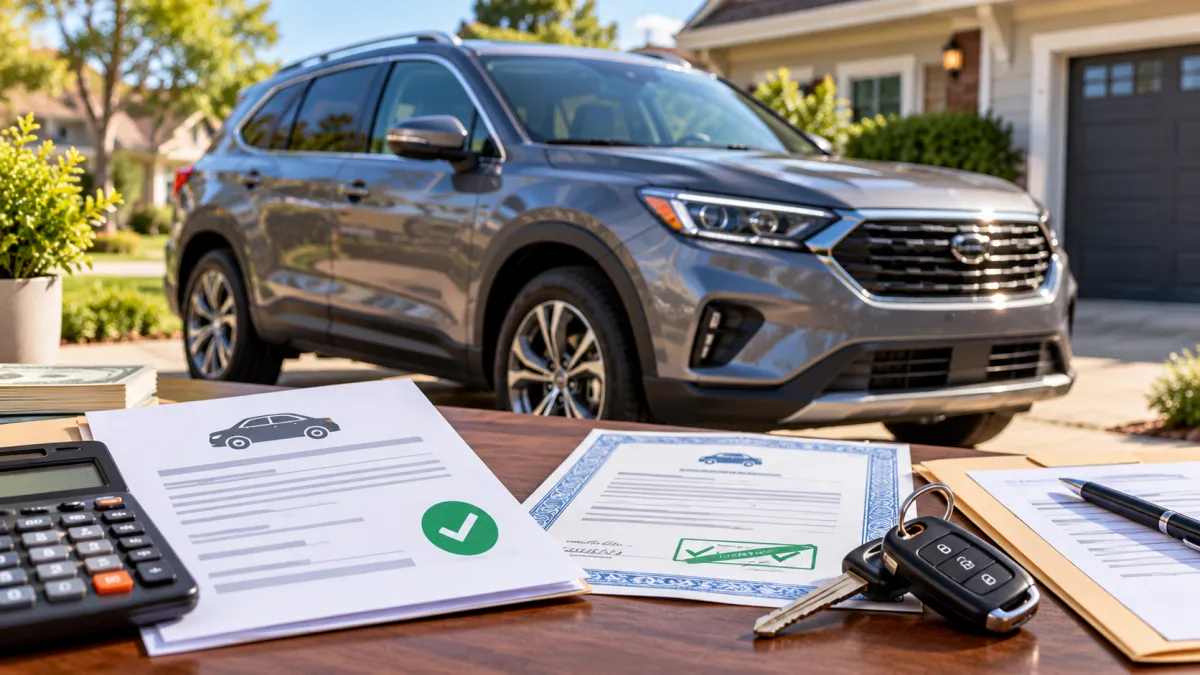
Yes, you can generally sell a car that still has an auto loan or lien. The process is more involved than selling a vehicle you own outright because the lender's payoff and lien must be handled before ownership can be transferred according to the applicable lender and state procedures.
The first step is not listing the car. It is finding out exactly how much you owe and comparing that amount with what the vehicle could realistically sell for. That tells you whether you have positive equity or negative equity and helps determine whether a private sale, dealership sale, trade-in, or waiting to sell makes the most sense.
A financed-car sale usually follows this basic path:
Get the payoff amount → determine the vehicle's value → calculate your equity → choose a selling method → coordinate with the lender → complete payment and lien release → transfer ownership.
The details can vary by lender and state, so treat the process below as a practical U.S. roadmap rather than a substitute for your lender's instructions or your state's vehicle-transfer requirements.
Can You Sell a Car That You Still Owe Money On?
In many cases, yes.
Having an outstanding auto loan does not automatically mean you must keep the vehicle until the final scheduled payment. What matters is that the loan is properly satisfied and the lender's lien is addressed as part of the sale.
The complication is that you may not have complete control over the title while the loan remains outstanding. Depending on the lender and state, the title may be held electronically or physically, and the lender may need to receive the payoff before the lien can be released.
That means you should contact the lender before promising a buyer that the title will be available immediately.
Ask the lender:
-
What is my current payoff amount?
-
How long is the payoff quote valid?
-
Where should payoff funds be sent?
-
What payment methods does the lender accept?
-
What happens after the loan is paid?
-
How will the lien be released?
-
Who receives the title or electronic title record?
-
Does the lender have specific instructions for a private sale?
-
Does the lender require the buyer, seller, or dealership to participate in the payoff process?
Getting these answers early can prevent problems later.
Step 1: Get Your Exact Loan Payoff Amount
Do not assume that the balance shown on your latest monthly statement is the exact amount required to pay off the loan.
Ask your lender for a current payoff amount.
The payoff amount is the amount required to satisfy the loan according to the lender's calculation for a particular date. It can differ from the balance shown on a regular statement because of accrued interest, fees, or other factors.
For example, imagine your loan statement shows:
-
Current loan balance: $17,800
-
Estimated vehicle value: $23,000
You might initially think you have $5,200 available after selling the vehicle. But the actual amount needed to satisfy the loan should come from the lender's payoff quote, not a simple calculation based on the statement balance.
The same principle applies when you are selling to a dealer. Get your own payoff information rather than relying only on the dealer's estimate of what you owe.
Also ask whether your loan agreement includes any applicable early-payoff charge. Do not assume there is one or that there isn't one; verify it with the lender.
Step 2: Find Out What Your Car Is Worth
The second number you need is the realistic value of the vehicle.
You can use valuation resources such as Kelley Blue Book or Edmunds as starting points. Compare more than one source when possible, because an estimated value is not necessarily the amount a particular buyer or dealer will actually offer.
Your vehicle's condition, mileage, equipment, location, service history, accident history, demand, and selling method can all affect the amount someone is willing to pay.
There is also an important difference between estimated value and actual offer.
A private buyer may offer an amount based on the local market and the condition of your specific vehicle. A dealership may use a different valuation because it is considering resale, reconditioning, inventory, and other business costs.
So instead of asking only, "What is my car worth?" ask:
What could I realistically receive for this vehicle through the selling method I am considering?
That is the number that matters when deciding whether you can clear the loan.
Step 3: Calculate Your Equity
Once you know the approximate selling price and the lender's payoff amount, you can determine whether you have positive or negative equity.
A simple starting calculation is:
Estimated sale price − loan payoff amount = approximate equity
Example of positive equity
Suppose:
-
Expected sale price: $25,000
-
Loan payoff: $18,000
Your approximate equity would be:
$25,000 − $18,000 = $7,000
If the vehicle actually sells for $25,000 and the lender receives the required $18,000 payoff, the remaining amount would generally represent your equity before any transaction-related costs or other amounts that may apply.
Example of negative equity
Now suppose:
-
Expected sale price: $18,000
-
Loan payoff: $23,000
The difference is:
$18,000 − $23,000 = −$5,000
You have approximately $5,000 in negative equity.
That does not necessarily mean you cannot sell the vehicle. It means the sale proceeds alone would not be enough to satisfy the loan.
This distinction is one of the most important things to understand before putting a financed car up for sale.
What Positive Equity Means
Positive equity gives you more flexibility.
If your vehicle is worth more than the amount required to pay off the loan, the sale proceeds can potentially satisfy the loan and leave money remaining for you.
For example:
| Item | Amount |
|---|---|
| Sale price | $26,000 |
| Loan payoff | $19,000 |
| Approximate equity | $7,000 |
The actual result depends on the final selling price, lender payoff calculation, and any applicable transaction costs.
Positive equity can also influence which selling method you choose.
If a private buyer offers significantly more than a dealership, the additional amount may make the extra work of a private sale worthwhile. If the dealer's offer is close enough to the private-sale amount, you may decide that convenience is more important.
What Negative Equity Means
Negative equity means you owe more on the vehicle than it is worth.
For example, if your payoff is $24,000 and the vehicle can realistically be sold for $19,000, you have approximately $5,000 in negative equity.
The key question becomes:
How will the remaining balance be paid?
You may need to pay the difference yourself, delay the sale while reducing the loan balance, or consider another transaction structure.
Do not assume that negative equity can simply disappear because a dealer says it will "pay off" your loan.
If negative equity is included in financing for another vehicle, the unpaid amount can become part of the new debt. That can increase the amount financed and the overall cost of the new loan.
Before agreeing to such an arrangement, look at the complete financing contract rather than focusing only on the monthly payment.
Step 4: Choose How You Want to Sell the Car
Once you know your payoff amount and equity position, compare your selling options.
| Selling method | Main advantage | Main consideration |
|---|---|---|
| Private sale | Potential for a higher selling price | More work and lender coordination |
| Dealership sale | Usually simpler transaction management | Offer may be lower than a strong private-sale offer |
| Trade-in | Convenient if you are buying another vehicle | Negative equity can become part of the new financing |
| Wait and pay down loan | May improve your equity position | You continue making payments and carrying ownership costs |
There is no universally best option.
A private sale may produce more money, but it requires advertising, buyer communication, negotiations, payment verification, and additional coordination.
A dealership may provide less money but make the transaction easier, particularly when a lender and lien are involved.
A trade-in can be convenient when you are replacing the vehicle, but you need to understand exactly how your existing loan balance is being handled.
Selling a Financed Car to a Dealership
Selling to a dealership can simplify some parts of a financed-car transaction.
The dealer may be able to coordinate the payoff of your existing loan as part of the transaction. However, you should still understand the numbers yourself.
Ask for a clear breakdown showing:
-
The dealer's offer for your vehicle
-
Your current loan payoff
-
Your positive or negative equity
-
Any amount you must pay separately
-
Any amount being included in new financing
-
The purchase price of the replacement vehicle, if applicable
-
The amount being financed
-
Any applicable fees and other charges
This is especially important when you are trading the vehicle toward another purchase.
A dealer saying, "We'll take care of the payoff," does not by itself tell you whether the existing loan balance is being paid from the vehicle's value, from your cash, or through additional financing.
Read the final paperwork carefully.
Selling a Financed Car Privately
A private sale can be more complicated when the lender has a lien.
The basic challenge is straightforward: the buyer wants ownership of the vehicle, while the lender needs to be paid and its lien must be properly addressed.
Before advertising the vehicle, contact the lender and ask exactly how it handles private-party sales.
The lender may have specific procedures involving:
-
Payment directly to the lender
-
A payoff quote
-
Buyer and seller identification
-
Title processing
-
Lien release
-
Electronic title records
-
A dealership or financial institution acting as an intermediary
Do not improvise this part of the transaction.
If a buyer is serious, explain that the vehicle has an outstanding loan and that the title and lien process will follow the lender's requirements.
A transparent process can prevent a buyer from becoming concerned when the title is not immediately available.
Step 5: Coordinate With Your Lender Before Closing
Once you have a buyer or dealer offer you are prepared to accept, contact your lender again.
Confirm:
-
The exact payoff amount.
-
The date through which that amount applies.
-
Where payoff funds should be sent.
-
The accepted payment method.
-
What documents the lender requires.
-
How the lien will be released.
-
How the title will be transferred.
-
Who will receive the title or electronic ownership record.
-
Whether the lender has additional instructions for the buyer or dealership.
This step is especially important because lender procedures are not identical.
One lender may have an established process for private sales, while another may require different documentation or payment arrangements.
The state where the vehicle is titled can also affect the process.
Step 6: Handle the Lien and Title Correctly
A lien means the lender has a secured interest connected to the vehicle until the loan obligation is satisfied.
When the loan is paid, the lien must be released according to the lender and applicable state procedures before the buyer can receive clear ownership documentation.
The exact process varies.
Some states use electronic title systems. In other situations, physical title documents may be involved. The lender may send information directly to the state motor-vehicle agency, provide a lien release, or follow another approved procedure.
That is why you should not promise a buyer a specific title-delivery timeline unless your lender and state agency have confirmed it.
If you cannot locate your vehicle title, address that problem before the transaction moves too far forward. KnowBrook's guide on what to do if you lost your car title covers the title-replacement issue and related complications.
Also remember that state requirements can differ for bills of sale, title signatures, odometer disclosures, notifications, and other transfer documents.
What About the Odometer Disclosure?
Federal odometer-disclosure requirements apply to many vehicle ownership transfers, with rules that depend in part on the vehicle's model year. State requirements may also apply.
For a financed-car sale, the loan itself does not eliminate the seller's responsibility to complete required vehicle-transfer documentation.
Do not assume that the lender will handle every document required for the ownership transfer.
Before closing, check your state's official motor-vehicle agency requirements and confirm which documents you and the buyer need to complete.
Step 7: Make Sure the Payment Process Is Verifiable
Payment deserves extra attention when you are selling a vehicle privately.
Do not release the vehicle, keys, or ownership documents based solely on a screenshot, email, text message, or other notification saying that money has been sent.
Be particularly cautious about:
-
Buyers who overpay
-
Requests to send money back
-
Buyers who ask you to pay a third party
-
Unusual payment arrangements
-
Pressure to complete the transaction immediately
-
Fake payment confirmations
-
Checks that appear to clear but have not been fully verified
-
Buyers who refuse reasonable verification steps
The FTC has specifically warned about fake-check scams targeting online car sellers. A fake check can appear to result in available funds before the bank later discovers the check is fraudulent. If you send money back to the scammer, you can be left responsible for the loss.
The safest approach is not to rely on a buyer's screenshot or verbal assurance. Verify the payment through the appropriate financial institution or payment process before handing over the vehicle.
When a lender is involved, also make sure the lender confirms how its payoff must be received.
Step 8: Complete the Sale and Keep Your Records
Once the payment, loan payoff, lien release, and ownership-transfer requirements have been properly addressed, complete the transaction according to your state's rules.
Keep copies of important records, such as:
-
Sale agreement or bill of sale, if required or used
-
Signed title documents, where applicable
-
Lender payoff confirmation
-
Lien-release documentation
-
Payment records
-
Buyer information required by your state
-
Vehicle-transfer or release-of-liability confirmation
-
Copies of communications related to the transaction
-
Any other documents your state or lender instructs you to retain
Do not throw away the paperwork immediately after handing over the keys.
Good records can help if there is a later question about the transaction, the loan payoff, title transfer, or when you stopped owning the vehicle.
What If You Owe More Than the Buyer Is Paying?
This is the point where many sellers need to stop and reconsider the transaction.
Suppose you owe $27,000, but a buyer is willing to pay only $22,000.
The buyer's payment does not satisfy the entire loan. There is a $5,000 gap.
You cannot simply transfer the vehicle and leave the remaining loan balance unresolved.
Possible approaches may include:
Pay the difference
If you have the funds, you may be able to cover the difference so the loan can be satisfied.
Wait
If the sale is not urgent, continuing to make payments may reduce the balance and potentially improve your equity position.
However, vehicle values can also change, so waiting does not guarantee that the financial gap will disappear.
Compare another selling method
A dealer may offer more or less than the private buyer. Compare actual offers rather than assuming one method will always produce the best result.
Reconsider a replacement-vehicle transaction
If you are selling because you want another vehicle, be careful about immediately rolling negative equity into another auto loan.
A lower monthly payment can sometimes hide the fact that you are financing a larger amount over a longer period.
Look at the total amount financed and total borrowing cost, not just the monthly payment.
Common Mistakes to Avoid
Mistake 1: Using the statement balance instead of getting a payoff
Your regular loan balance may not be the exact amount required to satisfy the loan.
Get the lender's current payoff amount.
Mistake 2: Listing the car before understanding the lien
A buyer may expect immediate title transfer.
Know your lender's process before advertising the vehicle.
Mistake 3: Assuming positive equity
Do not estimate your equity from what you paid for the vehicle.
Compare today's realistic selling price with today's payoff amount.
Mistake 4: Treating a dealer's "payoff" promise as free money
If you owe more than the vehicle is worth, understand where the difference goes.
If it is added to another loan, you are still responsible for that debt.
Mistake 5: Accepting a suspicious overpayment
A buyer who sends more money than requested and asks you to return the difference is a major warning sign.
Do not send money back simply because funds appear in your account.
Mistake 6: Assuming every state handles titles the same way
Title, lien, registration, notification, and transfer requirements vary.
Check the official motor-vehicle agency for the state involved in the transaction.
Mistake 7: Handing over the vehicle before the transaction is properly completed
Do not let pressure from a buyer push you into skipping lender, payment, title, or state requirements.
The vehicle should not change hands until you are satisfied that the transaction has been properly completed.
A Simple Financed-Car Selling Checklist
Before listing:
Before accepting an offer:
At closing:
After closing:
Conclusion
Selling a car with an outstanding loan is usually a matter of coordinating three things correctly: the vehicle's value, the lender's payoff, and the ownership-transfer process.
Start by getting the exact payoff amount from your lender. Then determine what the car could realistically sell for and calculate whether you have positive or negative equity. Those two numbers should guide your decision about selling privately, selling to a dealership, trading in the vehicle, or waiting.
If you have positive equity, the sale may leave money after the loan is satisfied. If you have negative equity, you need a clear plan for covering the difference before the lien can be properly resolved.
Most importantly, do not treat the loan payoff or title process as an afterthought. Contact the lender early, follow its instructions, verify payments before releasing the vehicle, and check your state's motor-vehicle requirements before completing the transfer.
A financed-car sale does not have to be complicated, but it does need to be handled in the right order: know what you owe, know what the car is worth, understand your equity, coordinate with the lender, and complete the title and payment process carefully.
Frequently asked questions
1. Can I sell a car that still has a loan on it?
Yes. You can generally sell a vehicle before the auto loan is fully paid off, but the lender's lien and payoff must be handled before ownership can be transferred. Start by getting the lender's current payoff amount and comparing it with the vehicle's realistic sale value.
2. What is a car loan payoff amount?
A payoff amount is the amount the lender requires to satisfy the loan as of a specified date. It can differ from the balance shown on a regular loan statement because of interest, fees, or other factors.
3. Can I sell my financed car privately?
In many cases, yes. A private sale can be completed while a loan remains outstanding, but the seller, buyer and lender may need to coordinate payment, lien release and title transfer. The exact process depends on the lender and state.
4. What happens if I owe more than my car is worth?
That is negative equity. You generally need to address the difference between the vehicle's sale value and the lender's payoff amount before the lien can be fully satisfied. Depending on your circumstances, you may choose to pay the difference, wait, or compare other selling options.
5. Can a dealership pay off my car loan when I sell it?
A dealership may be able to handle the payoff as part of the transaction. However, the exact process varies by dealer and lender. Before accepting an offer, confirm how the payoff, remaining equity or negative equity, lien release and title will be handled.
6. How long does it take to get a lien released?
There is no single nationwide processing time. The timing can depend on the lender, state, title system and transaction method. Ask the lender what happens after the payoff is received and how the lien release or title transfer will be completed.
7. Can I sell a car if the lender holds the title?
Possibly. A lender holding the title does not automatically prevent a sale, but the lender's payoff and lien-release procedure must be followed. Contact the lender before promising a buyer that the title can be transferred immediately.

Olivia Bennett writes practical automotive content covering car buying, ownership costs, maintenance, vehicle features, reliability, and everyday driving decisions. Her work focuses on helping readers understand automoti...