How to Sell a Car Privately: A Step-by-Step U.S. Guide
Learn how to sell a car privately in the U.S., from pricing and preparing your vehicle to screening buyers, verifying payment, completing title paperwork, and protecting yourself after the sale.
In this article
- 1. Gather Your Car's Documents Before Listing It
- 2. Check Whether You Still Have a Loan or Lien
- 3. Determine a Realistic Private-Sale Price
- 4. Prepare the Car for Sale
- 5. Create an Accurate Listing
- 6. Screen Buyers Before Meeting Them
- 7. Handle Test Drives Carefully
- 8. Be Ready to Negotiate
- 9. Verify Payment Before Handing Over the Car
- 10. Complete the Title and Sale Paperwork Correctly
- Odometer disclosure
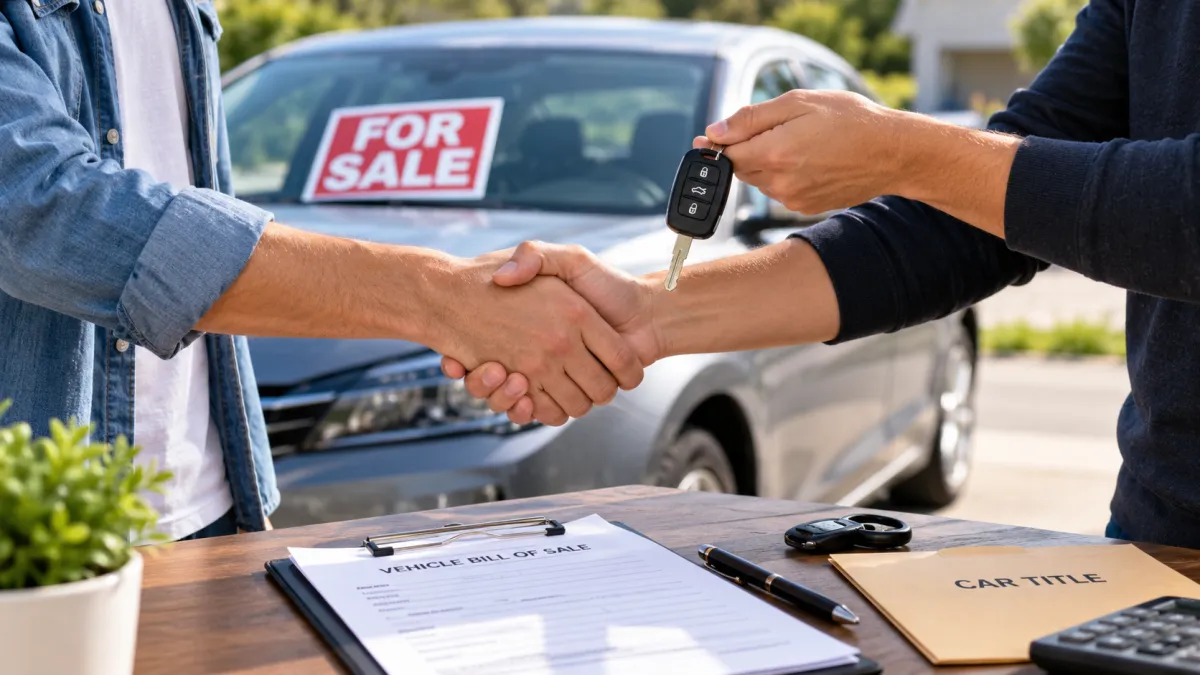
- Bill of sale
- 11. Understand the Difference Between Ownership Transfer and Seller Notification
- 12. Take Care of Plates, Registration, and Insurance
- 13. Keep a Complete Record of the Transaction
- Private Sale vs. Trade-In
- Common Mistakes to Avoid When Selling a Car Privately
- Pricing the car unrealistically
- Hiding known problems
- Meeting an unverified buyer without precautions
- Assuming a cashier's check is safe
- Accepting an overpayment
- Forgetting about a lien
- Treating another state's DMV process as your own
- Failing to document the sale
- Giving the buyer the car before the transaction is complete
- A Simple Private Car-Sale Checklist
- Conclusion
Selling a car privately can give you more control over the asking price and the transaction than trading the vehicle to a dealer. But a private sale also means you are responsible for preparing the car, finding a buyer, handling negotiations, verifying payment, completing the paperwork, and following your state's requirements.
The safest approach is to treat the sale as a process rather than simply putting a "For Sale" listing online. Before you advertise the car, get your documents together, determine a realistic price, check for any loan or lien, and understand what your state requires. Once you find a buyer, take precautions during the test drive, verify the payment independently, complete the title paperwork correctly, and document the sale.
Here's how to sell a car privately in the U.S., step by step.
1. Gather Your Car's Documents Before Listing It
Start by collecting the paperwork you are likely to need for the transaction. The exact requirements vary by state, so your state's motor-vehicle agency should be your final source for required documents and procedures.
Depending on your situation, relevant records can include:
-
The vehicle title
-
Maintenance and service records
-
Registration information
-
Loan or lien information
-
Odometer information
-
A bill of sale, if required or useful in your state
-
Any other state-specific transfer documents
The title is particularly important because it is central to transferring ownership. Check that the information on it is accurate and that you understand what your state requires you to complete before signing it.
If you cannot find your title, do not simply proceed as if it were unnecessary. State procedures for replacing a lost title vary. KnowBrook's guide on how to replace a lost car title can help you understand the issue before you begin the sale.
Also look for any restrictions, liens, or lender information connected to the vehicle.
2. Check Whether You Still Have a Loan or Lien
Selling a car with an outstanding loan requires additional planning.
If a lender has a lien on the vehicle, the lender may control the title or have a legal interest in the vehicle until the loan is paid according to the loan agreement. Contact the lender before advertising the car so you know:
-
Your current payoff amount
-
How the lender handles a private-party sale
-
How the lien will be released
-
Where the title will be sent or released
-
What payment method the lender accepts
-
What the buyer needs to do, if anything, during the transaction
Do not assume that paying the remaining balance automatically means you will immediately have the physical title in your hands. The timing and process can vary by lender and state.
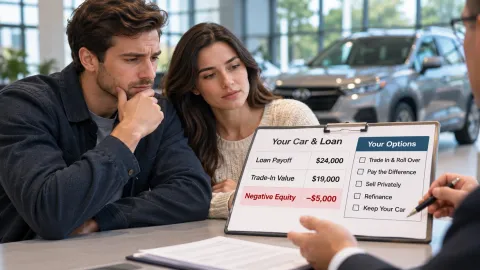
If the car is worth more than your payoff balance, you may be able to use the sale proceeds to satisfy the loan and complete the title process. If the car is worth less than what you owe, you will need to determine how the remaining balance will be handled before agreeing to a sale.
The important point is simple: understand the lien-release process before you promise a buyer that you can deliver clear ownership.
3. Determine a Realistic Private-Sale Price
Pricing is one of the biggest factors in how quickly a car attracts serious buyers.
Start by researching what comparable vehicles are being offered for in your market. Compare vehicles with similar:
-
Year
-
Make and model
-
Trim level
-
Mileage
-
Condition
-
Features
-
Service history
-
Accident history
-
Location
Do not automatically use the highest listing you find as your target price. A vehicle with unusually low mileage, excellent condition, or desirable equipment may justify a higher price than another vehicle of the same year and model.
Condition matters too. Be honest about dents, scratches, warning lights, worn tires, mechanical issues, previous damage, or other defects. A realistic price supported by the vehicle's actual condition can attract more serious buyers than an inflated price that leads to repeated negotiations.
It can also help to decide two numbers before listing:
Asking price: The amount you initially want to advertise.
Minimum acceptable price: The lowest amount you would realistically accept based on the vehicle's condition and your circumstances.
Keeping the minimum price private gives you a clearer negotiating boundary.
4. Prepare the Car for Sale
You do not necessarily need to spend heavily on repairs before selling the vehicle. Focus on improvements that make the car presentable and help a buyer understand its condition.
A basic preparation can include:
-
Washing and cleaning the exterior
-
Vacuuming the interior
-
Removing personal belongings
-
Cleaning windows and mirrors
-
Checking tire condition
-
Replacing inexpensive burned-out bulbs when appropriate
-
Gathering maintenance records
-
Fixing obvious minor problems when the cost makes sense
Avoid making expensive repairs solely because you think they will increase the selling price by the same amount. A major repair does not always return its full cost in the final sale price.
The goal is to present the vehicle honestly and make it easy for a buyer to evaluate.
5. Create an Accurate Listing
A strong listing should answer the questions a serious buyer is likely to have before contacting you.
Include information such as:
-
Year, make, and model
-
Trim level, if applicable
-
Mileage
-
Asking price
-
General condition
-
Notable features
-
Maintenance history
-
Known problems
-
Accident or damage history when applicable
-
Number of owners, if known and relevant
-
Title status
-
Loan or lien status when applicable
-
Location
-
Whether a test drive is available
Take clear photographs in good lighting. Photograph the exterior from several angles, the interior, tires, dashboard, mileage display, engine area when useful, and any noticeable damage.
Do not hide defects by photographing only the best-looking side of the vehicle. A buyer who discovers an undisclosed problem during an inspection is more likely to walk away or reduce the offer.
Honesty can also make negotiations easier because the buyer has a clearer understanding of what they are considering before meeting you.
6. Screen Buyers Before Meeting Them
A private sale involves meeting strangers, so basic caution matters.
Not every person who contacts you will be a serious buyer. Be cautious when someone:
-
Avoids answering basic questions about the vehicle
-
Wants to move the transaction unusually quickly
-
Offers significantly more than your asking price
-
Sends an unexpected payment arrangement
-
Asks you to send money back
-
Wants to involve an unfamiliar third party without a clear reason
-
Pressures you to skip normal paperwork
A serious buyer may ask reasonable questions about mileage, maintenance, condition, title status, or the reason for selling.
You do not need to provide unnecessary personal information. Arrange meetings in a safe, appropriate location and let someone you trust know when and where you are meeting a buyer.
7. Handle Test Drives Carefully
A test drive can be an important part of a private car sale, but it should be handled with reasonable safeguards.
Before allowing someone to drive the vehicle, verify their identity and driver's license. Consider your insurance situation and any requirements or restrictions that apply to your vehicle and state.
Choose a safe location for the meeting. When practical, accompany the buyer during the test drive rather than handing the vehicle over to an unverified stranger.
You should also avoid allowing a buyer to take the vehicle for an extended period without you or without appropriate safeguards. The purpose of the test drive is to allow the buyer to evaluate the vehicle, not to give them unrestricted access to it.
If the buyer wants an independent inspection, that can be reasonable. You can agree on a reputable mechanic or inspection location and determine in advance who will pay for the inspection.
8. Be Ready to Negotiate
Private buyers often expect some negotiation, so decide in advance how flexible you are.
When a buyer makes an offer, consider the vehicle's actual condition, comparable prices, your minimum acceptable price, and how much interest you have received.
You do not need to accept the first offer simply because someone is interested.
At the same time, rejecting every reasonable offer because you are holding out for an unrealistic price can keep the vehicle listed longer than necessary.
A useful approach is to separate legitimate negotiation from pressure tactics. If a buyer identifies a real mechanical issue or a condition problem you overlooked, that information may reasonably affect the price. If someone simply claims that another vehicle is cheaper without providing a meaningful comparison, you can decide whether the offer makes sense based on your own research.
Keep the agreed price clear before moving to the payment and paperwork stage.
9. Verify Payment Before Handing Over the Car
Payment fraud is one of the most important risks in a private vehicle sale.
A buyer may present a payment that appears legitimate but later turns out to be fraudulent. This is particularly important with fake checks and overpayment scams.
For example, a scammer may appear to send more money than the agreed purchase price and then ask you to return the difference. The original payment may later be discovered to be fraudulent, leaving you responsible for the loss.
The Federal Trade Commission specifically warns online vehicle sellers about fake-check scams.
Treat any unexpected overpayment as a warning sign.
Do not:
-
Send money back because a buyer says they accidentally overpaid
-
Buy gift cards at the buyer's request
-
Send money to another person on the buyer's behalf
-
Transfer cryptocurrency or wire money to "correct" a payment
-
Hand over the vehicle simply because funds appear in your account
-
Assume a cashier's check is automatically legitimate
If a buyer uses a check or other payment instrument, independently verify it before completing the transaction. Do not rely solely on contact information supplied by the buyer.
The key principle is that payment appearing to have arrived is not the same thing as payment you have independently verified as legitimate.
Because payment methods and bank procedures can vary, sellers should use an approach that gives them confidence the transaction is genuine before transferring possession, the title, or the keys.
10. Complete the Title and Sale Paperwork Correctly
Once the price and payment arrangements are settled, the next step is completing the ownership paperwork.
The exact process varies by state, but the title is generally a central document in a vehicle ownership transfer.
Follow your state's instructions carefully. Do not guess where information should be entered or assume that another state's title procedure applies to you.
Depending on your state and vehicle, the transaction may involve:
-
Signing the title
-
Recording the sale price
-
Recording the mileage
-
Completing an odometer disclosure
-
Providing a bill of sale
-
Completing state-specific forms
-
Providing required lien information
-
Submitting seller notification or release-of-liability information
Keep copies or records of the completed paperwork and transaction details.
Odometer disclosure
Federal odometer disclosure requirements are date-sensitive. Under the current federal framework, vehicles from Model Year 2011 and newer are generally subject to federal odometer disclosure requirements for the first 20 years, while Model Year 2010 and older vehicles remain under the previous federal framework.
State procedures can add requirements, so check the applicable rules for your vehicle and state before completing the title paperwork.
Do not guess the mileage or enter information that you cannot support.
Bill of sale
A bill of sale is not universally required in every private vehicle transaction. Whether it is legally required depends on the state and circumstances.
Even where it is not mandatory, a written record can be useful. It can document details such as:
-
Buyer and seller
-
Vehicle identification information
-
Sale price
-
Date of sale
-
Mileage
-
Signatures
-
Any agreed transaction terms
Use your state's required form when one is required rather than assuming a generic document satisfies every state requirement.
11. Understand the Difference Between Ownership Transfer and Seller Notification
One of the easiest mistakes to make after a private sale is assuming that submitting a seller notification automatically transfers the vehicle into the buyer's name.
It does not necessarily work that way.
States can require sellers to notify the motor-vehicle agency that the vehicle was sold. This may be called a Notice of Transfer, Vehicle Transfer Notification, Notice of Sale, or another term depending on the state.
The purpose can include documenting that you no longer possess the vehicle and helping protect you from problems associated with a vehicle that remains in state records.
But seller notification and the actual ownership transfer are separate steps in many states.
For example, California requires sellers to submit a Notice of Transfer and Release of Liability within the applicable deadline, but that notice does not itself transfer ownership. Texas also has a Vehicle Transfer Notification process and separately requires the buyer to complete the title-transfer process.
These examples demonstrate why you should follow your own state's process rather than copying another state's procedure.
12. Take Care of Plates, Registration, and Insurance
Do not assume that every state handles license plates the same way.
Plate requirements vary, so check your state's motor-vehicle agency before completing the sale. Depending on the state, the seller may need to remove plates, transfer them under specific circumstances, retain them, or follow another procedure.
The same principle applies to registration and insurance.
Once the sale has been completed, make sure your records accurately reflect that you no longer own or possess the vehicle and follow your insurer's instructions for removing or changing coverage.
Do not cancel insurance prematurely if doing so would leave you exposed while you still own or control the vehicle.
13. Keep a Complete Record of the Transaction
After the vehicle leaves your possession, keep your transaction records.
Your file can include:
-
A copy of the signed title or transfer paperwork
-
Bill of sale, if used
-
Sale date
-
Sale price
-
Mileage recorded at sale
-
Buyer information where appropriate and lawful
-
Seller notification confirmation
-
Loan payoff or lien-release documentation
-
Copies of relevant communications
-
Payment records
These records can be useful if questions arise later about when the vehicle was sold or what was agreed upon.
You should also keep confirmation that you completed any required state notification.
Private Sale vs. Trade-In
Selling privately and trading a vehicle to a dealer involve different priorities.
| Factor | Private Sale | Trade-In |
|---|---|---|
| Potential selling price | May provide more control over the price | Dealer offer may be lower than a private-party price |
| Convenience | Requires advertising and dealing with buyers | Usually simpler |
| Negotiation | Directly with the buyer | Usually with the dealer |
| Test drives | Seller handles the process | Dealer handles the process |
| Paperwork | Seller has more responsibility | Dealer generally handles much of the transaction |
| Payment risk | Seller must verify payment | Dealer transaction has a different payment structure |
| Time commitment | Can take longer depending on demand | Often faster |
Neither option is automatically better for every seller.
A private sale may make sense if you are comfortable managing the transaction and want more control over the selling price. A trade-in can be attractive if convenience and speed matter more than maximizing the private-party value.
Common Mistakes to Avoid When Selling a Car Privately
A few mistakes can create unnecessary risk or make the transaction more difficult.
Pricing the car unrealistically
An asking price far above comparable vehicles can discourage serious buyers. Research similar vehicles and consider condition rather than choosing a number based only on what you hope to receive.
Hiding known problems
Undisclosed mechanical or cosmetic issues can damage trust and create disputes. Describe known problems honestly.
Meeting an unverified buyer without precautions
A private vehicle sale requires you to interact with strangers. Choose appropriate meeting locations, verify basic buyer information, and use reasonable test-drive safeguards.
Assuming a cashier's check is safe
A cashier's check can still be fraudulent. Independently verify payment before handing over the vehicle, title, and keys.
Accepting an overpayment
An unexpected payment above the agreed price is a major warning sign. Do not refund the difference until the payment has been independently verified.
Forgetting about a lien
If a lender still has a lien, determine the payoff and title-release process before finalizing a private sale.
Treating another state's DMV process as your own
California, Texas, Florida, New York, and other states can have different requirements. Use your state's official motor-vehicle agency for the final instructions.
Failing to document the sale
Keep your signed paperwork, payment records, and seller-notification confirmation. A private transaction should leave a clear paper trail.
Giving the buyer the car before the transaction is complete
Do not hand over the vehicle, title, or keys simply because the buyer says payment has been sent. Complete the transaction in the proper order and verify the payment.
A Simple Private Car-Sale Checklist
Before listing:
-
Gather the title and vehicle records.
-
Check whether there is an outstanding loan or lien.
-
Research comparable vehicles and set a realistic price.
-
Clean and prepare the vehicle.
-
Identify known problems or defects.
-
Review your state's private-sale requirements.
Before meeting a buyer:
-
Prepare an accurate listing.
-
Take clear photographs.
-
Decide your negotiation range.
-
Screen inquiries for obvious warning signs.
-
Choose a safe meeting location.
-
Plan how you will handle test drives.
At the sale:
-
Confirm the final price.
-
Verify payment independently.
-
Complete the title correctly.
-
Complete required odometer information.
-
Use a bill of sale when required or useful.
-
Provide only the paperwork appropriate for the completed transaction.
-
Hand over the vehicle and keys only after the transaction is properly completed.
After the sale:
-
Complete your state's seller notification or release-of-liability process.
-
Follow your state's plate requirements.
-
Update your insurance as appropriate.
-
Keep copies of the transaction records.
-
Keep documentation related to any loan payoff or lien release.
Conclusion
Selling a car privately is more than finding someone willing to pay your asking price. A successful transaction requires preparation, realistic pricing, careful buyer screening, safe test-drive practices, legitimate payment, accurate paperwork, and proper post-sale documentation.
The most important protection is to slow down when something about the transaction feels unusual. An unexpected overpayment, pressure to bypass paperwork, questionable payment method, unresolved lien, or request to transfer the vehicle before payment is verified can turn a straightforward sale into an expensive problem.
Before completing the transaction, check your state's current motor-vehicle requirements and make sure you understand exactly what you need to do with the title, odometer information, plates, seller notification, and registration. With those steps handled carefully, you can approach a private car sale with a much clearer process and fewer avoidable risks.
Frequently asked questions
Can I sell a car privately if I still have a loan on it?
You can generally sell a car privately while a loan is outstanding, but you need to address the lien as part of the transaction. Contact your lender before listing the vehicle to understand the payoff amount and the process for releasing the lien or transferring the title. Do not promise a buyer that you can provide a clear title until you understand your lender's requirements.
What happens if the buyer does not transfer the car title?
The seller should follow the vehicle-transfer notification or release-of-liability procedure required by their state as soon as the sale is completed. These procedures can help document that you no longer possess the vehicle, but they do not necessarily transfer ownership themselves. The buyer is generally responsible for completing the title and registration process required by the state.
Can a buyer scam me with a cashier's check?
Yes. A cashier's check can be fraudulent, so sellers should not assume that this form of payment is automatically safe. Independently verify the payment before handing over the vehicle, title, or keys. Be especially cautious if the buyer sends more money than agreed and asks you to refund the difference.
Do I have to give the buyer a bill of sale?
Whether a bill of sale is legally required depends on the state and circumstances. Even when it is not required, keeping a signed written record of the transaction can provide useful documentation of the vehicle, sale price, date, and parties involved.
Do I need to remove my license plates when I sell my car?
Plate requirements vary by state. Some states require sellers to remove their plates, while other procedures can differ depending on the vehicle and transaction. Check your state's motor-vehicle agency before completing the sale rather than assuming the same rule applies everywhere in the U.S.
How long does it usually take to sell a car privately?
There is no single reliable nationwide timeline. The time can vary based on the vehicle's price, condition, mileage, make and model, local demand, season, listing quality, and how quickly qualified buyers respond.
Should I let a buyer take my car for a test drive alone?
For safety, sellers should avoid allowing an unverified buyer to leave alone with the vehicle. Verify the buyer's identity and driver's license, choose a safe location, and accompany the buyer when practical. Test-drive procedures and legal requirements can vary by state and insurance situation.
What should I do if a buyer sends me more money than the agreed price?
1. Do not refund the difference or send money elsewhere. An overpayment can be part of a fake-check or other payment scam. Verify that the original payment is legitimate before taking any further action, and do not hand over the vehicle or title based solely on funds appearing in your account.

Olivia Bennett writes practical automotive content covering car buying, ownership costs, maintenance, vehicle features, reliability, and everyday driving decisions. Her work focuses on helping readers understand automoti...