How Much Tax Do You Pay When You Sell a Car? Federal Tax Rules and Reporting
Learn how federal taxes apply when you sell a personal car in the United States. This guide explains taxable gains, nondeductible losses, how to calculate your car’s tax basis, Form 1099-K reporting, and the IRS forms and records you may need.
In this article
- Do You Pay Federal Income Tax When Selling a Personal Car?
- How to Calculate the Taxable Gain or Loss on a Car Sale
- Example 1: Selling a car for less than you paid
- Example 2: Selling a car for more than you paid
- Example 3: Selling a car for approximately the purchase price
- Why Most Personal Car Sales Do Not Create a Taxable Gain
- What Happens If You Sell a Car for a Profit?
- Reporting a taxable gain
- What If You Sell a Car at a Loss?
- Form 1099-K and Selling a Personal Car
- What is the Form 1099-K reporting threshold?
- What should you do if you receive Form 1099-K for a car sale?
- How to Report a Taxable Car Sale to the IRS
- Step 1: Determine the vehicle’s tax basis
- Step 2: Determine the amount realized
- Step 3: Calculate the gain or loss
- Step 4: Review the applicable IRS forms
- Step 5: Keep your documentation
- What Records Should You Keep When Selling a Car?
- What if you cannot find the original purchase price?
- Special Situations That Can Change the Tax Calculation
- Selling a car that was used for business
- Selling a car that you received as a gift
- Selling an inherited car
- Selling a car with an outstanding loan or lien
- Federal Tax Rules vs. State Tax Rules
- Common Mistakes to Avoid When Selling a Personal Car
- Treating the full selling price as taxable income
- Assuming a personal-use loss is deductible
- Ignoring Form 1099-K
- Assuming cash sales are tax-free
- Using the loan balance as the tax basis
- Applying personal-use rules to a business vehicle
- Helpful IRS Resources for a Personal Car Sale
- Conclusion
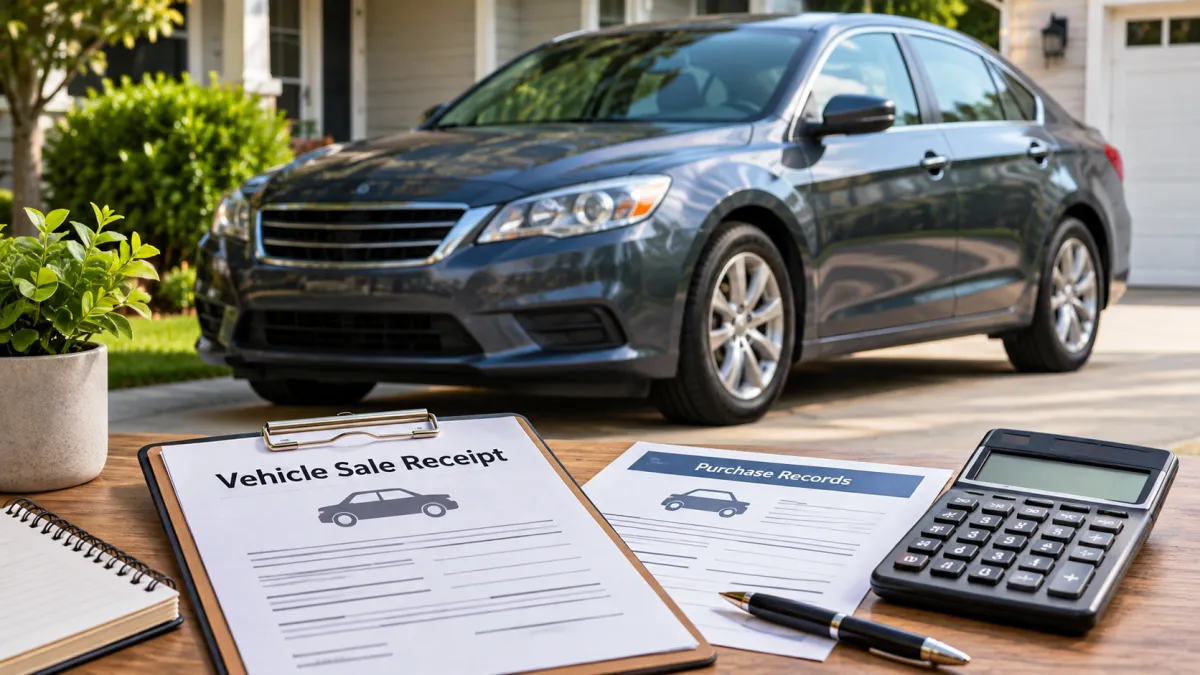
Selling a personal car usually does not create federal income tax if you sell it for less than you paid. But if you sell the vehicle for more than its tax basis, the profit may be taxable. The amount you receive from the buyer is not automatically the amount of income you owe tax on.
The key is the difference between your car’s tax basis and its selling price. That distinction matters whether you sell the vehicle privately, accept cash, or receive a payment through an online platform.
This guide explains how federal tax rules generally apply to personal car sales, how to calculate a gain or loss, what to do if you receive Form 1099-K, and which records can help support your tax reporting.
Do You Pay Federal Income Tax When Selling a Personal Car?
For most people selling a car they owned for personal use, the federal tax result depends on whether the sale produces a gain or a loss.
-
Sell the car for less than its tax basis: The loss is generally not deductible.
-
Sell the car for more than its tax basis: The gain is generally taxable.
-
Sell the car for approximately what you paid: There is generally no gain or deductible loss.
A car is personal-use property. Like other personal belongings, its sale can create a taxable gain even though the vehicle is not an investment you bought specifically to make money.
For example, suppose you purchased a car for $24,000 and later sold it for $15,000. You received $15,000 from the buyer, but you did not make a $15,000 profit. You sold the vehicle for less than its purchase cost, so the transaction generally produces a personal loss that you cannot deduct on your federal income tax return.
Now suppose you bought a collectible vehicle for $24,000 and sold it for $30,000. The $6,000 gain is generally taxable.
The distinction between the money received and the actual gain is the foundation of the federal tax rules.
How to Calculate the Taxable Gain or Loss on a Car Sale
The basic calculation compares your car’s tax basis with the amount realized from the sale.
For a typical personal car, the tax basis generally starts with the purchase price. Special circumstances—such as a gift, inheritance, business use, or depreciation—can change the calculation.
A simplified calculation is:
Amount realized from sale − Adjusted tax basis = Gain or loss
For a straightforward personal-use car sale, the purchase price is often a reasonable starting point for the basis. The amount realized generally reflects what you received from the sale, with applicable selling costs taken into account where relevant.
Example 1: Selling a car for less than you paid
Imagine you bought a used car for $18,500. A few years later, you sell it privately for $11,000.
| Item | Amount |
|---|---|
| Original purchase price | $18,500 |
| Selling price | $11,000 |
| Difference | −$7,500 |
You have a $7,500 personal-use loss under this simplified example.
That loss is generally nondeductible for federal income tax purposes. You cannot use it to reduce wages, other income, or capital gains.
This is a common result when selling an ordinary personal vehicle because cars often lose value as they age and accumulate mileage.
Example 2: Selling a car for more than you paid
Suppose you purchased a vehicle for $20,000 and later sold it for $26,500.
| Item | Amount |
|---|---|
| Original purchase price | $20,000 |
| Selling price | $26,500 |
| Difference | $6,500 |
The $6,500 gain is generally taxable.
The actual tax owed depends on your overall tax situation and the applicable tax rules. The gain is not necessarily taxed at a fixed percentage simply because the property was a car.
Example 3: Selling a car for approximately the purchase price
Suppose you purchased a vehicle for $16,000 and sold it for $16,000.
| Item | Amount |
|---|---|
| Original purchase price | $16,000 |
| Selling price | $16,000 |
| Difference | $0 |
In this simplified case, there is no gain or loss.
These examples are hypothetical and assume a straightforward personal-use vehicle sale without special basis adjustments.
Why Most Personal Car Sales Do Not Create a Taxable Gain
Many personal cars lose value over time. The owner may sell the vehicle after several years because of a move, a new vehicle purchase, changing transportation needs, or repairs that are no longer worthwhile.
If the sale price is below the amount paid, the owner generally has a personal-use loss.
The federal tax rules treat personal-use losses differently from taxable gains. A loss on personal property is generally not deductible, while a gain on personal property is generally taxable.
This creates an important asymmetry:
-
If you sell your personal car at a loss, you generally cannot claim the loss as a tax deduction.
-
If you sell it at a profit, you generally must account for the taxable gain.
Do not assume that a sale is automatically tax-free simply because the car was used for personal transportation. The sale price compared with the vehicle’s tax basis is what matters.
Likewise, do not assume that every dollar received from selling a car is taxable income. Gross proceeds and taxable profit are different concepts.
What Happens If You Sell a Car for a Profit?
A taxable gain can arise when the sale price exceeds the vehicle’s tax basis.
This can happen in unusual or specialized circumstances. For example, a vehicle might appreciate because it is rare, collectible, or in unusually desirable condition. Some owners may also sell a car after a market shortage or other circumstances increase its resale value.
If the car was owned and used personally, a gain is generally treated under the tax rules for personal-use property.
Reporting a taxable gain
A taxable gain from selling personal property is generally reported using:
-
IRS Form 8949 — Sales and Other Dispositions of Capital Assets
-
Schedule D (Form 1040), Capital Gains and Losses
The applicable reporting instructions depend on the tax year and the transaction.
The gain is not necessarily taxed as ordinary income at your regular marginal tax rate. The tax treatment can depend on the character of the gain and other factors in your return.
If you believe your vehicle sale generated a significant profit, review the applicable IRS instructions or consult a qualified tax professional before filing.
What If You Sell a Car at a Loss?
Selling a personal car at a loss is a common situation.
Suppose you bought a vehicle for $28,000 and sold it for $9,500 after several years of use. Under a simplified calculation, the loss is $18,500.
That loss generally cannot be deducted on your federal income tax return because it arose from the sale of personal-use property.
It does not become deductible simply because:
-
You sold the car privately.
-
You sold it for cash.
-
You sold it through an online marketplace.
-
The buyer paid you through a payment app.
-
You received a tax form reporting the transaction.
However, if a payment platform reports the transaction on Form 1099-K, you may need to address the reported gross amount on your tax return so that it is not mistakenly treated as taxable profit. The IRS provides specific guidance for personal items sold at a loss.
This reporting issue is separate from whether the loss itself is deductible.
Form 1099-K and Selling a Personal Car
Form 1099-K is an information return used to report certain payments processed through payment cards or third-party payment networks, including some payment apps and online marketplaces.
You may receive this form after selling a personal car through a platform that processes the payment. Receiving the form does not automatically mean that you owe federal income tax.
The form generally reports gross payment amounts. It does not necessarily show your original purchase price, adjusted tax basis, selling costs, or taxable gain.
For example, a payment platform might report a $14,000 car sale. If you originally paid $21,000 for the vehicle, the reported gross payment does not mean you made $14,000 in taxable income. The sale may instead represent a personal-use loss.
The IRS explains how to handle this situation in its official guide, What to Do With Form 1099-K.
What is the Form 1099-K reporting threshold?
The federal reporting threshold for third-party settlement organizations is generally more than $20,000 in gross payments and more than 200 transactions for the payee under the IRS guidance updated in October 2025.
However, there are important qualifications:
-
A payment platform may issue Form 1099-K even if the federal threshold is not met.
-
Payment card transactions have different reporting rules and do not have the same threshold.
-
State reporting requirements may be lower.
-
The reporting threshold does not determine whether a sale is taxable.
A single car sale through a payment app may not meet the transaction-count threshold for mandatory reporting by a third-party settlement organization, but that does not guarantee that you will not receive a form.
The IRS provides updated information in its Form 1099-K FAQs.
What should you do if you receive Form 1099-K for a car sale?
If the form reports a personal car sale, take these steps:
-
Confirm that the transaction actually occurred and that the reported payment amount is correct.
-
Locate the original purchase records or other evidence of the vehicle’s tax basis.
-
Determine whether the sale produced a gain or a personal-use loss.
-
Review the IRS instructions for reporting the transaction for the applicable tax year.
-
Keep the form and supporting records with your tax documents.
Do not ignore the form merely because you believe the sale was at a loss. The reported amount may still need to be addressed on your return.
The IRS provides more specific information in its Form 1099-K FAQs: What to Do If You Receive a Form 1099-K.
How to Report a Taxable Car Sale to the IRS
If selling your personal car resulted in a taxable gain, you generally need to report that gain on your federal income tax return.
For a taxable gain from personal-use property, the typical reporting path includes Form 8949 and Schedule D of Form 1040. The applicable tax-year instructions should determine how the transaction is entered.
Step 1: Determine the vehicle’s tax basis
Start with the original purchase price and consider whether any special circumstances affect the basis.
For an ordinary personal car, the original purchase price is usually the starting point. If the vehicle was gifted, inherited, used for business, or subject to depreciation, the calculation may be more complicated.
Step 2: Determine the amount realized
Identify the actual amount you received from the sale. Applicable selling expenses may affect the calculation, so retain documentation of any relevant fees.
Do not automatically treat a payment platform’s gross payment figure as your taxable gain.
Step 3: Calculate the gain or loss
Compare the amount realized with the adjusted tax basis.
-
If the amount realized is higher, the difference is generally a taxable gain.
-
If the amount realized is lower, the difference is generally a nondeductible personal-use loss.
-
If the amounts are equal, there is generally no gain or loss.
Step 4: Review the applicable IRS forms
For a taxable gain, review Form 8949 instructions and the Schedule D instructions.
If you received Form 1099-K, also review the IRS guidance on that form. Reporting procedures for personal items sold at a loss may differ from the reporting procedures for taxable gains.
Step 5: Keep your documentation
Save the purchase records, sale records, payment records, and any tax forms you received.
If you are uncertain about the correct reporting method, a tax professional can help determine how the transaction should be handled.
What Records Should You Keep When Selling a Car?
Good documentation can make it easier to determine whether your car sale produced a gain or loss. It can also help you respond if the reported payment amount does not match the taxable amount.
Consider keeping the following records:
| Record | Why it matters |
|---|---|
| Original purchase agreement or invoice | Helps establish the purchase price and starting tax basis |
| Bill of sale | Documents the vehicle’s sale price and transaction details |
| Payment receipt or bank record | Helps confirm the amount received |
| Form 1099-K, if received | Shows the gross payment amount reported by a payment platform |
| Selling fee records | May help determine the amount realized |
| Vehicle ownership documents | Help establish that the vehicle was yours |
| Relevant business-use or depreciation records | May be needed if the car was not exclusively personal-use property |
You do not need to create an elaborate tax file for every ordinary vehicle sale, but retaining the important records is a sensible precaution.
What if you cannot find the original purchase price?
If you no longer remember what you paid for the car, avoid simply guessing.
You may be able to reconstruct the purchase price by checking:
-
The original dealer invoice or purchase agreement.
-
Bank or credit card statements from the time of purchase.
-
Financing documents.
-
Records from the dealership or individual who sold the vehicle.
-
Other documents that support the original cost.
The IRS discusses basis and recordkeeping in Publication 551 — Basis of Assets.
If records are missing and the sale appears to have produced a taxable gain, consider getting professional tax guidance before filing.
Special Situations That Can Change the Tax Calculation
The basic purchase-price-versus-sale-price calculation works for many ordinary personal car sales. Not every vehicle sale is that simple.
Selling a car that was used for business
If you used the vehicle for business, claimed depreciation, or deducted business expenses related to it, the tax basis may differ from the original purchase price.
The sale may involve additional rules, including potential depreciation recapture or other business-property tax treatment.
For example, a vehicle used partly for business and partly for personal transportation may require a calculation that accounts for the business-use portion.
Do not apply the simple personal-use loss rule automatically to a business vehicle.
Selling a car that you received as a gift
A gifted vehicle may have a tax basis that differs from the amount you paid—because you may not have paid anything.
The basis can depend on the circumstances of the gift and the relevant tax rules. If you later sell the car for a gain, the taxable amount may require more than comparing the sale price with zero.
Keep documentation from the person who gave you the vehicle if available.
Selling an inherited car
An inherited vehicle may have a basis determined under inheritance-related tax rules. That basis may not be the amount the original owner paid for the car.
If you sell an inherited vehicle, use the relevant records and tax guidance rather than assuming that the original purchase price applies.
Selling a car with an outstanding loan or lien
A loan balance does not automatically determine the car’s tax basis.
For example, the amount you still owe the lender and the amount you originally paid for the vehicle are two different figures. Paying off a loan as part of the sale does not, by itself, mean that the loan balance is the basis used to calculate a taxable gain.
The transaction may require careful consideration of the sale price and any relevant costs.
For practical steps involving the ownership transfer and lender payoff, see KnowBrook’s guide to selling a car with an outstanding loan or lien.
Federal Tax Rules vs. State Tax Rules
This article focuses on federal income tax treatment. State rules may differ.
Some states have their own income tax systems, and the treatment of a gain from selling personal property may depend on the state’s laws and your circumstances. State tax reporting requirements can also differ from federal requirements.
A state may have separate rules involving vehicle title transfers, sales tax, registration, or other transaction-related charges. These are not necessarily the same as federal income tax on a gain.
If your car sale resulted in a profit, check your state tax agency’s guidance. Do not assume that federal treatment automatically answers every state tax question.
Common Mistakes to Avoid When Selling a Personal Car
A few misunderstandings can lead to incorrect tax reporting.
Treating the full selling price as taxable income
The amount you receive from a buyer is not necessarily your taxable profit. You need to compare the amount realized with the vehicle’s tax basis.
Assuming a personal-use loss is deductible
A loss on the sale of a personal-use car is generally nondeductible. You cannot ordinarily use it to offset wages or other income.
Ignoring Form 1099-K
If you receive Form 1099-K, review it and determine the appropriate tax treatment. A reported gross payment does not automatically equal taxable income, but the form should not be ignored.
Assuming cash sales are tax-free
The payment method does not determine whether a gain is taxable. A cash transaction can still create a taxable gain if the sale price exceeds the vehicle’s tax basis.
Using the loan balance as the tax basis
The outstanding balance on a car loan is not automatically the vehicle’s tax basis. Keep the purchase price and loan records separate when calculating the result.
Applying personal-use rules to a business vehicle
A vehicle used for business, or one for which depreciation was claimed, may have a different tax treatment. The ordinary personal-use calculation may not apply.
Helpful IRS Resources for a Personal Car Sale
The following official resources can help you understand the tax rules and reporting requirements:
-
IRS Publication 544 — Sales and Other Dispositions of Assets: Explains the tax treatment of property sales and dispositions.
-
IRS Form 8949 Instructions: Provides guidance for reporting sales and dispositions of capital assets.
-
IRS — What to Do With Form 1099-K: Explains how to handle payment reporting for personal items and other transactions.
-
IRS Form 1099-K General FAQs: Covers the form’s purpose and reporting thresholds.
-
IRS Form 1099-K FAQs for Recipients: Helps recipients understand the next steps after receiving the form.
IRS instructions can change, so use the guidance that applies to the tax year in which you sold the vehicle.
Conclusion
Selling a personal car does not automatically mean that you owe federal income tax. The key factor is whether the transaction produced a taxable gain.
If you sell the car for less than its tax basis, the resulting personal-use loss is generally nondeductible. If you sell it for more than its tax basis, the gain is generally taxable and may need to be reported using Form 8949 and Schedule D.
Keep your purchase documents, bill of sale, payment records, and any Form 1099-K you receive. If your vehicle had business use, was inherited or gifted, or involved other special circumstances, the tax calculation may be more complicated.
Before filing, compare the sale amount with the vehicle’s tax basis and review the IRS guidance for the applicable tax year. This helps distinguish a payment that was merely reported from a gain that is actually taxable.
Frequently asked questions
1. Do I have to report a car sale to the IRS if I sold it at a loss?
Generally, a loss from selling a personal-use car is not deductible for federal income tax purposes. However, if you receive Form 1099-K for the transaction, you may need to address the reported amount on your tax return according to the IRS instructions for the applicable tax year. Keep records showing the original cost and sale price.
2. Does receiving Form 1099-K mean I owe taxes on my car sale?
No. Form 1099-K reports gross payment amounts, not necessarily taxable income or profit. If you sold your personal car for less than your tax basis, the transaction generally results in a nondeductible personal loss rather than taxable gain. Review the IRS reporting instructions for the tax year involved.
3. What if I cannot remember the original price I paid for my car?
Try to locate your original purchase agreement, dealer invoice, financing records, bank statements, or other purchase documentation. These records can help establish your vehicle’s tax basis. Avoid guessing if you need to report a taxable gain.
4. Do I have to pay taxes if I sell my car for cash?
The payment method generally does not determine whether the sale creates taxable income. If you sell a personal car for more than its tax basis, the gain is generally taxable. A loss from selling personal-use property is generally nondeductible.
5. Do I have to pay state income tax when I sell my personal car?
State tax treatment may differ from federal rules. Whether a gain is taxable can depend on your state’s laws and your circumstances. Check your state tax agency’s guidance for the applicable rules.

Olivia Bennett writes practical automotive content covering car buying, ownership costs, maintenance, vehicle features, reliability, and everyday driving decisions. Her work focuses on helping readers understand automoti...