Buying a Car Out of State: Taxes, Title, Registration, and Getting It Home
Learn how to buy a car from another state, verify the vehicle and paperwork, understand state-specific tax and registration requirements, arrange legal transportation home, and complete title and registration in your state.
In this article
- Can You Buy a Car in Another State?
- What Changes When You Buy a Car Out of State?
- Before You Buy: What to Verify
- Confirm Where the Vehicle Will Be Titled and Registered
- Ask Who Will Collect the Taxes
- Check Inspection and Emissions Requirements
- Confirm the Title Documents
- Check the Vehicle Before Sending Money
- Review the Vehicle History
- Arrange an Independent Inspection
- Dealer vs. Private Seller
- How Taxes Work on an Out-of-State Car Purchase
- When the Dealer Collects Tax
- When You Pay Tax at Home
- Keep Proof of Tax Paid
- How to Get the Car Home Legally
- Option 1: Drive the Vehicle Home
- Option 2: Ship the Vehicle
- Title and Registration After You Get Home
- Registration Deadlines Are State-Specific
- What If the Vehicle Does Not Meet Your State's Requirements?
- Is Buying a Car Out of State Worth It?
- A Practical Out-of-State Car Buying Workflow
- Step 1: Find the Vehicle
- Step 2: Verify the Vehicle
- Step 3: Check Your State's Requirements
- Step 4: Confirm Tax Treatment
- Step 5: Confirm the Paperwork
- Step 6: Plan How the Vehicle Will Get Home
- Step 7: Complete the Home-State Process
- Common Mistakes to Avoid
- Focusing Only on the Vehicle Price
- Assuming the Seller Handles Everything
- Assuming You Can Drive Home Without Checking
- Skipping the Vehicle Inspection
- Ignoring the Title
- Assuming Another State's Rules Apply at Home
- Waiting Until the Vehicle Arrives to Check Requirements
- Use Official State Resources Before You Pay
- Conclusion
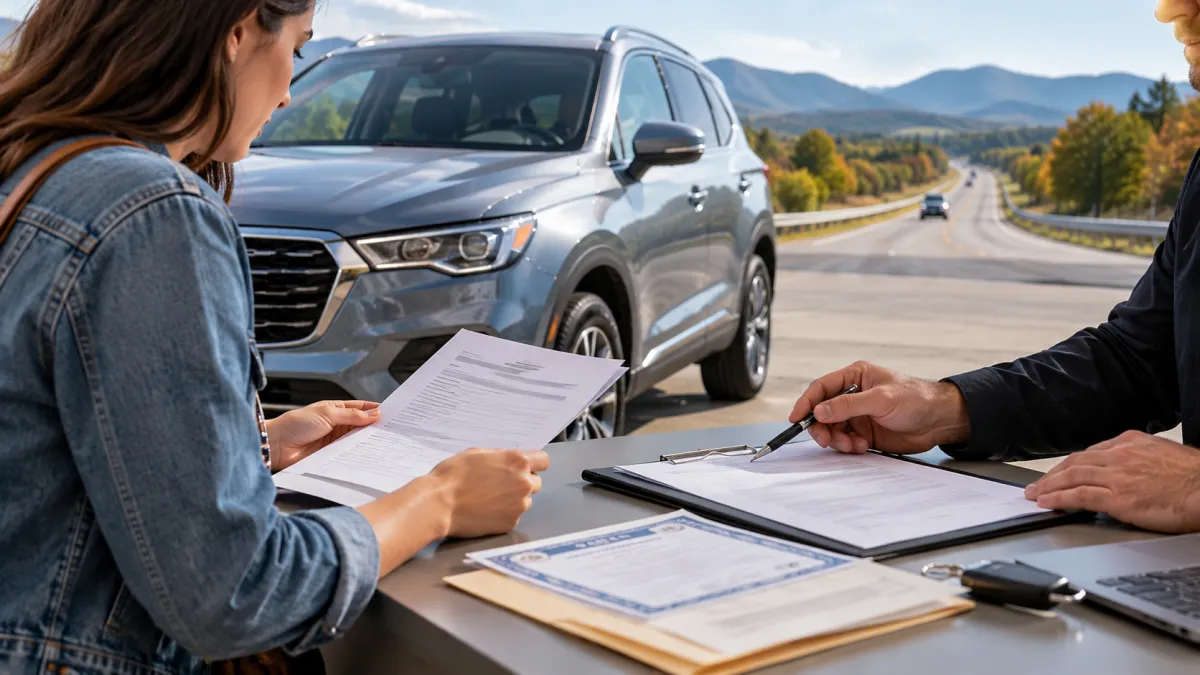
Buying a car from another state can give you access to more inventory, different prices, or a specific vehicle you cannot find locally. But the purchase does not end when you sign the paperwork and receive the keys.
The state where you buy the vehicle and the state where you will title and register it may have different rules for taxes, temporary operating authority, inspections, emissions requirements, title documents, and registration deadlines.
The safest approach is to treat an out-of-state purchase as a transaction with two locations: where you buy the vehicle and where you will ultimately register it. Before paying, confirm the requirements of your destination state, understand who is collecting taxes, verify the title and vehicle history, and decide how you will legally get the vehicle home.
Can You Buy a Car in Another State?
Yes. U.S. consumers can purchase vehicles outside their home state, including from an out-of-state dealership or private seller.
The important question is not whether you can buy the vehicle. It is whether you can complete the transaction in a way that satisfies the requirements of the state where you will title and register it.
An out-of-state purchase can involve several separate steps:
- Find and verify the vehicle.
- Confirm where the vehicle will be titled and registered.
- Check the destination state's tax requirements.
- Determine which taxes the seller or dealer will collect.
- Verify the title and purchase documents.
- Determine whether you need temporary operating authorization.
- Arrange insurance.
- Decide whether to drive or ship the vehicle home.
- Complete any required inspection or emissions testing.
- Apply for title and registration in your home state.
The exact process varies by state, so there is no single nationwide checklist that applies identically to every transaction.
What Changes When You Buy a Car Out of State?
A local purchase is usually straightforward because the seller, vehicle, tax rules, title process, and registration requirements are all relatively familiar.
With an out-of-state purchase, you have to coordinate requirements across state lines.
| Part of the purchase | What you need to determine |
|---|---|
| Taxes | Which state collects sales or use tax and how taxes already paid are treated |
| Title | What title documents you need to take ownership |
| Registration | Where and when you must register the vehicle |
| Temporary operation | Whether you need temporary registration or another authorization to drive it |
| Inspection | Whether your destination state requires VIN, safety, emissions, or other inspections |
| Insurance | When coverage must begin and what is required before driving |
| Transportation | Whether you can legally drive the vehicle home or should ship it |
| Documents | Which purchase, title, tax, and identification documents must be retained |
These requirements are not necessarily determined by the state where you purchased the car. Your destination state's rules can be particularly important because that is where the vehicle will ultimately be titled and registered.
Before You Buy: What to Verify
The biggest mistake with an out-of-state purchase is treating the vehicle price as the entire transaction.
Before sending a deposit or signing a purchase agreement, verify the vehicle and the paperwork at the same time.
Confirm Where the Vehicle Will Be Titled and Registered
Start with your destination state.
Check the official motor-vehicle agency for the state where you live and determine what it requires for an out-of-state vehicle purchase.
Look for information about:
- Title applications
- Registration
- Required documents
- VIN verification
- Safety inspections
- Emissions testing
- Sales or use tax
- Temporary operating authority
- Insurance requirements
- Registration deadlines
Do this before completing the purchase rather than after the vehicle is already sitting in your driveway.
State requirements can differ substantially. For example, Delaware requires VIN verification for certain out-of-state purchases and has inspection requirements for other vehicles before a Delaware title can be issued.
That does not mean another state has the same requirement. It illustrates why the destination state's rules need to be checked for the specific vehicle and transaction.
Ask Who Will Collect the Taxes
Do not assume that the dealer will automatically handle every tax obligation.
Ask the seller or dealer:
- What taxes will be collected at purchase?
- What taxes or fees are being paid to the selling state?
- Will the vehicle be delivered to you in another state?
- What documentation will show taxes already paid?
- What will you need to provide when titling the vehicle at home?
Tax treatment is state-specific and can depend on how and where the vehicle is delivered.
For example, Illinois provides a specific process for Illinois residents who purchase certain vehicles from an out-of-state dealer and title them in Illinois. The Illinois Department of Revenue uses Form RUT-25 for applicable transactions.
Michigan provides another example of why delivery details matter. Its current guidance distinguishes between vehicles received in Michigan and vehicles delivered outside Michigan, with different sales-tax treatment depending on the circumstances.
These are state examples, not a nationwide rule. The correct tax answer depends on the states involved and the circumstances of your purchase.
Check Inspection and Emissions Requirements
A vehicle that can be legally sold in one state may still have additional requirements when you register it in another.
Your destination state may require:
- VIN verification
- Safety inspection
- Emissions testing
- Title inspection
- Other registration-related checks
California, for example, has specific requirements for vehicles registered in the state, including requirements affecting out-of-state vehicles.
Do not assume that passing an inspection in the selling state automatically satisfies your home state's requirements.
Confirm the Title Documents
Title problems can turn an attractive vehicle deal into a long administrative problem.
Before paying, determine:
- Who currently holds the title
- Whether the seller has the title
- Whether the title is properly assigned
- Whether there is a lien
- Whether the vehicle has a branded title
- What documents the seller will provide
- Whether your destination state has additional title requirements
If you are buying from a private seller, be especially careful about ownership documentation. A bill of sale alone may not be enough to establish everything your destination state requires for titling.
For a dealer purchase, ask exactly which documents the dealership will provide and which documents you will have to submit yourself.
Check the Vehicle Before Sending Money
The administrative side of an out-of-state purchase is only half the problem. You also need to make sure the vehicle itself is worth buying.
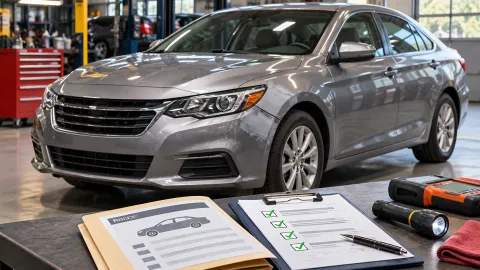
The Federal Trade Commission recommends getting a vehicle history report and having a used vehicle independently inspected by a mechanic. The FTC specifically notes that a vehicle-history report is not a substitute for an independent mechanical inspection.
Review the Vehicle History
A vehicle-history report can help identify issues such as:
- Previous title history
- Reported odometer information
- Salvage or other title brands
- Theft-related information
- Other reported events
The National Motor Vehicle Title Information System, or NMVTIS, provides consumers with vehicle-history information through approved providers. Its information includes title and brand history and other data, although it is not a complete record of every aspect of a vehicle's condition.
Use a history report as one part of the evaluation rather than treating it as proof that the vehicle is mechanically sound.
Arrange an Independent Inspection
If you are traveling several hours to another state to buy a vehicle, it can be tempting to skip an inspection.
That can be expensive.
An independent mechanical inspection can identify problems that photographs, a seller's description, or a history report may not reveal.
This is particularly important when buying from a private seller or purchasing a used vehicle sight unseen.
If an inspection reveals a major problem, you can reconsider the purchase before committing to the cost and effort of transporting the vehicle home.
Dealer vs. Private Seller
The basic out-of-state process can be different depending on who sells you the vehicle.
| Factor | Out-of-state dealer | Private seller |
|---|---|---|
| Paperwork | Dealer may handle some transaction documents | Buyer generally has more responsibility |
| Tax collection | Dealer may collect applicable taxes | Buyer may need to handle tax obligations |
| Title | Dealer should explain title process and provide required documents | Buyer must carefully verify ownership and title |
| Temporary operation | Ask what temporary authorization is available | Requirements may need to be arranged separately |
| Vehicle inspection | Still worth getting an independent inspection for a used vehicle | Independent inspection is especially important |
| Transportation | Dealer may offer delivery or other options | Buyer generally arranges transportation directly |
| Risk | More structured transaction, but requirements still need verification | Greater need to verify seller, title, payment, and paperwork |
Neither option is automatically better.
A dealer may make some administrative parts easier, but that does not mean you should assume the dealer has handled every requirement in your home state.
With a private seller, you may have more responsibility for verifying the title, arranging payment, obtaining required temporary authorization, and completing the registration process.
How Taxes Work on an Out-of-State Car Purchase
Taxes are one of the areas where buyers most often make assumptions.
There is no universal rule that says every out-of-state vehicle purchase is taxed in exactly the same way.
The applicable treatment can depend on:
- The state where you buy the vehicle
- The state where you will register it
- Where the vehicle is delivered
- Whether you buy from a dealer or private seller
- Taxes already collected
- State-specific rules and exemptions
The safest approach is to verify the tax treatment with the appropriate state tax or revenue agency before completing the purchase.
When the Dealer Collects Tax
A dealer may collect applicable taxes as part of the transaction.
If that happens, keep the documentation showing what was collected.
Do not rely only on a verbal statement that "the taxes are taken care of." Your home state's title or registration process may require documentation showing what was paid.
When You Pay Tax at Home
In some transactions, the buyer may have to report or pay applicable tax when the vehicle is titled or registered in the destination state.
The exact process varies by state.
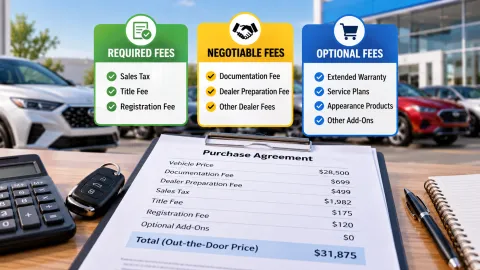
This is why the purchase price alone does not tell you the final cost of an out-of-state vehicle. You should calculate the vehicle price together with applicable taxes, title and registration costs, transportation, inspection requirements, and other transaction expenses.
Keep Proof of Tax Paid
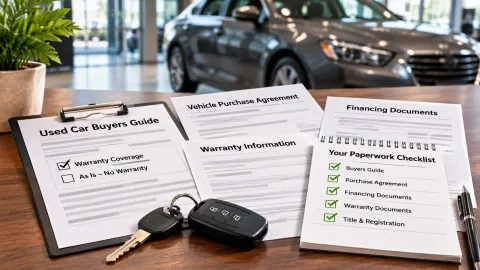
Keep copies of:
- Purchase agreement
- Bill of sale
- Dealer invoice
- Receipts for taxes paid
- Title documents
- Temporary operating documents
- Shipping records, if applicable
Good documentation can make the title and registration process easier and can help demonstrate what happened during the transaction.
How to Get the Car Home Legally
Once the purchase is complete, you still have to move the vehicle from the selling state to your home.
There are two basic options: drive it or ship it.
Option 1: Drive the Vehicle Home
Before driving away, confirm that you have the documents and authorization required for the trip.
Depending on the circumstances, you may need:
- Proof of ownership or purchase
- Required temporary registration or operating authorization
- Insurance
- Valid identification
- Other documents required by the states involved
Temporary registration and operating rules are not uniform across the country. Do not rely on a generic statement about how long temporary tags are valid.
Instead, verify the specific authorization available for your transaction and whether it allows you to travel from the selling state to your destination.
Option 2: Ship the Vehicle
Shipping can make sense when:
- The vehicle is far away
- You cannot obtain appropriate temporary operating authorization
- The vehicle is not ready for a long trip
- You do not want to drive it yourself
- The purchase involves complicated transportation logistics
Before arranging shipment, confirm when ownership transfers, who is responsible for the vehicle during transportation, and what documentation you will receive.
Shipping also changes the delivery circumstances of the transaction, which can matter for tax treatment in some states. Michigan's current guidance illustrates how the location where a vehicle is received can affect sales-tax treatment.
Title and Registration After You Get Home
Getting the vehicle home is not the final step.
You still need to complete the title and registration process in the state where the vehicle will be registered.
Your state may require some combination of:
- Original title
- Bill of sale or purchase agreement
- Application for title
- Proof of insurance
- Identification
- Odometer information
- Tax documentation
- VIN verification
- Safety inspection
- Emissions testing
- Registration fees
The exact list depends on your state and the vehicle.
Registration Deadlines Are State-Specific
There is no single nationwide deadline for registering an out-of-state vehicle.
Your destination state sets its own requirements.
For example, California provides different timing rules depending on the circumstances of the vehicle and the person's residency status. California DMV guidance includes a 20-day period for certain out-of-state vehicles after becoming a resident or obtaining employment in the state.
That should not be treated as a national 20-day rule.
Before buying, find your state's official deadline and make a plan to complete the process within that period.
What If the Vehicle Does Not Meet Your State's Requirements?
This is an important question to answer before buying.
A vehicle can be attractive because it is cheaper or more available in another state, but the savings may disappear if your destination state requires additional work before registration.
Potential issues can include:
- Emissions requirements
- VIN verification
- Safety inspection
- Title problems
- Missing paperwork
- Vehicle modifications
- Registration restrictions
California is one example where out-of-state vehicles can face state-specific requirements that need to be considered before purchase.
If you discover that the vehicle may not qualify for registration in your state, do not assume that the problem can be fixed cheaply or easily. Confirm the requirement with the relevant state agency and understand what would be required before completing the purchase.
Is Buying a Car Out of State Worth It?
It can be, but the right comparison is not simply:
Out-of-state price vs. local price
Instead, compare the total transaction.
Consider:
- Vehicle purchase price
- Applicable taxes
- Title and registration costs
- Dealer or transaction fees
- Inspection costs
- Travel expenses
- Temporary operating authorization
- Shipping costs
- Insurance
- Repairs or modifications required for your state
- Time required to complete the transaction
An out-of-state vehicle can still be a good purchase when the vehicle is difficult to find locally or the overall savings justify the additional work.
But a small difference in advertised price may not be meaningful once transportation, taxes, inspections, and administrative costs are included.
A Practical Out-of-State Car Buying Workflow
The easiest way to avoid surprises is to handle the transaction in an order that exposes problems before you commit your money.
Step 1: Find the Vehicle
Compare the vehicle's actual purchase price with similar vehicles available closer to home.
Do not compare advertised prices alone.
Step 2: Verify the Vehicle
Check the VIN, vehicle history, title status, mileage information, condition, and seller information.
For a used vehicle, consider an independent mechanical inspection.
Step 3: Check Your State's Requirements
Before paying, review your destination state's official requirements for:
- Title
- Registration
- Taxes
- Inspections
- Emissions
- VIN verification
- Temporary operation
Step 4: Confirm Tax Treatment
Ask both the seller and the appropriate state tax agency how taxes will be handled.
Get the answer in writing when possible.
Step 5: Confirm the Paperwork
Know exactly what you will receive when the transaction is completed.
Do not leave the selling state assuming you can obtain missing documents later without difficulty.
Step 6: Plan How the Vehicle Will Get Home
Decide whether you will drive or ship it.
If driving, confirm insurance and legal operating authorization before leaving.
Step 7: Complete the Home-State Process
Once the vehicle arrives, complete the required title, tax, inspection, and registration steps within your state's applicable deadlines.
This workflow reduces the risk of discovering a tax, title, or registration problem after the purchase has already been completed.
Common Mistakes to Avoid
Focusing Only on the Vehicle Price
A lower sticker price does not automatically mean a lower total cost.
Calculate the entire transaction before deciding.
Assuming the Seller Handles Everything
A dealer may handle some paperwork, but your destination state can still have requirements that you must satisfy yourself.
Assuming You Can Drive Home Without Checking
Having the keys and a bill of sale does not automatically answer whether you can legally operate the vehicle on the trip home.
Confirm the required temporary authorization and insurance first.
Skipping the Vehicle Inspection
A clean history report does not guarantee good mechanical condition. The FTC recommends an independent inspection for used vehicles.
Ignoring the Title
Do not treat the title as paperwork you can sort out later.
A problem with ownership, liens, title brands, or missing documents can delay registration or create a much larger problem.
Assuming Another State's Rules Apply at Home
A vehicle may meet the requirements of the state where you bought it but still face additional requirements in your destination state.
Waiting Until the Vehicle Arrives to Check Requirements
This is one of the easiest mistakes to prevent.
Your destination state's rules should be part of the buying decision, not an afterthought.
Use Official State Resources Before You Pay
Because state requirements vary, the most useful resources are the official agencies responsible for your transaction.
Start with your destination state's motor-vehicle agency. Use it to verify title, registration, inspection, VIN, emissions, and temporary-operation requirements.
Then check your destination state's tax or revenue agency for sales and use tax rules.
For used vehicles, the FTC's consumer guidance is useful for understanding vehicle history reports, Buyers Guides, and independent inspections. The FTC's Used Car Rule also requires most covered dealers to display a Buyers Guide on used vehicles offered for sale, subject to specific state-law exceptions such as Maine and Wisconsin.
NMVTIS can also provide useful title and vehicle-history information through approved consumer-report providers. However, it should be treated as a source of vehicle-history information rather than a replacement for a physical inspection.
The key is to use these resources for their specific purposes instead of relying on a general internet checklist.
Conclusion
Buying a car out of state can work well, but it requires more planning than a typical local purchase. The important issues are not limited to finding the right vehicle and negotiating the price.
Before paying, verify the vehicle's history and condition, confirm the title documents, determine how taxes will be handled, check your destination state's inspection and registration requirements, and establish how you will legally get the vehicle home.
Most importantly, treat your home state's rules as part of the purchase decision. Tax treatment, temporary operating authority, inspections, emissions requirements, title procedures, and registration deadlines can vary by state and by transaction.
A few minutes spent checking those requirements before buying can help prevent a much more expensive problem after the vehicle is already yours.
Frequently asked questions
Can I buy a car in one state and register it in another?
Yes. You can generally purchase a vehicle in one state and title and register it in another, but the destination state's requirements determine the paperwork, taxes, inspections, and registration process. Check your state's motor-vehicle agency before completing the purchase.
Do you have to pay sales tax twice when buying a car out of state?
Not necessarily. Tax treatment is state-specific and can depend on the states involved, how the vehicle is delivered, and taxes already paid. Do not assume that purchasing in another state means you automatically pay tax twice. Check the destination state's tax agency and the seller's state rules before paying.
How do you get temporary tags for a car bought out of state?
Temporary registration or operating authority varies by state and by transaction. Ask the seller or dealer what temporary authorization is available and confirm the requirements with the relevant state motor-vehicle agency before leaving with the vehicle.
Can I drive an out-of-state car home after buying it?
You may be able to drive it home if you have the required title or purchase documents, insurance, and valid temporary or other operating authorization. The rules depend on the states involved. If you cannot establish legal temporary operation, arrange transportation instead of driving the vehicle without proper authorization.
Is it better to buy an out-of-state car from a dealer or a private seller?
Neither is automatically better. A dealer may be able to handle more of the transaction paperwork and tax collection, while a private-party purchase can require you to manage more of the title, tax, temporary-operation, and transportation steps yourself. Compare the total transaction requirements and costs before deciding.
Does an out-of-state car need an inspection before I can register it?
It depends on the destination state and the vehicle. Some states require inspections, VIN verification, emissions testing, or other checks, while others may have exemptions. Confirm the requirements with your state's motor-vehicle agency before buying.
What should I check before buying a car from an out-of-state seller?
Verify the vehicle identification number, title status, vehicle history, odometer information, seller identity, purchase documents, and the vehicle's condition. Consider an independent mechanical inspection, because a vehicle-history report does not replace an inspection. Also confirm your state's title, registration, tax, inspection, and emissions requirements before sending money.
How long do you have to register a car bought out of state?
1. There is no single nationwide deadline. Registration and title deadlines are set by the applicable state, so confirm the deadline with the state where you will register the vehicle.

Olivia Bennett writes practical automotive content covering car buying, ownership costs, maintenance, vehicle features, reliability, and everyday driving decisions. Her work focuses on helping readers understand automoti...