What Happens After a Car Accident When You File an Insurance Claim?
Learn what happens after you file a car insurance claim, including the adjuster’s investigation, damage inspection, repairs or total loss, claim timelines, deductibles, settlements, and what to do if a claim is delayed or denied.
In this article
- What Happens After You File a Car Insurance Claim?
- Before and When You File the Claim
- Step 1: The Insurance Company Receives and Reviews Your Claim
- Step 2: An Insurance Adjuster Investigates the Claim
- Why the Investigation Can Take Time
- Step 3: The Insurance Company Reviews Coverage and Liability
- First-Party vs. Third-Party Car Insurance Claims
- Step 4: Your Vehicle Is Inspected and Damage Is Estimated
- Can You Choose Your Own Repair Shop?
- Step 5: The Claim Moves Toward a Repair or Total-Loss Decision
- If the Car Can Be Repaired
- If the Car Is Declared a Total Loss
- What Happens to Your Deductible?
- How Long Does a Car Insurance Claim Take?
- What You Should Do While the Claim Is Being Investigated
- Keep a Claim File
- Respond to Reasonable Requests
- Keep Track of Conversations
- Ask for Explanations in Writing When Necessary
- What If the Claim Is Delayed?
- What If the Insurance Company Denies the Claim?
- What If You Disagree With the Settlement?
- Can Filing a Claim Affect Future Insurance Costs?
- How State Insurance Rules Can Change the Process
- Common Mistakes to Avoid After Filing a Claim
- Assuming the First Estimate Is Always Final
- Ignoring Written Communications
- Guessing About Accident Details
- Accepting a Settlement Without Understanding It
- Assuming Every State Uses the Same Rules
- Losing Track of the Claim
- A Practical Way to Manage Your Claim From Start to Finish
- Conclusion
After a car accident, filing an insurance claim is only the beginning. Once the claim is reported, the insurance company generally reviews the claim, investigates what happened, assesses vehicle damage, determines what coverage and liability apply, and then moves toward repair, payment, or a total-loss settlement.
The exact process depends on the circumstances of the accident, your insurance policy, the state where the accident occurred, whether you are using your own insurer or the other driver's insurer, and whether there is a disagreement about fault or coverage.
There is also no single nationwide timeline that applies to every car insurance claim. A straightforward claim with clear documentation may move relatively quickly, while a claim involving disputed fault, extensive damage, multiple vehicles, injuries, or coverage questions can take longer.
Here is what you can generally expect after filing a car insurance claim.
What Happens After You File a Car Insurance Claim?
The post-filing process usually follows this general path:
| Stage | What the insurance company may do | What you should do |
|---|---|---|
| Claim received | Opens and assigns the claim | Confirm the claim number and contact information |
| Initial review | Reviews the accident, policy, and available information | Provide requested documents and evidence |
| Investigation | Contacts drivers, witnesses, and other parties as needed | Keep records and respond accurately |
| Damage assessment | Inspects the vehicle and estimates repairs | Provide photos, estimates, and relevant receipts |
| Coverage and liability review | Determines what the policy may cover and who may be responsible | Review the decision and ask questions if unclear |
| Repair or total loss | Authorizes or evaluates repairs or determines whether the vehicle is a total loss | Review the repair plan or settlement information |
| Payment or settlement | Pays covered amounts or makes a settlement offer | Check the payment or settlement against the available information |
| Disagreement or delay | May conduct additional review | Request explanations, preserve records, and escalate when appropriate |
The table describes a general process, not a legally required sequence for every claim. State laws, policy language, and the facts of the accident can change how a particular claim is handled.
Before and When You File the Claim
The insurance claim process is easier when you have already documented the accident.
Depending on the circumstances, useful information can include photographs or videos of the vehicles and accident scene, the other driver's information, witness information, a police report when one was made, and records related to vehicle damage.
You should also notify your own insurer as required by your policy or applicable state rules, even if you believe the other driver caused the accident. Whether you ultimately make a first-party claim under your own policy, a third-party claim against the other driver's insurer, or both depends on the circumstances and state law.
If you have already filed the claim, keep the claim number and the name and contact information for the person handling it. Keeping a simple record of calls, emails, documents submitted, inspections, estimates, and decisions can be valuable if the claim becomes delayed or disputed.
Step 1: The Insurance Company Receives and Reviews Your Claim
Once you report the accident, the insurer opens a claim and begins gathering information.
The initial review may involve basic questions such as:
-
When and where did the accident occur?
-
Which vehicles and people were involved?
-
What damage was reported?
-
Was a police report made?
-
Who appears to have been involved or potentially responsible?
-
What insurance policy or coverage may apply?
-
Are there photographs, witness information, estimates, or other documents available?
The insurer may assign a claims representative or adjuster to the case. The exact terminology and responsibilities can vary between insurance companies.
At this point, it is useful to make sure the insurer has your correct contact information and that you understand how to provide additional documents or photographs.
Do not assume that submitting the initial claim means every issue has already been resolved. The insurer may need additional information before it can determine coverage, liability, or the amount payable.
Step 2: An Insurance Adjuster Investigates the Claim
One of the most important parts of the process is the claim investigation.
An insurance adjuster generally investigates the circumstances of the loss, reviews relevant information and coverage, assesses vehicle damage, and helps determine the amount the insurer may pay under the applicable policy. An adjuster is not simply someone who approves or rejects a claim on the spot.
The investigation may include reviewing:
-
Your description of the accident
-
Statements or information from other drivers
-
Witness information
-
Police reports when available
-
Photographs or videos
-
Vehicle damage
-
Repair estimates
-
Relevant policy provisions
-
Information from other insurance companies
-
Other documentation related to the claim
You may be asked to provide a statement about what happened. Answer questions accurately and avoid guessing about facts you do not know.
For example, if you are unsure about the exact speed of another vehicle, it is better to say that you do not know than to provide an unsupported estimate.
The adjuster may also contact the other driver, witnesses, repair facilities, or other parties when additional information is necessary.
Why the Investigation Can Take Time
A claim can take longer when important facts are unclear.
For example, an accident involving two drivers on a straightforward road may be easier to investigate than a collision involving several vehicles, conflicting accounts, unclear responsibility, extensive damage, or questions about whether a particular loss is covered.
The more information an insurer needs to establish what happened and what the policy covers, the longer the process may take.
Step 3: The Insurance Company Reviews Coverage and Liability
The insurer must determine whether the relevant insurance coverage applies to the loss and, depending on the claim, how responsibility for the accident should be handled.
These are related but different questions.
Coverage asks whether the applicable insurance policy provides protection for the particular loss.
Liability concerns responsibility for the accident or damage.
For example, if you have collision coverage and damage your vehicle in an accident, your own policy may provide a way to handle covered vehicle damage subject to its terms and deductible. If another driver is responsible, you may instead pursue a claim against that driver's liability coverage, depending on state law and the circumstances.
Your state's insurance system also matters. The United States does not have one identical auto insurance system in every state. Fault-based and no-fault systems can affect how certain accident-related claims are handled.
This is one reason a general online explanation cannot replace the actual terms of your policy or applicable state requirements.
First-Party vs. Third-Party Car Insurance Claims
The difference between first-party and third-party claims is important after an accident.
A first-party claim is generally made under your own insurance policy. For example, you may use your collision coverage to address damage to your vehicle when your policy provides that coverage.
A third-party claim is generally made against another person's insurance when that person may be responsible for the loss.
The process can differ depending on which insurer is handling the claim.
With a first-party claim, the insurer is evaluating a claim under your own policy. With a third-party claim, the other driver's insurer is evaluating a claim involving its policyholder's potential liability.
State law can also affect the process, particularly in states with different approaches to determining responsibility for accident-related losses.
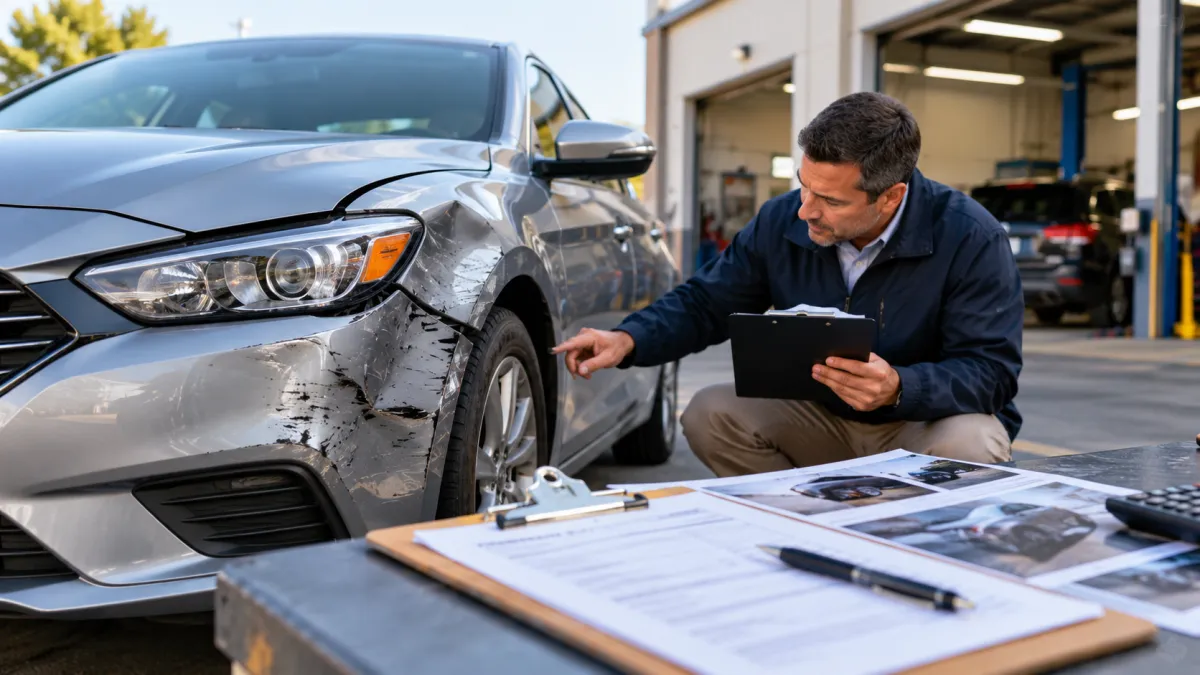
Step 4: Your Vehicle Is Inspected and Damage Is Estimated
After the initial investigation, the insurer needs to understand the extent of the vehicle damage.
An inspection may be performed in person, through photographs, at a repair facility, or through another method used by the insurer. The exact process varies.
The damage assessment is used to develop or review a repair estimate.
The initial estimate may not always identify every issue immediately. Some damage may not become apparent until the vehicle is disassembled during repairs. In those circumstances, additional damage may need to be evaluated.
Keep copies of estimates, photographs, receipts, and other relevant records.
Can You Choose Your Own Repair Shop?
Do not automatically assume that you must use the repair shop recommended by the insurance company.
Repair-shop rules and practices can vary by state, policy, insurer, and claim circumstances. An insurer may recommend a network or preferred repair facility, but whether you can choose another shop and how the insurer handles the estimate can depend on the circumstances.
Before authorizing repairs, understand:
-
Who is performing the inspection
-
What repair estimate is being used
-
Whether additional damage can be submitted for review
-
What portion of the repair cost you may have to pay
-
Whether your policy contains relevant requirements
-
What your state allows regarding repair-shop choice
Getting this information early can reduce confusion later.
Step 5: The Claim Moves Toward a Repair or Total-Loss Decision
Once the damage has been evaluated, the vehicle generally follows one of two broad paths: repair or total loss.
If the Car Can Be Repaired
If the vehicle is repairable under the insurer's evaluation, the claim may move toward the repair process.
The repair facility performs the necessary work, and additional damage discovered during the repair may require another review or supplemental estimate.
Your deductible may also matter.
For example, suppose your covered vehicle damage is handled under collision coverage and your policy has a deductible. The insurer may pay the covered amount above the applicable deductible, subject to the policy's terms.
This is why knowing how much car insurance coverage you need can help you understand the coverage and deductible choices that affect you before an accident occurs. how much car insurance coverage you need
If the Car Is Declared a Total Loss
A vehicle may be treated as a total loss when repairing it is not considered economically or otherwise appropriate under the applicable state rules and insurer's evaluation.
A total-loss claim is different from a normal repair claim because the insurer generally moves from estimating repair costs to determining the vehicle's value and the appropriate settlement.
The amount offered can depend on factors such as the vehicle's condition and market value, the applicable coverage, and policy and state requirements.
If you disagree with the valuation, do not assume you have to accept it without understanding how it was calculated. Ask the insurer to explain the valuation and provide relevant supporting information. Comparable vehicles and other documentation may be useful when disputing a valuation, depending on the circumstances.
Some policies also contain appraisal or other dispute provisions that may apply.
What Happens to Your Deductible?
A deductible is the amount you are generally responsible for paying before your insurer pays covered losses under a policy provision that includes a deductible.
Whether a deductible applies depends on the type of claim and the coverage being used.
For example, if you make a covered collision claim under your own policy, your collision deductible may apply. A third-party liability claim against the other driver's insurer can work differently because you are not making a claim under your own collision coverage.
The exact outcome depends on the circumstances, applicable coverage, and state rules.
If you are unsure whether a deductible applies, ask the insurer to explain which coverage is being used and how the deductible was calculated.
How Long Does a Car Insurance Claim Take?
There is no single nationwide timeline for every car insurance claim.
A straightforward claim with clear accident facts, accessible documentation, limited vehicle damage, and no major disagreement may move faster than a complicated claim.
Factors that can affect the timeline include:
-
Severity of vehicle damage
-
Number of vehicles involved
-
Whether fault is disputed
-
Whether coverage is disputed
-
Availability of witnesses or documentation
-
Whether a police report is needed
-
How quickly the vehicle can be inspected
-
Repair-shop scheduling
-
Discovery of additional damage
-
Total-loss valuation disputes
-
Communication between insurers and involved parties
-
State-specific claim-handling requirements
Some states establish specific requirements for acknowledging, investigating, deciding, or paying certain claims. Those requirements are not automatically nationwide rules.
For example, Texas has specific claim-handling deadlines that can apply to auto insurance claims, while California has its own fair-claims handling requirements. These state examples illustrate why you should check the rules that apply where your claim occurred rather than relying on a single national number.
An insurer's own estimated processing time also should not be confused with a nationwide legal deadline.
What You Should Do While the Claim Is Being Investigated
Your role does not end after filing the claim.
A few simple habits can make the process easier to follow.
Keep a Claim File
Save:
-
Claim numbers
-
Adjuster or claims representative contact information
-
Emails and letters
-
Photos and videos
-
Police-report information
-
Repair estimates
-
Receipts
-
Rental-car documentation when applicable
-
Settlement offers
-
Written explanations of decisions
A chronological record can be particularly useful if the claim later becomes disputed.
Respond to Reasonable Requests
If the insurer requests information that is relevant to the claim, provide it as accurately and promptly as you reasonably can.
If you do not understand a request, ask what information is needed rather than guessing.
Keep Track of Conversations
Write down the date of important calls, who you spoke with, and what was discussed.
You do not need a complicated system. A simple notes document or spreadsheet can be enough.
Ask for Explanations in Writing When Necessary
If the insurer makes a decision you do not understand, ask for an explanation and supporting information in writing when appropriate.
Written communication can make it easier to understand what the insurer decided and why.
What If the Claim Is Delayed?
A delay does not necessarily mean the insurer is acting improperly. Some claims genuinely require additional investigation.
For example, a delay may occur because the insurer is waiting for information, the vehicle needs another inspection, additional damage has been discovered, fault remains disputed, or a total-loss valuation needs further review.
If a claim appears to be stalled, start by contacting the adjuster or insurer and asking:
-
What information is still needed?
-
What part of the claim is currently under review?
-
What has already been completed?
-
What is preventing the next step?
-
What should you provide, if anything?
Keep a record of the response.
If the insurer does not adequately address the issue, you can review your policy's complaint or dispute procedures and the consumer resources available through your state insurance department.
What If the Insurance Company Denies the Claim?
A denial is not necessarily the end of the process.
First, find out why the insurer denied the claim. Ask for the explanation in writing when appropriate and review the policy language that the insurer says supports the decision.
Then compare the decision with the information you provided.
Depending on the circumstances, you may be able to provide additional evidence or ask the insurer to reconsider its decision. Relevant evidence could include photographs, repair documentation, accident records, witness information, or other information that addresses the reason for the denial.
If the dispute remains unresolved, review your policy for applicable dispute or appraisal provisions and consider contacting your state's insurance department for consumer assistance.
A state insurance department is not your personal attorney or claims representative, but it may be able to help consumers understand complaint procedures and address certain concerns about an insurer's handling of a claim.
What If You Disagree With the Settlement?
Disagreement can occur even when an insurer agrees that a claim is covered.
For example, you may believe a vehicle's total-loss value is too low, disagree with the amount of damage included in a repair estimate, or believe additional information should be considered.
Start by asking the insurer how the amount was calculated.
Then gather documentation that supports your position. For a vehicle valuation dispute, that might include information about comparable vehicles or the condition and features of your vehicle, depending on the circumstances.
If the policy contains an appraisal or other dispute process, review how it works before taking the next step.
The escalation path should generally be organized rather than confrontational:
Contact the insurer or adjuster → ask for an explanation → request supporting information in writing when appropriate → provide relevant evidence → review applicable policy dispute provisions → contact your state insurance department if the issue remains unresolved.
The appropriate process can vary by state and policy, so do not assume that one dispute procedure applies to every claim.
Can Filing a Claim Affect Future Insurance Costs?
A claim can affect future premiums or renewal decisions, but filing a claim does not automatically mean your insurance rate will increase in every situation.
The potential effect can depend on factors such as the type and circumstances of the claim, claim history, insurer practices, and state rules.
That is one reason the decision to file a claim should not be based solely on the possibility of a premium increase. Consider the actual damage, applicable coverage, policy requirements, and financial consequences of handling the loss yourself.
If the claim process results in higher future insurance costs, reviewing legitimate ways to lower your car insurance without sacrificing important protection may become useful. ways to lower your car insurance
How State Insurance Rules Can Change the Process
Auto insurance is regulated at the state level, so the rules surrounding claims are not identical across the United States.
State differences can affect areas such as:
-
Fault and no-fault systems
-
Claim-handling requirements
-
Repair-shop practices
-
Total-loss rules
-
Complaint procedures
-
Deadlines for certain insurer actions
-
Requirements concerning claim communications
-
Dispute and appraisal procedures
Texas and California provide useful examples of why this matters.
Texas has specific requirements concerning how insurers acknowledge and process certain claims, including deadlines that can apply after the insurer receives necessary information. Texas also provides consumer guidance concerning vehicle damage, total losses, and claim disputes.
California has its own fair-claims handling requirements, including rules governing insurer communications and claim decisions in specified circumstances.
These examples should not be treated as rules for every state. If a claim becomes disputed or delayed, use the insurance department for the state involved to find the applicable consumer guidance.
The National Association of Insurance Commissioners maintains a directory that can help consumers locate their state insurance department.
Common Mistakes to Avoid After Filing a Claim
A few mistakes can make an already stressful claim more difficult to manage.
Assuming the First Estimate Is Always Final
Vehicle damage can become clearer after an inspection or during repairs. If additional damage is discovered, ask how it should be documented and submitted for review.
Ignoring Written Communications
Important claim decisions may be communicated through letters, emails, or other documentation. Keep copies and read them carefully.
Guessing About Accident Details
If you do not remember something, say so. Avoid inventing details simply because you think an exact answer is expected.
Accepting a Settlement Without Understanding It
Before agreeing to a settlement, understand what the payment represents, what damage or losses it includes, and whether any applicable policy provisions affect the amount.
Assuming Every State Uses the Same Rules
A process that applies in Texas may not be identical to one in California or another state. State law matters.
Losing Track of the Claim
Once a claim is filed, it can be tempting to wait for the insurer to contact you. If you have not heard anything within the timeframe you were given, follow up and document the communication.
A Practical Way to Manage Your Claim From Start to Finish
The easiest way to think about a car insurance claim is as a series of checkpoints rather than one single event.
First, confirm that the claim was opened. Keep the claim number and contact information for the person handling it.
Second, provide accurate evidence. Submit relevant photographs, reports, estimates, receipts, and other requested information.
Third, understand the investigation. Know whether the insurer is still determining facts, coverage, liability, or vehicle damage.
Fourth, review the vehicle assessment. If repairs are proposed, understand the estimate. If the vehicle is considered a total loss, understand how the valuation was reached.
Fifth, track payments and deductibles. Make sure you understand which coverage is being used and what portion, if any, you are responsible for.
Sixth, address problems promptly. If the claim is delayed, denied, or undervalued, ask for a clear explanation and supporting information.
Finally, escalate when necessary. If you cannot resolve the issue with the insurer, review your policy's dispute provisions and consider contacting your state insurance department.
This approach helps turn a confusing process into a sequence of decisions and documented steps.
Conclusion
After you file a car insurance claim, the insurer generally moves through several stages: reviewing the claim, investigating the accident, assessing coverage and liability, inspecting vehicle damage, determining whether the vehicle will be repaired or treated as a total loss, and eventually handling payment or settlement.
The process is not identical for every driver. The type of claim, your policy, the accident circumstances, the insurer, and the laws of the state where the claim is handled can all affect what happens next.
Your most useful role is to stay organized. Keep your claim information, preserve accident and repair documentation, respond accurately to requests, understand how your vehicle damage is being evaluated, and ask for explanations when a decision is unclear.
If the claim is delayed, denied, or valued differently from what you expected, do not simply guess at the next step. Start with the insurer, request clarification and supporting information, review the policy's applicable dispute procedures, and use your state insurance department's consumer resources when the issue remains unresolved.
Frequently asked questions
How long does a car insurance claim take?
There is no single nationwide timeline for every car insurance claim. The time can depend on the insurer, state requirements, claim complexity, available documentation, vehicle damage, and whether fault or coverage is disputed. Straightforward claims may move faster than complicated claims.
What does an insurance adjuster do after a car accident?
An insurance adjuster investigates the claim, reviews relevant information and coverage, assesses vehicle damage, and helps determine the amount the insurer may pay under the policy. The exact process can vary by insurer and claim.
Can I choose my own repair shop after an insurance claim?
Repair-shop rules can vary by state, policy, and claim circumstances. Do not assume that an insurer’s preferred repair shop is always mandatory. Check the applicable state rules and your policy before choosing a shop.
What happens if the insurance company denies my car insurance claim?
Ask the insurer for the reason for the denial and, when appropriate, request the explanation in writing. Review your policy and supporting evidence, keep records of communications, and discuss the decision with the insurer. If the dispute remains unresolved, you may be able to seek assistance from your state insurance department.
What happens if I disagree with the insurance company’s settlement offer?
Ask how the insurer calculated the settlement and request supporting information. You can provide relevant documentation or evidence supporting your position and review your policy for applicable dispute or appraisal provisions. If the issue cannot be resolved with the insurer, your state insurance department may provide consumer assistance.
Does filing a car insurance claim make your insurance go up?
A claim can affect future insurance premiums or renewal, depending on factors such as the type and frequency of claims, the insurer, state rules, and the circumstances of the loss. Filing a claim does not automatically mean your premium will increase in every situation.
Can I file a claim with the other driver’s insurance company?
Depending on the circumstances, you may make a third-party claim against the other driver’s liability insurer instead of, or in addition to, making a first-party claim under your own policy. The process can vary by state, including differences between fault-based and no-fault insurance systems.

Olivia Bennett writes practical automotive content covering car buying, ownership costs, maintenance, vehicle features, reliability, and everyday driving decisions. Her work focuses on helping readers understand automoti...