What Is Paratransit? ADA Eligibility, How to Apply, and How It Works
Learn how ADA paratransit works in the United States, who may qualify, how to apply through a local transit agency, and what to expect during the eligibility process. This guide explains conditional eligibility, application decisions, appeals, visitor services, and important federal rules.
In this article
- Eligibility Categories Under the ADA
- 1. Inability to Use an Accessible Vehicle
- 2. Inability to Reach an Accessible Stop or Station
- 3. Inability to Use the Fixed-Route System Under Certain Conditions
- Temporary and Conditional Eligibility
- Understanding the Difference Between Eligibility and Service
- Preparing for the Application and Assessment
- Written Decisions and Appeals
- Paratransit Service for Visitors
- Official Resources for Understanding ADA Paratransit
- Federal Transit Administration (FTA) ADA Guidance
- 49 CFR Part 37
- Conclusion
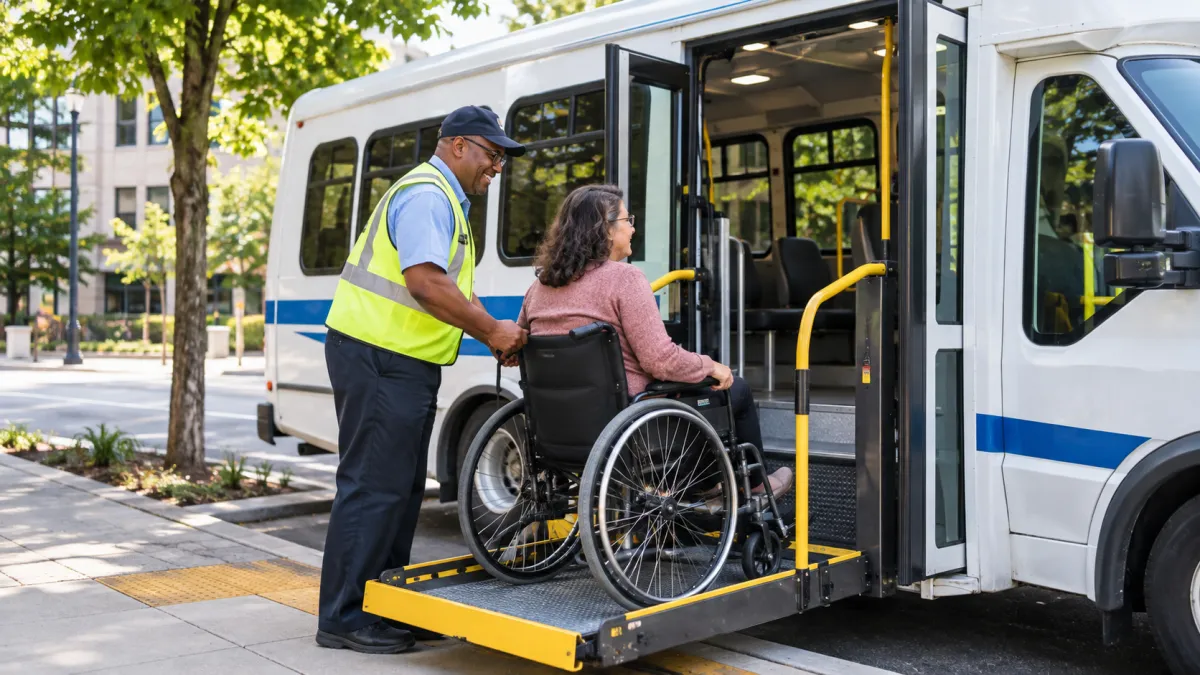
ADA paratransit is a transportation service for people with disabilities who cannot use regular fixed-route public transportation for some or all of their trips because of their functional limitations. In the United States, public transit agencies that operate fixed-route services generally must provide complementary paratransit for eligible riders.
Paratransit is often provided through a shared-ride vehicle, such as an accessible van or small bus. Instead of following a fixed route with designated stops, the service typically picks up eligible passengers at an agreed location and takes them to their destinations within the service area.
However, having a disability does not automatically qualify someone for ADA paratransit. Eligibility depends on how the person’s disability affects their ability to use the local fixed-route transit system. The application and assessment process is handled by the transit agency or its designated eligibility provider.
Understanding the eligibility criteria, application process, and local service rules can help applicants prepare and avoid confusion.
Eligibility Categories Under the ADA
Federal regulations describe three main ways a person may qualify for ADA complementary paratransit. These categories focus on the barriers a person faces when using fixed-route transit.
1. Inability to Use an Accessible Vehicle
A person may qualify if a physical or mental impairment prevents them from boarding, riding, or getting off an accessible fixed-route vehicle without assistance beyond the vehicle operator or boarding device.
The assessment considers functional ability, not merely whether a person has a particular condition.
2. Inability to Reach an Accessible Stop or Station
A person may qualify when their disability prevents them from getting to a particular boarding location or from traveling between that location and their destination.
For example, a person might be able to ride an accessible bus but face a disability-related barrier that prevents them from reaching the stop for a specific trip.
3. Inability to Use the Fixed-Route System Under Certain Conditions
A person may qualify when their impairment prevents them from using fixed-route transit for certain trips under particular circumstances.
The regulations allow eligibility to apply to some trips but not others when the criteria are met. Eligibility may also be temporary or permanent.
Temporary and Conditional Eligibility
Eligibility is not necessarily a permanent, unrestricted approval.
Temporary eligibility may be appropriate when a person’s functional limitations are expected to last for a limited period. For example, a temporary condition could affect their ability to use fixed-route transportation during recovery. The transit agency determines eligibility and its duration through the applicable process.
Conditional eligibility means that a person qualifies for paratransit under specific circumstances, rather than for every trip. The conditions should relate to the functional barriers that affect the person’s use of fixed-route transit.
These distinctions are useful when describing transportation limitations on an application. An applicant should explain the circumstances in which they cannot use regular transit, even if they can use it at other times.
Understanding the Difference Between Eligibility and Service
A common source of confusion is assuming that an eligibility approval guarantees every requested ride.
There are several separate considerations:
| Consideration | What it means |
|---|---|
| Eligibility | Whether the person meets ADA paratransit criteria |
| Conditional eligibility | Whether eligibility applies only to certain trip circumstances |
| Service area | Whether the trip’s origin and destination fall within the applicable service area |
| Reservation | Whether the rider has arranged the trip according to provider procedures |
| Local operating rules | The provider’s instructions for booking, pickup, cancellations, and other details |
Federal service-area requirements for bus-based complementary paratransit generally include corridors extending three-fourths of a mile on each side of fixed routes, along with certain areas surrounded by those corridors. Rail service has its own station-based service-area requirements. Local jurisdictional boundaries and other provisions also matter.
Because these rules can be technical, riders should check with their local provider when determining whether a particular address or trip is covered.
Preparing for the Application and Assessment
Applicants can make the process clearer by organizing information about their transportation limitations before beginning.
Consider these practical steps:
-
Describe the transportation barrier. Explain what makes boarding, riding, navigating, or reaching a stop difficult or impossible under the relevant circumstances.
-
Use specific examples from daily travel. Examples should reflect actual limitations, not assumptions about what a diagnosis means.
-
Review the provider’s application instructions. Each local agency may have its own forms and assessment steps.
-
Ask about accessible formats or communication support if needed. Federal regulations require application-process information and materials to be made available in accessible formats upon request.
-
Keep a copy of the submitted application. It can help the applicant track what was provided and respond to any follow-up request.
The purpose of preparation is to explain functional ability accurately—not to try to fit a particular eligibility category.
Written Decisions and Appeals
A transit agency must provide its eligibility determination in writing. When an applicant is found ineligible, the written decision must state the reasons for that finding.
If the applicant disagrees with the decision, the agency must provide an administrative appeal process. The applicant should read the decision and its appeal instructions carefully, identify the reason given for denial, and follow the agency’s process for challenging it.
The appeal process is administered locally. The applicant should use the instructions supplied by the agency rather than assuming that the procedures are identical across the country.
Paratransit Service for Visitors
ADA paratransit is not limited to eligible residents of one local service area.
Federal rules require covered transit entities to make complementary paratransit available to qualifying visitors. A visitor who presents documentation of ADA paratransit eligibility from their home jurisdiction must be treated as eligible under the visitor provisions. If documentation is not available, the local entity may request information about residence and, when the disability is not apparent, about the disability.
The visitor-service rule allows service for any combination of 21 days during a 365-day period, beginning with the visitor’s first use within that period. The local entity cannot require a visitor to complete its own local eligibility certification before receiving the service required by the visitor rule.
Visitors should still contact the destination provider to learn its practical procedures for arranging rides and supplying any relevant documentation.
Official Resources for Understanding ADA Paratransit
Applicants and riders can consult federal resources for the underlying rules:
Federal Transit Administration (FTA) ADA Guidance
The Federal Transit Administration provides guidance explaining the federal framework for complementary paratransit and eligibility. It can help readers understand the standards transit agencies must follow.
49 CFR Part 37
This federal regulation contains transportation requirements addressing ADA paratransit eligibility, application processes, visitor service, and service criteria.
These federal resources explain the baseline requirements. They do not replace the application instructions, assessment process, or ride-booking procedures provided by a local transit agency.
Conclusion
ADA paratransit provides an important transportation option for people whose disabilities prevent them from using fixed-route public transit under certain circumstances. Eligibility is based on functional transportation limitations, and it may be temporary or conditional.
For someone considering applying, the practical starting point is to identify the local transit agency, review its eligibility instructions, and describe the specific barriers they face when using fixed-route transportation. Applicants should understand the written determination and appeal process, as well as the federal 21-day protection that applies after a complete application.
Once eligibility is established, service-area rules, reservations, and local procedures remain important. Knowing the difference between eligibility and the coverage of an individual trip can help riders understand how the service applies to their transportation needs.
Frequently asked questions
1. Does a medical diagnosis automatically qualify someone for ADA paratransit?
No. A diagnosis alone does not automatically establish eligibility. ADA paratransit eligibility is based on a person's functional ability to use fixed-route public transportation under applicable circumstances. The transit agency evaluates the individual's limitations in relation to using its regular transit service.
2. Can someone receive temporary ADA paratransit eligibility?
Yes. Temporary eligibility may be appropriate when a person's functional limitations are expected to last for a limited period. The transit agency determines the eligibility period based on its assessment and applicable requirements.
3. Can ADA paratransit visitors use the service in another city?
Yes. Federal rules provide visitor eligibility for people who do not reside in the service area, subject to applicable requirements. Visitor service is available for up to 21 days within a 365-day period. Visitors should contact the local transit agency in advance to understand its documentation and reservation procedures.
4. What happens if a transit agency does not decide a complete paratransit application within 21 days?
If the agency has not made an eligibility determination within 21 days after receiving a complete application, the applicant must be treated as eligible and provided service until the agency makes and communicates a denial.
5. Can ADA paratransit eligibility apply only to certain trips?
Yes. Conditional eligibility may apply when a person can use fixed-route transit for some trips but cannot use it for others because of their functional limitations and the circumstances of the trip.

Olivia Bennett writes practical automotive content covering car buying, ownership costs, maintenance, vehicle features, reliability, and everyday driving decisions. Her work focuses on helping readers understand automoti...