How to Transfer a Car Title After the Owner Dies: Heirs, Probate, and DMV Requirements
Learn how to transfer a car title after an owner dies in the United States. This guide explains who can transfer an inherited vehicle, when probate may be required, which documents are commonly needed, and how heirs, surviving spouses, beneficiaries, and executors can navigate state DMV requirements.
In this article
- Who Can Transfer a Car Title After the Owner Dies?
- Surviving Joint Owner
- Named Beneficiary
- Executor or Personal Representative
- Heir or Family Member
- Does Transferring an Inherited Car Require Probate?
- Situations Where Probate May Not Be Necessary
- Situations Where Probate May Be Required
- What If the Owner Died Without a Will?
- Documents Needed to Transfer a Car Title After Death
- The Vehicle Title Is Missing
- The Vehicle Has an Outstanding Loan
- Step-by-Step: How to Transfer a Car Title After the Owner Dies
- Step 1: Review the Existing Vehicle Title
- Step 2: Determine Who Has Legal Authority
- Step 3: Check Whether Probate or a Simplified Process Applies
- Step 4: Gather the Required Documents
- Step 5: Resolve Any Lien or Ownership Issue
- Step 6: Complete the State Title-Transfer Application
- Step 7: Submit the Application and Pay Applicable Fees
- Step 8: Confirm the New Title and Registration
- How State DMV Rules Differ
- Examples of State-Specific Resources
- What Happens When Multiple Heirs Are Involved?
- When One Heir Wants the Car
- When the Heirs Want to Sell the Car
- What If the Car Is Still Registered to the Deceased Owner?
- Costs Involved in Transferring an Inherited Car Title
- Common Mistakes to Avoid
- Assuming the Closest Relative Automatically Owns the Car
- Signing the Deceased Owner’s Name
- Ignoring Probate Requirements
- Overlooking a Lien
- Using the Wrong DMV Form
- Assuming Every State Follows the Same Rules
- Conclusion
When a car owner dies, transferring the vehicle’s title is not always as simple as signing the title over to a family member. The process depends on how the vehicle was owned, whether the deceased person left a will, whether probate is required, and the rules of the state’s Department of Motor Vehicles (DMV) or equivalent agency.
In some situations, a surviving joint owner or named beneficiary may be able to transfer the title with relatively little paperwork. In others, an executor, personal representative, or court-appointed administrator must handle the vehicle as part of the deceased person’s estate.
The basic process is to determine who has legal authority over the vehicle, gather the required ownership and estate documents, complete the state’s title-transfer paperwork, and submit the application to the appropriate motor vehicle agency. Before beginning, it is important to confirm the applicable state requirements because there is no single nationwide procedure for transferring an inherited car.
Who Can Transfer a Car Title After the Owner Dies?
The person authorized to transfer a deceased owner’s vehicle depends primarily on the vehicle’s ownership arrangement and the estate’s legal status.
A family member may be the intended recipient of the car, but being a spouse, child, or other relative does not automatically give that person authority to sign the title or sell the vehicle.
The following situations commonly determine who can handle the transfer.
Surviving Joint Owner
If the vehicle was titled jointly with another person, the surviving owner may have the right to retain or transfer the vehicle.
However, the exact result depends on how the names appear on the title and whether the ownership arrangement includes a right of survivorship. Some titles identify joint ownership in a way that allows the vehicle to pass directly to the surviving owner. Other arrangements may require estate-related documents.
The surviving owner should review the existing title and check with the state DMV before signing or submitting paperwork.
Named Beneficiary
Some states allow vehicle owners to designate a beneficiary who receives the vehicle after the owner’s death. This may be called a transfer-on-death (TOD) designation or a similar term.
Where this option is available and properly established, the beneficiary may be able to claim the vehicle without going through the same process used for assets distributed through probate.
The beneficiary should confirm that the designation was valid, that it applies to the vehicle, and that the state’s required documentation is available.
Executor or Personal Representative
If the vehicle belongs to the deceased person’s estate, the executor named in the will or the personal representative appointed by a court may be responsible for handling it.
This person may need to obtain legal authority through probate before transferring the vehicle to an heir or selling it. The authority may be documented through court-issued letters testamentary, letters of administration, or another state-recognized document.
An executor should not assume that possessing the vehicle’s keys or title is sufficient authority to transfer ownership.
Heir or Family Member
An heir may receive the vehicle under a will, state inheritance law, or an estate distribution.
The heir’s ability to complete the transfer directly depends on the state’s process. Some states provide simplified procedures for certain family members or smaller estates. Others require an executor or administrator to complete the transfer.
If several heirs are involved, the estate may also need to establish who is entitled to receive the vehicle.
Does Transferring an Inherited Car Require Probate?
Probate is the legal process used to administer a deceased person’s estate. It may involve validating a will, identifying assets, paying debts, and distributing property to beneficiaries or heirs.
A car title transfer after death does not always require probate. Whether probate is necessary depends on the ownership arrangement, the state’s laws, the value and circumstances of the estate, and the documents available.
Situations Where Probate May Not Be Necessary
A transfer may be possible without a full probate proceeding when:
-
The vehicle has a valid transfer-on-death beneficiary designation recognized by the state.
-
The vehicle is jointly owned with a surviving owner who has the right to receive it.
-
The state provides a simplified procedure for transferring certain vehicles from a small estate.
-
A surviving spouse or eligible family member qualifies for a special state procedure.
-
The estate has already been legally administered and the required distribution documents are available.
These are possible routes, not universal rules. The requirements differ by state, and a simplified procedure may have conditions related to the estate’s value, waiting periods, debts, or the identity of the applicant.
Situations Where Probate May Be Required
Probate or another formal estate-administration process may be necessary when:
-
The vehicle was titled only in the deceased owner’s name.
-
There is no valid beneficiary designation.
-
The deceased person left a will that must be administered.
-
Multiple heirs disagree about who should receive the vehicle.
-
The state requires a court-appointed representative to transfer estate property.
-
The vehicle is part of an estate with unresolved legal or financial obligations.
If probate is already underway, the vehicle may be handled as one of the estate’s assets. The executor or administrator should follow the court’s instructions and applicable state law.
What If the Owner Died Without a Will?
When a person dies without a will, the estate is generally handled under the state’s intestate succession laws. Those laws determine which relatives may inherit and in what order.
The closest family member is not necessarily authorized to transfer the car immediately. The estate may still need an administrator, a court order, or a state-specific affidavit.
Before applying for the title, identify the person legally entitled to receive the vehicle and confirm what documentation the DMV requires.
Documents Needed to Transfer a Car Title After Death
The documents required vary by state and by the circumstances of the transfer. Preparing the paperwork before visiting the DMV can help prevent delays.
Commonly requested documents include the following.
| Document | Why It May Be Needed |
|---|---|
| Original vehicle title | Establishes the vehicle’s existing ownership |
| Death certificate | Confirms that the titled owner has died |
| Title-transfer application | Requests issuance of a new title |
| Will or estate distribution document | May identify the intended recipient |
| Letters testamentary or letters of administration | Establishes the representative’s legal authority |
| Small-estate affidavit | May support a simplified transfer when state law allows it |
| Beneficiary designation | Shows that the vehicle was designated to pass to a beneficiary |
| Identification | Verifies the identity of the person applying |
| Lien release | May be required if a recorded lien has been paid off |
| Odometer disclosure | May be required depending on the vehicle and transfer |
| State-specific forms | Provides the additional information required by the DMV |
Not every transfer requires every document in the table. For example, a surviving joint owner may need different paperwork from an executor transferring a vehicle through probate.
The Vehicle Title Is Missing
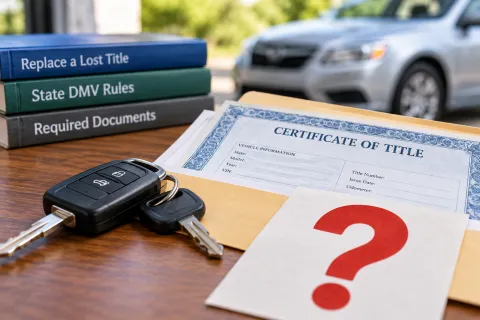
If the original title cannot be located, the transfer may still be possible, but the state may require a replacement title or another procedure.
The person handling the estate should check whether the DMV allows a duplicate-title application to be submitted together with the deceased-owner transfer paperwork.
KnowBrook’s guide to what to do if you lost your car title explains the general replacement-title process.
The Vehicle Has an Outstanding Loan
An inherited vehicle may still have a loan or lien attached to it. Inheriting the car does not automatically remove the lender’s interest.
The estate or intended recipient should determine:
-
Whether the loan balance remains unpaid.
-
Who is responsible for payments under the loan agreement.
-
Whether the lender must provide a lien release.
-
Whether the title can be transferred while the lien remains recorded.
-
Whether the lender has specific requirements for an ownership change.
If the vehicle is eventually sold, the lien may need to be resolved as part of the transaction. The process can differ depending on the lender and state.
For more information about handling a vehicle with an outstanding loan, see KnowBrook’s guide to selling a car with a loan or lien.
Step-by-Step: How to Transfer a Car Title After the Owner Dies
The following process provides a general framework for handling an inherited vehicle in the United States. The exact order and forms may differ depending on the state and estate circumstances.
Step 1: Review the Existing Vehicle Title
Start by locating the vehicle’s title and reviewing the ownership information.
Look for:
-
The name or names of the titled owners.
-
Any indication of joint ownership.
-
A beneficiary designation, if applicable.
-
A lienholder listed on the title.
-
Any ownership-related restrictions or additional information.
If another person is listed as a co-owner, determine whether the title arrangement allows the surviving owner to receive the vehicle directly.
Do not assume that the person listed second on the title automatically becomes the sole owner. The state’s ownership rules and the title wording matter.
Step 2: Determine Who Has Legal Authority
Identify the person who can legally handle the vehicle’s ownership transfer.
This may be:
-
A surviving joint owner.
-
A named beneficiary.
-
An executor.
-
A court-appointed administrator.
-
An eligible heir using a state-authorized simplified process.
If the vehicle is part of an estate, review the will and any court documents. If there is no will, determine whether an estate administrator has been appointed or whether a simplified state procedure applies.
This step is especially important when several family members may have an inheritance interest.
Step 3: Check Whether Probate or a Simplified Process Applies
Contact the state DMV or review its official deceased-owner vehicle-transfer guidance.
The DMV may explain which procedure applies to situations such as:
-
Joint ownership.
-
Transfer to a surviving spouse.
-
Transfer to a beneficiary.
-
Transfer through probate.
-
Transfer from a small estate.
-
Transfer when the owner died without a will.
If probate is required, the person responsible for the estate may need to obtain court authorization before proceeding.
If a simplified procedure is available, confirm its eligibility requirements. Do not use a small-estate affidavit or family-member procedure unless the estate qualifies under the state’s rules.
Step 4: Gather the Required Documents
Collect the title, death certificate, identification, and any documents establishing the applicant’s authority.
Depending on the situation, this could include a will, court-issued letters, a beneficiary designation, an affidavit, or a court order.
Make sure the names and details are consistent across the documents. Differences in names, missing signatures, or incomplete information may lead to additional requests from the DMV.
If the original title is missing, check the state’s duplicate-title requirements before submitting the application.
Step 5: Resolve Any Lien or Ownership Issue
Before the title is transferred, determine whether a lender or another party has a legal interest in the vehicle.
If a loan remains outstanding, contact the lender to understand the available options. If the loan has been paid off but the lien is still shown, the state may require a lien release.
Also resolve any uncertainty about which heir should receive the vehicle. If several heirs are entitled to the estate and disagree about the car, the executor or administrator may need to follow the estate’s legal process rather than selecting a recipient informally.
Step 6: Complete the State Title-Transfer Application
Obtain the correct title-transfer form from the state DMV or equivalent motor vehicle agency.
The application may ask for information such as:
-
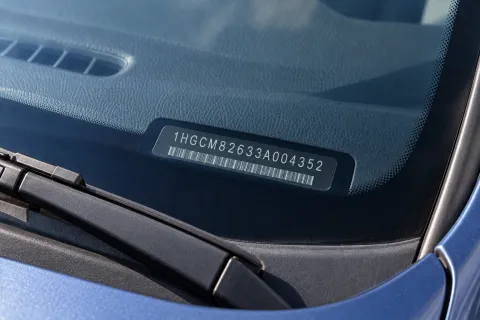
Vehicle identification number (VIN).
-
Make, model, and year.
-
Current titled owner.
-
New owner.
-
Transfer reason.
-
Odometer reading, when required.
-
Applicant’s relationship to the deceased owner.
-
Estate representative’s information.
-
Signatures and supporting documentation.
Use the state’s instructions for signing on behalf of a deceased owner. An executor or administrator may need to sign in a specific representative capacity.
Do not sign the deceased owner’s name yourself unless the state’s official instructions explicitly establish a legally permitted method of doing so.
Step 7: Submit the Application and Pay Applicable Fees
Submit the completed paperwork through the method accepted by the state. Depending on the jurisdiction, this may involve an in-person DMV visit, a mail-in application, or another authorized process.
The application may include title fees, registration charges, taxes, or other costs. Whether a transfer is subject to tax or qualifies for an exemption depends on the state and the type of transfer.
Keep copies of the submitted documents and any receipts.
Step 8: Confirm the New Title and Registration
After the application is processed, confirm that the new title reflects the correct owner.
The new owner should also determine whether the vehicle’s registration needs to be updated. A title establishes ownership, while registration generally relates to the vehicle’s authorization to be operated on public roads.
If the car will be driven, check the state’s registration and insurance requirements. A transfer of ownership does not automatically mean the vehicle is properly registered or insured for the new owner.
How State DMV Rules Differ
Vehicle inheritance procedures are governed largely by state law and state motor vehicle agency requirements. Forms, eligibility rules, fees, and probate-related procedures can differ significantly.
For example, states may have distinct processes for:
-
Transferring a vehicle to a surviving spouse.
-
Transferring a vehicle with a beneficiary designation.
-
Handling vehicles owned by someone who died without a will.
-
Using a small-estate affidavit.
-
Transferring a vehicle through a court-appointed estate representative.
-
Issuing a title when the original title is unavailable.
Official state guidance is the most reliable starting point for determining which process applies.
Examples of State-Specific Resources
The following state agencies provide guidance or documentation related to deceased-owner vehicle transfers:
-
California DMV: Provides title-transfer information and guidance involving transfer-on-death designations and other ownership situations.
-
Utah DMV: Provides guidance on vehicle ownership transfers involving deceased owners.
-
New York DMV: Provides deceased-owner information and forms, including procedures involving family members and estate circumstances.
-
South Carolina DMV: Provides information for inheriting a vehicle and handling related title requirements.
-
Texas DMV: Provides motor vehicle title guidance that addresses estate-related ownership transfers.
-
DC DMV: Provides procedures and information for handling vehicle ownership after an owner’s death.
These resources should not be treated as interchangeable. A form or procedure accepted in one state may not be accepted in another.
When checking the official guidance, make sure it applies to the specific circumstances: joint ownership, beneficiary transfer, probate, or an heir receiving the vehicle. If the guidance is unclear, contact the state agency before submitting the application.
What Happens When Multiple Heirs Are Involved?
An inherited vehicle may be part of an estate that has more than one heir or beneficiary.
The presence of multiple heirs can make the transfer more complicated because the estate must determine who is entitled to receive the vehicle.
For example, a deceased owner may have left a car to one person in a will, while other estate assets are distributed to several beneficiaries. Alternatively, the owner may have died without a will, and state inheritance law may give multiple relatives an interest in the estate.
The person administering the estate should review the will, applicable inheritance rules, and any court instructions.
When One Heir Wants the Car
If one heir is intended to receive the vehicle, the estate may need to document that distribution. The required paperwork depends on whether probate is involved and whether the state permits a direct transfer.
The other heirs may need to participate in the estate’s distribution process, but whether their consent or signatures are required for the DMV transfer is a state-specific question.
Do not assume that an informal agreement among family members is sufficient to establish legal ownership.
When the Heirs Want to Sell the Car
If the heirs decide to sell the vehicle instead of transferring it to one person, the estate representative should confirm who has authority to complete the sale.
The vehicle may need to be titled in the estate representative’s name, transferred to an heir first, or handled through another state-authorized procedure.
The correct method depends on the state’s title rules and the estate’s legal status.
For general guidance on selling a vehicle privately, see KnowBrook’s step-by-step U.S. guide to selling a car privately.
What If the Car Is Still Registered to the Deceased Owner?
A vehicle may remain registered under the deceased owner’s name while the estate is being administered.
Registration and title are separate matters. The title identifies ownership, while registration generally allows the vehicle to be operated under state requirements.
The death of the owner does not necessarily mean that the vehicle’s registration is immediately canceled. However, the estate or intended new owner should check the state’s rules before driving the car.
Important considerations include:
-
Whether the registration remains valid.
-
Whether the vehicle must be re-registered after the ownership transfer.
-
Whether the new owner must provide proof of insurance.
-
Whether the vehicle is subject to inspection or emissions requirements.
-
Whether the state imposes specific requirements while the estate is being administered.
If the car is not being driven, the estate should still determine whether any registration or other vehicle obligations need attention.
Costs Involved in Transferring an Inherited Car Title
The cost of transferring a car title after the owner dies varies by state and by the type of transfer.
Possible expenses include:
| Cost | What May Affect It |
|---|---|
| Title-transfer fee | State fee schedule and type of title application |
| Registration fee | Vehicle details and state registration rules |
| Taxes | State law and whether the transfer qualifies for an exemption |
| Duplicate-title fee | Whether the original title is missing |
| Lien-related costs | Outstanding loan or lender requirements |
| Probate or estate expenses | Whether formal estate administration is needed |
| Notary fees | Whether documents must be notarized |
Some transfers may qualify for fee or tax exemptions, while others may be treated differently from ordinary vehicle sales.
Do not assume that an inherited vehicle is automatically exempt from every title fee, tax, or registration charge. Check the applicable state’s official fee schedule and transfer guidance.
If probate is involved, estate-related legal or administrative expenses may be separate from DMV charges.
Common Mistakes to Avoid
Handling a vehicle title after someone dies can involve both family and legal responsibilities. Avoiding common mistakes can help prevent delays or problems with ownership.
Assuming the Closest Relative Automatically Owns the Car
A spouse, child, or other relative may be an heir, but inheritance rights and authority to transfer the title are not necessarily the same thing.
Confirm who is legally authorized to handle the vehicle.
Signing the Deceased Owner’s Name
Do not sign the deceased person’s name as though they were still alive.
The authorized representative may need to sign using a specific legal designation or follow another state-approved procedure.
Ignoring Probate Requirements
If the vehicle belongs to the estate, transferring it without the required authority may create legal or title problems.
Determine whether probate, court authorization, or a simplified estate procedure applies.
Overlooking a Lien
A vehicle may still be subject to a loan or lien after the owner’s death.
Check the title and contact the lender if necessary. A lien may affect whether and how the vehicle can be transferred or sold.
Using the Wrong DMV Form
Different forms may apply to a beneficiary transfer, surviving joint owner, small estate, or probate transfer.
Use the form intended for the specific situation, not a generic title-transfer application alone.
Assuming Every State Follows the Same Rules
A process used in California, Utah, New York, South Carolina, Texas, or Washington, DC, may not be valid in another jurisdiction.
Always verify the procedure with the state where the vehicle is titled.
Conclusion
Transferring a car title after the owner dies begins with identifying who has legal authority over the vehicle. A surviving joint owner or beneficiary may be able to complete a direct transfer, while a vehicle belonging to an estate may require an executor, administrator, probate documents, or a state-approved simplified procedure.
The most important steps are to review the existing title, determine whether probate is necessary, gather the required documents, address any lien, and follow the state DMV’s specific application instructions. If multiple heirs are involved, establish who is entitled to receive or sell the vehicle before attempting the transfer.
Because state requirements differ, confirm the applicable rules with the official motor vehicle agency before signing or submitting paperwork. This helps ensure that the new title accurately reflects the vehicle’s legal ownership.
Frequently asked questions
1. Can I transfer an inherited car title if the owner died without a will?
Yes, it may be possible. When someone dies without a will, the vehicle generally becomes part of the estate unless a qualifying ownership arrangement or beneficiary procedure applies. The person authorized to handle the transfer depends on state intestacy laws and the estate's circumstances. You may need court appointment documents, an heirship affidavit, or another state-approved procedure. Contact the state DMV and probate court to confirm the requirements.
2. Do all heirs have to agree to transfer an inherited car?
Not necessarily. Whether all heirs must consent depends on state law, the vehicle's ownership arrangement, and who has legal authority over the estate. Some situations require agreement or signatures from multiple heirs, while others allow an appointed personal representative to handle the transfer. Confirm the requirements with the relevant state DMV or probate authority.
3. Do you have to renew registration for a car owned by someone who died?
Registration requirements vary by state and situation. Some states provide specific instructions for vehicles registered to deceased owners. Do not assume that registration can simply be renewed in the deceased person's name. Check the state DMV's guidance for the vehicle's current registration and title status.
4. Is there a deadline to transfer an inherited car title after death?
There is no single nationwide deadline for transferring an inherited vehicle title. States may impose different requirements based on the transfer method, estate process, or beneficiary designation. Check the applicable DMV rules before relying on a specific deadline.
5. Can a car title be transferred to a beneficiary after the owner's death without probate?
In some states, a qualifying transfer-on-death beneficiary or other non-probate procedure may allow the vehicle to be transferred without a full probate process. Eligibility depends on the state, the title arrangement, and the required documentation. Not every vehicle or beneficiary qualifies.
6. How much does it cost to transfer a car title after the owner dies?
The cost depends on the state and the transfer circumstances. Possible charges include title fees, registration fees, taxes, or other administrative costs. Some transfers may qualify for exemptions. Check the official state DMV fee schedule and applicable inheritance-related rules for the specific vehicle.

Olivia Bennett writes practical automotive content covering car buying, ownership costs, maintenance, vehicle features, reliability, and everyday driving decisions. Her work focuses on helping readers understand automoti...