How to Lower Your Car Insurance Without Sacrificing Important Coverage
Learn practical ways to lower your car insurance costs, from comparing equivalent quotes and finding discounts to adjusting deductibles and reviewing optional coverage—without giving up protection you may still need.
In this article
- Start With Savings That Do Not Reduce Your Coverage
- Compare Car Insurance Quotes Using the Same Coverage
- Check Every Discount You May Qualify For
- Make Sure Your Mileage and Vehicle Use Are Accurate
- Review Your Policy After Major Life Changes
- Consider Savings That Involve a Tradeoff
- Consider Raising Your Deductible Carefully
- Consider Usage-Based or Telematics Insurance
- Review Optional Coverage Before Removing Important Protection
- Should You Drop Collision or Comprehensive Coverage on an Older Car?
- Compare the Vehicle's Value With the Cost of Coverage
- Check Lender or Lease Requirements
- Consider What You Would Do After a Loss
- Compare Quotes Without Accidentally Buying Less Coverage
- Do Not Compare Only the Monthly Payment
- Watch for Changes Hidden in the Details
- A Practical Order for Lowering Your Premium
- Step 1: Check Your Current Policy
- Step 2: Ask About Discounts
- Step 3: Compare Equivalent Quotes
- Step 4: Review Your Deductible
- Step 5: Evaluate Usage-Based Insurance
- Step 6: Review Optional Coverage
- Step 7: Recheck the Policy Later
- Common Mistakes That Can Make Car Insurance Savings Backfire
- Choosing the Lowest Quote Without Comparing Coverage
- Raising the Deductible Beyond What You Can Afford
- Underreporting Mileage
- Dropping Coverage Without Considering the Vehicle's Value
- Assuming Bundling Is Always Cheapest
- Assuming Credit Information Is Treated the Same Everywhere
- Focusing on the Premium Instead of Your Total Financial Exposure
- When a Lower Premium May Not Be Worth It
- How State Rules Can Affect Your Options
- A Simple Car Insurance Savings Checklist
- The Best Way to Think About Cheaper Car Insurance
- Conclusion
Car insurance can be one of the more frustrating recurring costs of owning a vehicle, especially when your premium rises even though you have not changed how you drive. The good news is that lowering your premium does not necessarily mean cutting important coverage.
The safest approach is to look for savings in stages. Start with options that may reduce your price without reducing your protection, such as comparing equivalent quotes, checking available discounts, verifying your mileage and vehicle use, and reviewing changes in your household. Then consider choices that involve a tradeoff, such as raising your deductible or enrolling in a usage-based insurance program. Only after that should you consider reducing coverage that protects your own vehicle.
The goal is not simply to find the cheapest policy. It is to find a price that is reasonable while keeping coverage that makes sense for your vehicle, finances, and circumstances.
Start With Savings That Do Not Reduce Your Coverage
Before changing your deductible or dropping coverage, look for ways to reduce the premium without changing the protection you currently carry.
These options should generally be your first step because they focus on pricing, eligibility, and policy accuracy rather than removing coverage.
Compare Car Insurance Quotes Using the Same Coverage
One of the most effective ways to determine whether you are paying too much is to compare quotes from multiple insurers.
However, a quote comparison only tells you something useful when the policies are actually comparable.
A policy that costs less because it has lower liability limits, a higher deductible, or fewer optional coverages is not necessarily a better deal. You may simply be buying less protection.
When comparing quotes, keep the major policy features consistent:
-
Liability coverage limits
-
Uninsured and underinsured motorist coverage where applicable
-
Collision and comprehensive coverage
-
Deductibles
-
Optional coverage you consider important
-
Applicable drivers and vehicles
The National Association of Insurance Commissioners recommends comparing coverage and limits rather than focusing only on price.
This is particularly important when switching insurers. A lower premium can look attractive until you discover that the new policy has a higher deductible or different coverage limits.
A useful question is not, "Which company is cheapest?"
Instead ask, "Which company offers comparable protection at the lowest reasonable price?"
That distinction can prevent a significant reduction in coverage simply for the sake of a lower monthly bill.
Check Every Discount You May Qualify For
Insurance companies may offer discounts based on factors such as driving history, vehicle use, policy characteristics, or other eligibility criteria. The available discounts vary by insurer and state.
Rather than assuming you are receiving every discount available, ask your insurer to review your policy for discounts you may qualify for.
Depending on the insurer, possible opportunities may relate to things such as:
-
A clean driving record
-
Multiple policies with the same insurer
-
Vehicle safety features
-
Low mileage or qualifying vehicle use
-
Certain payment or policy arrangements
-
Other insurer-specific eligibility criteria
Do not assume that a discount is automatically the best option. Ask what qualification is required and whether the discount changes any part of your policy.
The important point is to make sure you are being rated accurately and receiving discounts for which you genuinely qualify.
Make Sure Your Mileage and Vehicle Use Are Accurate
How much you drive and how you use your vehicle can affect insurance pricing.
For example, someone who drives a car primarily for occasional personal trips may present a different risk profile from someone who drives long distances for work every day.
That does not mean reporting a lower mileage figure will automatically reduce your premium. Insurers have different rating practices, and your actual expected use matters.
Review the information your insurer has for:
-
Annual mileage
-
Primary vehicle use
-
Commute information
-
Business use, if applicable
-
Drivers who regularly use the vehicle
The key is accuracy.
Do not intentionally underestimate your mileage simply to obtain a lower premium. If your actual driving pattern changes, tell your insurer and ask whether the change could affect your rate.
Review Your Policy After Major Life Changes
Insurance pricing can change when your circumstances change.
If you have recently moved, changed your driving habits, changed vehicles, added or removed a driver, or experienced another significant change in how the vehicle is used, it can be a good time to review your policy.
The purpose is not to manipulate your policy information. It is to make sure the insurer has accurate information and that your coverage still matches your situation.
A policy review can also reveal that you are paying for coverage or options that no longer make sense for your circumstances.
Consider Savings That Involve a Tradeoff
If you have already compared equivalent quotes, checked discounts, and verified your policy information, you can consider options that may reduce your premium but require you to accept some additional risk or responsibility.
Two important examples are changing your deductible and considering usage-based insurance.
These choices should be evaluated rather than treated as automatic ways to save money.
Consider Raising Your Deductible Carefully
Your deductible is the amount you generally pay out of pocket for a covered claim before the insurer pays the remaining covered amount, subject to the policy terms.
A higher deductible can reduce the premium for certain coverages.
But the lower premium comes with a tradeoff: you would have to pay more yourself after a covered claim.
For example, imagine your current policy has a deductible you could comfortably pay from your savings. Moving to a higher deductible might reduce the premium, but the decision only makes financial sense if you could still handle the larger out-of-pocket expense after an accident or other covered loss.
Before increasing your deductible, ask yourself:
-
How much would I save on the premium?
-
How much higher would my out-of-pocket cost be after a claim?
-
Could I pay the new deductible without using money needed for rent, bills, or other essential expenses?
-
How often do I realistically want to take on that additional financial risk?
A lower premium is not automatically a better financial decision if the deductible becomes difficult to afford.
The right deductible is one that balances premium savings with an amount you could reasonably handle if you need to file a claim.
Consider Usage-Based or Telematics Insurance
Some insurers offer usage-based insurance programs that use telematics to evaluate factors such as mileage or driving behavior.
Depending on the insurer and program, information collected through a telematics program may be used as part of insurance pricing.
For a driver who qualifies for favorable pricing under such a program, this can be another way to explore potential savings.
But it is important to understand the program before enrolling.
Consider:
-
What driving information is collected
-
How the information is used
-
Whether participation is optional
-
How pricing may be affected
-
What privacy information the insurer provides
-
Whether the program fits your driving habits
Telematics programs are not identical across insurers. The availability, rules, and potential pricing effects can vary.
Do not assume that joining a usage-based program will always lower your premium. Treat it as another option to evaluate based on the specific program offered to you.
Review Optional Coverage Before Removing Important Protection
Another way to lower insurance costs is to review optional coverage.
This is where the decision becomes more important because removing coverage can reduce your financial protection.
Not every driver needs every optional coverage, but removing coverage simply because the premium is high can create a much larger financial problem later.
Start by understanding what each coverage does and whether you still have a practical reason to carry it.
For example, collision coverage generally addresses damage to your vehicle from covered collision losses, while comprehensive coverage generally addresses certain non-collision losses covered by the policy.
Your decision should take into account your vehicle's value, your financial ability to repair or replace it, your risk tolerance, and any contractual requirements.
Before making changes, it can help to review how much car insurance you need.
That guide focuses on choosing appropriate coverage, while this article focuses on lowering the cost without unnecessarily reducing protection.
Should You Drop Collision or Comprehensive Coverage on an Older Car?
This is one of the more significant cost-saving decisions because it can change how much protection you have for your own vehicle.
For an older vehicle with a relatively low value, the cost of maintaining certain physical-damage coverage may eventually deserve a closer look.
But the age of the vehicle alone does not determine whether dropping coverage makes sense.
Consider several factors together.
Compare the Vehicle's Value With the Cost of Coverage
If your vehicle has a relatively low market value, paying for certain physical-damage coverage may provide less financial benefit than it once did.
However, you should not make the decision based only on the vehicle's age.
Consider:
-
The vehicle's current value
-
The premium attributable to the coverage
-
Your deductible
-
Your ability to replace the vehicle
-
Your ability to pay for major repairs
-
How dependent you are on the vehicle
-
Your tolerance for taking the loss yourself
The important question is whether you could comfortably absorb the financial loss if the vehicle were damaged or otherwise suffered a covered loss that you are no longer insured for.
Check Lender or Lease Requirements
If you finance or lease a vehicle, your lender or leasing company may require certain physical-damage coverage.
That means you should not remove collision or comprehensive coverage without checking the terms of your loan or lease.
Even if dropping coverage would lower your insurance premium, doing so could conflict with contractual requirements.
This is one reason insurance decisions should be based on more than the monthly premium.
Consider What You Would Do After a Loss
Suppose you remove coverage and later have significant damage to your vehicle.
The question becomes simple: could you afford to repair or replace the vehicle yourself?
If the answer is no, the premium savings may not justify the additional financial exposure.
A lower insurance bill is useful only if the remaining risk is financially manageable.
Compare Quotes Without Accidentally Buying Less Coverage
Shopping around is useful, but it can become misleading if you compare policies based only on the final premium.
A quote is not a complete comparison until you know what you are buying.
Use a simple comparison framework.
| What to Compare | Why It Matters |
|---|---|
| Liability limits | Lower limits can mean less protection if you are responsible for a covered accident |
| Deductibles | A higher deductible can reduce premium but increase your out-of-pocket cost |
| Collision coverage | Helps protect against covered collision damage to your vehicle |
| Comprehensive coverage | Helps protect against certain covered non-collision losses |
| Uninsured/underinsured motorist coverage | Can provide protection in situations involving drivers with insufficient or no applicable coverage, subject to state rules and policy terms |
| Optional coverages | Removing them may reduce the premium but also reduce protection |
| Total premium | Shows what you pay, but should be considered alongside the coverage provided |
This approach makes it easier to identify whether you are actually saving money or simply accepting less protection.
Do Not Compare Only the Monthly Payment
Insurance companies may present premiums in different payment structures.
A monthly payment can make one policy appear easier to afford even when the overall policy cost or terms differ.
When comparing insurers, look beyond the amount due today.
Consider the overall premium, payment arrangements, deductibles, coverage limits, and other policy terms.
The cheapest monthly payment is not necessarily the lowest-cost policy once the entire policy is considered.
Watch for Changes Hidden in the Details
When switching insurers, review the declarations page or quote details carefully.
Look for differences in:
-
Coverage limits
-
Deductibles
-
Included and excluded coverage
-
Drivers listed on the policy
-
Vehicles covered
-
Vehicle use
-
Optional protection
A policy can appear substantially cheaper because one or more of these items changed.
The goal is to compare insurance on an apples-to-apples basis.
A Practical Order for Lowering Your Premium
If your car insurance feels too expensive, it helps to work from the lowest-risk savings opportunities toward the decisions that involve greater tradeoffs.
A sensible order is:
Step 1: Check Your Current Policy
Review your current premium, deductibles, coverage limits, drivers, vehicles, mileage, and vehicle use.
Make sure the information is accurate.
Step 2: Ask About Discounts
Contact your insurer and ask which discounts you currently receive and whether you qualify for any additional ones.
Do not claim a discount unless you actually meet its requirements.
Step 3: Compare Equivalent Quotes
Get quotes from multiple insurers.
Keep the major coverage limits and deductibles consistent so you are comparing similar protection.
Step 4: Review Your Deductible
If you still need additional savings, determine whether a higher deductible would be financially manageable.
Compare the premium reduction with the additional amount you would have to pay after a claim.
Step 5: Evaluate Usage-Based Insurance
If available, review the insurer's telematics program and understand how it works before deciding whether to participate.
Step 6: Review Optional Coverage
Only after the previous steps should you seriously consider reducing optional coverage.
Evaluate what protection you would lose and whether you could handle the resulting risk.
Step 7: Recheck the Policy Later
Insurance needs and circumstances can change.
A periodic review can help you avoid continuing to pay for an arrangement that no longer fits your vehicle use or financial situation.
Common Mistakes That Can Make Car Insurance Savings Backfire
Trying to lower insurance costs is reasonable, but some strategies can create more problems than they solve.
Choosing the Lowest Quote Without Comparing Coverage
A low premium is not meaningful if the policy provides substantially less protection.
Always compare coverage limits and deductibles.
Raising the Deductible Beyond What You Can Afford
A deductible is only a useful cost-saving tool if you can actually pay it when necessary.
Do not choose a deductible that would force you to borrow money or miss essential bills after a covered claim.
Underreporting Mileage
Do not report an artificially low mileage figure to try to obtain a lower premium.
Your insurance information should accurately reflect how you use the vehicle.
If your driving pattern genuinely changes, ask your insurer whether your updated usage affects your rate.
Dropping Coverage Without Considering the Vehicle's Value
Removing physical-damage coverage can shift repair or replacement costs to you.
Before making that decision, consider the vehicle's value and whether you could comfortably replace it.
Assuming Bundling Is Always Cheapest
Bundling home and auto insurance can sometimes produce a discount, but it does not automatically guarantee the lowest total price.
Compare the combined cost with alternatives.
The best choice is the one that provides appropriate coverage at a reasonable overall cost.
Assuming Credit Information Is Treated the Same Everywhere
Insurance practices involving credit-based information vary by state and insurer.
Do not assume that improving your credit history will have the same insurance effect everywhere in the United States.
If this factor matters to you, check how insurers in your state use credit-related information when permitted.
Focusing on the Premium Instead of Your Total Financial Exposure
Insurance exists to transfer certain financial risks to an insurer.
Reducing the premium by transferring a much larger risk back to yourself may not be a good trade.
For example, saving money on your premium could be less important than keeping coverage that protects you from a loss you could not afford to pay yourself.
When a Lower Premium May Not Be Worth It
There is a point where reducing the insurance bill can become counterproductive.
Consider a driver who can save money by choosing a higher deductible. If that driver has enough savings to comfortably cover the deductible, the tradeoff may be reasonable.
Now consider someone who has very little emergency savings. The same deductible could create a serious financial problem after an accident.
The numbers are the same, but the financial situation is different.
This is why there is no single "best" deductible or coverage combination for every driver.
The right decision depends on your ability to absorb a loss.
The same principle applies to dropping collision or comprehensive coverage. A vehicle owner who can comfortably replace an older car may be in a different position from someone who relies on that vehicle for work and could not afford a replacement.
Think about insurance as part of your broader financial risk rather than simply another monthly expense.
How State Rules Can Affect Your Options
Car insurance is regulated at the state level, so the rules and available options can differ across the United States.
State law can affect required coverage, available insurance practices, and how certain rating factors are used.
That means advice that works in one state should not automatically be treated as universal.
For example, credit-based insurance practices are subject to state-specific rules, and insurers may have different practices within those legal frameworks.
Your state insurance department or insurance regulator is an important resource when you need to confirm requirements that apply where you live.
This matters especially before reducing liability coverage or making another change that could affect whether your policy meets applicable state requirements.
State requirements are only the starting point, though. Meeting the legal minimum does not necessarily mean you have enough protection for your personal financial situation.
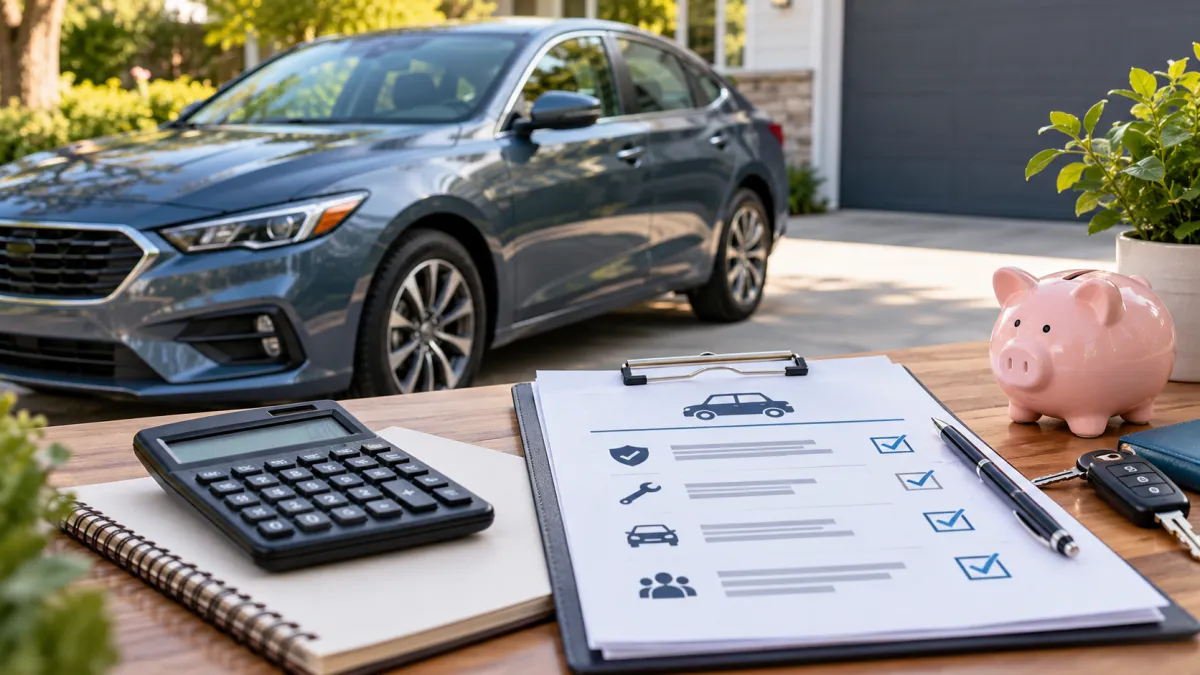
A Simple Car Insurance Savings Checklist
Before changing your policy, work through this checklist:
-
Review your current premium.
-
Check your coverage limits.
-
Check your deductibles.
-
Confirm every listed driver is accurate.
-
Confirm the vehicles on the policy are correct.
-
Verify annual mileage.
-
Verify how each vehicle is used.
-
Ask about available discounts.
-
Compare quotes from multiple insurers.
-
Compare equivalent coverage rather than just premium prices.
-
Check whether a higher deductible is financially manageable.
-
Review any usage-based insurance program carefully.
-
Consider whether optional coverage still makes sense.
-
Check lender or lease requirements before changing physical-damage coverage.
-
Consider what you could afford to pay yourself after a covered loss.
-
Check state-specific requirements before reducing required coverage.
This order helps keep the focus on savings first and protection second only when the tradeoff is reasonable.
The Best Way to Think About Cheaper Car Insurance
Lowering car insurance is not necessarily about finding one trick that produces the biggest immediate discount.
It is about making several informed decisions.
Start with the changes least likely to reduce protection. Make sure your information is accurate, ask about discounts, compare insurers, and evaluate equivalent quotes.
If the premium is still too high, consider tradeoffs such as a higher deductible or a usage-based program. Understand what you are giving up or accepting before making the change.
Only then consider reducing coverage that protects your vehicle or other financial interests.
The most useful comparison is therefore not simply "expensive policy versus cheap policy." It is the relationship between premium, coverage, deductible, and financial risk.
Conclusion
The safest way to lower car insurance is to work from the least disruptive savings opportunities toward decisions that involve greater financial tradeoffs.
Start by checking your policy for accuracy, asking about discounts, reviewing mileage and vehicle use, and comparing equivalent quotes from multiple insurers. If you need additional savings, evaluate whether a higher deductible or usage-based insurance program fits your circumstances.
Be more cautious when considering reductions in coverage. A lower premium can come with a higher financial risk if you remove protection you later need. Before changing collision or comprehensive coverage, consider your vehicle's value, your ability to pay for repairs or replacement, and any lender or lease requirements.
The goal is not to pay as little as possible for car insurance. The goal is to pay a reasonable price for protection that still makes financial sense for you.
Frequently asked questions
How do I know if I can afford a higher car insurance deductible?
A higher deductible can reduce your premium, but you would pay more out of pocket after a covered claim. Before increasing it, make sure you could comfortably pay the new deductible if your vehicle is damaged.
How often should I shop around for car insurance?
It can be useful to compare quotes when your policy is up for renewal or when your circumstances change, such as moving, changing your driving habits, adding or removing a driver, or buying a different vehicle. Compare policies using the same coverage limits and deductibles.
Will reporting lower annual mileage automatically lower my car insurance?
Not necessarily. Mileage and vehicle use can affect insurance pricing, but insurers use different rating practices. Report your actual expected mileage and ask your insurer whether a change in mileage or vehicle use could affect your premium.
Can switching car insurance companies really lower my premium?
It can, but savings are not guaranteed. Compare quotes from multiple insurers using equivalent coverage, limits, and deductibles rather than choosing a policy based only on the lowest advertised price.
Does bundling home and auto insurance always save money?
No. Bundling may qualify you for a discount with some insurers, but it does not automatically produce the lowest overall cost. Compare the combined price with separate policies from other insurers.
What happens if I drop collision or comprehensive coverage and then damage my car?
You may have to pay for certain vehicle damage yourself if the coverage you removed would have covered the loss. Before dropping either coverage, consider the vehicle's value, your ability to pay for repairs or replacement, and any lender or lease requirements.
Does every car insurance company use credit information to set rates?
No. The use of credit-based insurance information varies by state and insurer. Where it is permitted, insurers may use credit-related information as one factor in pricing, but practices and restrictions differ.

Olivia Bennett writes practical automotive content covering car buying, ownership costs, maintenance, vehicle features, reliability, and everyday driving decisions. Her work focuses on helping readers understand automoti...