Non-Owner Car Insurance: Who Needs It, What It Covers, and How to Get It
Non-owner car insurance can help protect drivers who do not own a vehicle but occasionally borrow or rent cars. Learn who may need this coverage, what it generally covers and excludes, how it differs from standard and rental-car insurance, what affects its cost, and how to obtain a policy. The guide also explains household-driver concerns and state-specific SR-22 or FR-44 considerations.
In this article
- What Is Non-Owner Car Insurance?
- Who May Need Non-Owner Car Insurance?
- People who frequently borrow cars
- People who rent cars occasionally
- People between vehicles
- Drivers who need an SR-22 or FR-44 filing
- People who use cars only occasionally
- What Does Non-Owner Car Insurance Cover?
- Bodily injury liability
- Property damage liability
- Optional medical-related coverage
- What Does Non-Owner Car Insurance Usually Not Cover?
- Damage to the vehicle you are driving
- Damage to your own property
- Regular use of a household vehicle
- Commercial or for-hire driving
- How Non-Owner Car Insurance Works When You Borrow a Car
- Non-Owner Car Insurance vs. Standard Auto Insurance
- Non-Owner Car Insurance vs. Rental Car Insurance
- How Much Does Non-Owner Car Insurance Cost?
- Why quotes can differ
- How to compare the cost with your actual needs
- How to Get Non-Owner Car Insurance
- Step 1: Confirm that a non-owner policy fits your situation
- Step 2: Check the vehicle owner’s insurance
- Step 3: Compare quotes from multiple insurers
- Step 4: Review the coverage and exclusions
- Step 5: Select coverage limits that fit your circumstances
- Step 6: Complete the application and confirm the policy
- Common Mistakes to Avoid
- Assuming non-owner insurance covers every borrowed car
- Believing it pays for damage to the borrowed vehicle
- Ignoring household-driver rules
- Treating SR-22 or FR-44 as insurance
- Assuming rental protection is unnecessary
- Buying a policy without comparing coverage
- Conclusion
You do not have to own a car to need auto insurance. If you occasionally borrow a vehicle, rent cars, or need to maintain certain insurance-related filings after losing access to your own vehicle, non-owner car insurance may be worth considering.
Non-owner car insurance is generally a liability-focused auto policy for people who drive but do not own a vehicle. It can help pay for injuries or property damage you cause to others while driving a covered vehicle, subject to the policy’s terms and exclusions. It usually does not pay to repair the car you are driving.
Whether you need this coverage depends on how often you drive, whether you have regular access to someone else’s vehicle, the protection already available through the vehicle owner’s policy, and your state’s requirements. Understanding these differences can help you avoid paying for coverage that does not fit your situation—or driving without protection you may need.
What Is Non-Owner Car Insurance?
Non-owner car insurance is an auto liability policy designed for drivers who do not own a vehicle. It can provide liability protection when the policyholder drives certain vehicles they do not own, such as a borrowed car or a rental vehicle, depending on the policy.
A standard auto insurance policy is usually associated with a specific vehicle. A non-owner policy is generally associated with the driver instead.
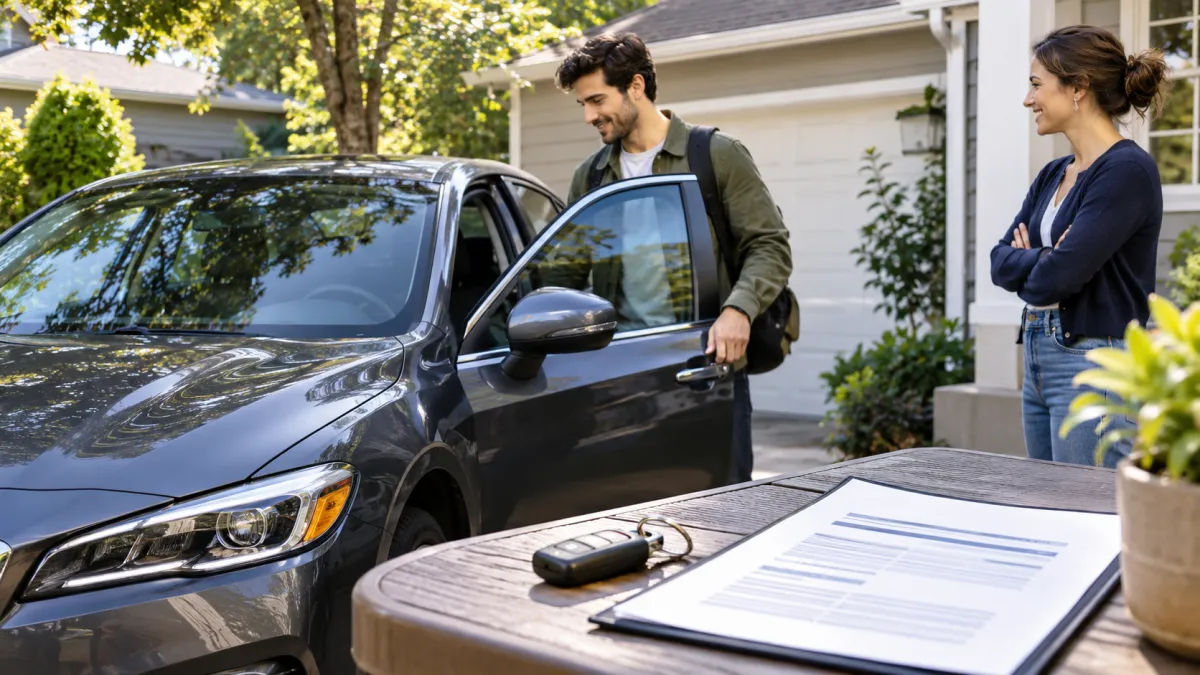
For example, imagine you live in an apartment without a car but occasionally borrow a friend’s sedan to run errands. If you cause an accident while driving that vehicle, the car owner’s insurance may provide coverage first, depending on the policy and applicable law. Your non-owner policy may provide additional liability protection if its terms apply.
Non-owner insurance is not a replacement for every type of auto insurance. It is typically designed for liability coverage, not physical damage protection for the vehicle you drive.
The exact coverage, eligibility rules, and available options vary by insurer and state.
Who May Need Non-Owner Car Insurance?
Non-owner car insurance can be useful in several situations. However, it is not automatically necessary for every person who drives a car they do not own.
People who frequently borrow cars
If you regularly borrow vehicles from friends or relatives but do not own a car, a non-owner policy may help provide liability protection.
The important distinction is between occasional borrowing and regular access to a vehicle.
If you frequently drive a particular household member’s car, the vehicle owner’s insurer may require you to be listed as a driver. A non-owner policy may not be appropriate for someone who has regular access to a specific vehicle.
Before purchasing coverage, discuss your driving arrangement with the vehicle owner and insurer.
People who rent cars occasionally
Some people do not own vehicles but rent cars while traveling or for occasional personal use.
A non-owner policy may provide liability coverage for certain rental situations. However, it should not be assumed to cover every rental-car expense.
Rental companies may offer separate protection options, and the terms of a non-owner policy can limit coverage. Physical damage to the rental vehicle, loss-of-use charges, and other rental-related expenses may not be covered.
Review the policy and rental agreement before deciding whether additional protection is needed.
People between vehicles
You may sell your car and decide not to purchase another one immediately. During this period, you might still borrow cars or rent vehicles occasionally.
A non-owner policy may help maintain liability coverage while you are without a vehicle.
If you are planning to purchase another car soon, compare the cost and suitability of a non-owner policy with arranging a standard auto policy when you acquire the vehicle. Avoid creating a gap in coverage if you will be driving.
Drivers who need an SR-22 or FR-44 filing
Some drivers are required by their state to maintain proof of financial responsibility after certain driving-related events.
An SR-22 or FR-44 is generally a filing connected to an insurance policy, not a separate insurance policy by itself. Requirements vary by state, and not every driver or situation qualifies for a non-owner arrangement.
If you do not own a car but need a filing, ask an insurer or your state’s relevant agency whether a non-owner policy can meet your specific requirement.
Do not assume that purchasing any non-owner policy automatically satisfies an SR-22 or FR-44 obligation.
People who use cars only occasionally
A person who drives only a few times a year may consider non-owner insurance, but whether it makes financial sense depends on the circumstances.
If the vehicle owner’s policy already provides appropriate coverage for occasional permissive drivers, an additional policy may not be necessary. If you rent cars, the rental company’s available protection may also affect your decision.
Compare the available coverage and costs rather than purchasing a policy simply because you sometimes drive.
What Does Non-Owner Car Insurance Cover?
Non-owner car insurance generally focuses on liability protection. The specific coverage depends on the insurer, state, and policy.
Bodily injury liability
Bodily injury liability may help pay for injuries you cause to other people in an accident for which you are legally responsible.
Covered expenses may include certain medical costs, subject to the policy’s limits and conditions. The coverage is intended to protect against liability to others, not to provide unrestricted medical coverage for the policyholder.
Property damage liability
Property damage liability may help pay for damage you cause to another person’s property while driving a covered vehicle.
For example, if you accidentally strike another vehicle while borrowing a car, property damage liability may apply to damage to that other vehicle, subject to the policy.
The coverage limit matters. If the damage exceeds the available limit, you could remain financially responsible for the difference.
Optional medical-related coverage
Depending on the state and insurer, a non-owner policy may offer additional coverage such as medical payments coverage (MedPay), personal injury protection (PIP), or uninsured/underinsured motorist coverage.
These options are not universally available with non-owner policies.
Their purpose and eligibility rules can differ by state. For example, PIP may operate under state-specific no-fault rules, while uninsured or underinsured motorist coverage may address certain injuries caused by drivers who have inadequate insurance.
Ask the insurer which options are available and how they apply when you are driving a vehicle you do not own.
What Does Non-Owner Car Insurance Usually Not Cover?
Understanding exclusions is just as important as understanding the coverage included.
Damage to the vehicle you are driving
Non-owner car insurance generally does not include collision or comprehensive coverage for the vehicle you borrow or rent.
Collision coverage typically addresses damage to a covered vehicle from a collision, while comprehensive coverage generally addresses certain non-collision losses. A non-owner policy is usually not designed to insure the physical vehicle itself.
If you damage a borrowed car, the vehicle owner’s policy may be relevant. If you damage a rental car, the rental agreement and any separate protection you purchased may matter.
Do not assume your non-owner policy will pay for repairs to the vehicle.
Damage to your own property
A liability-focused policy generally does not provide broad coverage for your own property. If you cause damage to property you own, the policy may not cover it.
The policy’s exact terms determine how a particular claim is handled.
Regular use of a household vehicle
Non-owner coverage is generally intended for people who do not own or have regular access to a vehicle.
If you live with someone who owns a car and you drive it regularly, the insurer may require you to be listed on that vehicle’s policy. A non-owner policy may exclude or restrict coverage for vehicles available for your regular use.
This is especially important for spouses, partners, roommates, and family members who share a household.
Commercial or for-hire driving
Personal auto coverage may exclude certain commercial driving activities, including rideshare or delivery work.
If you drive for a rideshare platform, deliver food or packages, or use a vehicle for another for-hire activity, do not assume a non-owner policy provides coverage.
You may need a different policy or an appropriate commercial or platform-related coverage arrangement. Confirm the terms with the insurer before accepting paid driving work.
How Non-Owner Car Insurance Works When You Borrow a Car
When you borrow a car, more than one insurance policy may be relevant.
In many situations, the vehicle owner’s insurance is the first policy considered for an accident involving that vehicle. A non-owner policy may provide additional liability protection, depending on the circumstances, policy language, and applicable law.
However, this is not a universal rule for every accident or every policy.
Consider a hypothetical example:
You borrow a friend’s car for a short trip. While driving, you cause an accident that injures another person. The vehicle owner’s policy may respond to the claim if the policy covers your use of the car. If the claim exceeds that policy’s available liability limits, your non-owner policy may potentially provide additional protection if its coverage applies.
The actual result depends on the policies, the facts of the accident, and state law.
Before borrowing a car, confirm that the owner permits your use and that the vehicle’s insurance covers the arrangement. If you borrow vehicles frequently, review whether you should be listed on an owner’s policy instead.
Non-Owner Car Insurance vs. Standard Auto Insurance
The main difference is that a standard auto policy is generally connected to a vehicle you own, while a non-owner policy is intended for drivers who do not own a vehicle.
| Feature | Non-owner car insurance | Standard auto insurance |
|---|---|---|
| Intended policyholder | Driver who does not own a car | Vehicle owner or eligible driver insuring a vehicle |
| Liability coverage | Generally included | Generally included |
| Collision coverage for a specific car | Usually not included | May be included |
| Comprehensive coverage for a specific car | Usually not included | May be included |
| Vehicle insured under policy | Typically no owned vehicle listed | Usually a specific vehicle or vehicles listed |
| Regular-use vehicle | May be restricted | Can be insured and drivers listed |
| SR-22/FR-44 filing | May be available in qualifying situations | May be available in qualifying situations |
| Best fit | Occasional drivers without a car | People who own or insure a vehicle |
A non-owner policy may be less expensive than a standard policy in some situations because it generally does not insure a specific vehicle for physical damage. However, the price depends on the driver, coverage limits, insurer, state, and other factors.
For help evaluating coverage limits, see KnowBrook’s guide on how much car insurance coverage you may need.
Non-Owner Car Insurance vs. Rental Car Insurance
Non-owner insurance and rental-car protection serve different purposes.
Non-owner insurance may provide liability coverage when you drive certain vehicles you do not own. Rental-car protection may offer coverage or financial protection specifically related to a rental agreement.
A rental company may offer options that address liability, damage to the rental vehicle, or other rental-related costs. The details depend on the company and the agreement.
| Consideration | Non-owner policy | Rental-car protection |
|---|---|---|
| Primary purpose | Liability protection for eligible non-owned driving | Protection associated with a rental |
| Liability coverage | May be included | Depends on the rental arrangement and options |
| Rental vehicle damage | Generally not covered by the non-owner policy | Certain options may address rental vehicle damage |
| Coverage duration | Policy term | Typically tied to the rental agreement |
| Suitable for | Drivers without a car who borrow or rent occasionally | People renting a vehicle |
A non-owner policy should not be treated as a complete rental-car protection package.
Before renting, check what your policy covers, what the rental company offers, and whether any other coverage you have applies. Avoid paying for overlapping protection without understanding the differences, but do not assume that existing coverage eliminates every rental-related risk.
How Much Does Non-Owner Car Insurance Cost?
The cost of non-owner car insurance varies. There is no single price that applies to all drivers across the United States.
Insurers may consider factors such as:
-
Your driving record
-
Your location and state
-
Your age and driving history
-
The liability limits you select
-
Available optional coverages
-
Your prior insurance history
-
The insurer’s underwriting rules
A driver with a clean record may receive a different quote from someone with recent violations or an accident history. Rates can also vary between insurers for similar coverage.
Why quotes can differ
Insurance companies assess risk differently. One insurer may offer a more competitive rate for a particular driver profile, while another may price the same coverage higher.
For that reason, it is useful to compare quotes from multiple insurers rather than relying on a single estimate.
When comparing quotes, make sure the coverage limits and options are similar. A lower premium may reflect lower limits or different policy conditions.
How to compare the cost with your actual needs
Before buying a policy, consider how often you drive and what protection you already have.
If you rarely drive and are covered under a vehicle owner’s policy when borrowing, a non-owner policy may provide limited additional value. If you frequently borrow cars from different people, need liability protection for eligible non-owned driving, or must maintain a qualifying filing, it may be more relevant.
Do not choose a policy based only on its premium. Review the coverage, exclusions, and eligibility conditions.
How to Get Non-Owner Car Insurance
Getting a non-owner policy generally involves comparing insurers, confirming eligibility, choosing coverage limits, and reviewing the policy before purchase.
Step 1: Confirm that a non-owner policy fits your situation
Start by identifying how you use vehicles.
Ask yourself:
-
Do I own a car?
-
Do I have regular access to a household vehicle?
-
Do I borrow vehicles occasionally or frequently?
-
Do I rent cars?
-
Do I need an SR-22 or FR-44 filing?
-
Am I using a vehicle for personal or commercial driving?
If you regularly drive a specific vehicle, a standard policy with you listed as a driver may be more appropriate.
Step 2: Check the vehicle owner’s insurance
If you borrow a car, ask the owner whether their insurance covers your use.
The insurer may have rules about permissive drivers, household members, or regular drivers. Do not assume that the owner’s policy automatically covers every person who gets permission to drive.
If you live in the same household as the owner or regularly use the vehicle, ask whether you need to be listed on the policy.
Step 3: Compare quotes from multiple insurers
Contact insurers that offer non-owner policies in your state.
When requesting quotes, explain your actual driving arrangement. Tell the insurer whether you borrow cars, rent vehicles, have household access to a car, or need a state filing.
Use consistent coverage limits when comparing quotes so that the prices are meaningful.
Step 4: Review the coverage and exclusions
Before purchasing, check:
-
Bodily injury liability limits
-
Property damage liability limits
-
Availability of MedPay, PIP, or uninsured/underinsured motorist coverage
-
Restrictions involving regular-use vehicles
-
Rental-car coverage limitations
-
Exclusions for commercial or for-hire driving
-
Any filing requirements and related conditions
Ask the insurer to clarify anything you do not understand.
Step 5: Select coverage limits that fit your circumstances
State minimum liability limits may not be sufficient to cover every serious accident.
Consider your financial situation, potential liability, and the coverage available through the vehicle owner’s policy. Higher limits may offer more protection but can also increase the premium.
The appropriate limits depend on your circumstances. Avoid assuming that the cheapest available policy provides enough coverage.
Step 6: Complete the application and confirm the policy
Provide accurate information about your driving history and vehicle access.
If you are purchasing coverage to meet a state filing requirement, verify that the insurer can make the required filing and that it satisfies the specific obligation.
Once the policy is issued, review the documents and confirm the effective date. If you will be driving, make sure the coverage is active before doing so.
Common Mistakes to Avoid
Assuming non-owner insurance covers every borrowed car
A policy may restrict coverage for vehicles available for regular use or vehicles owned by household members. Review these limitations carefully.
Believing it pays for damage to the borrowed vehicle
Non-owner policies generally focus on liability. They usually do not include collision or comprehensive coverage for the car you drive.
Ignoring household-driver rules
If you regularly drive a spouse’s, partner’s, roommate’s, or family member’s car, the insurer may require you to be listed on the vehicle’s policy.
Treating SR-22 or FR-44 as insurance
These are filings connected to insurance requirements. The filing itself does not replace the insurance policy, and eligibility depends on state rules and the driver’s circumstances.
Assuming rental protection is unnecessary
A non-owner policy may not cover damage to a rental vehicle or every cost associated with a rental agreement. Review the available protection and exclusions before declining rental options.
Buying a policy without comparing coverage
Premiums alone do not show whether a policy fits your needs. Compare limits, exclusions, eligibility, and optional coverage—not just the price.
Conclusion
Non-owner car insurance can be a practical option for people who drive but do not own a vehicle. It generally provides liability-focused protection for eligible non-owned driving, such as certain situations involving borrowed or rented cars.
It is not a substitute for a standard auto policy when you own a vehicle, and it usually does not cover physical damage to the car you are driving. Regular access to a household vehicle, rental-car arrangements, commercial driving, and state filing requirements can all affect whether a non-owner policy is appropriate.
Before purchasing, confirm how the vehicle owner’s insurance applies, compare quotes with similar limits, and carefully review exclusions. If you need an SR-22 or FR-44 filing, verify the requirements with your insurer and the relevant state agency.
The best policy is one that matches how you actually drive, meets any applicable requirements, and provides coverage you understand.
Frequently asked questions
1. Does non-owner car insurance pay before or after the car owner’s insurance?
In many situations, the vehicle owner’s insurance may provide the primary coverage when someone drives the car with permission. A non-owner policy may provide additional liability protection if its terms allow it. However, the order and availability of coverage depend on the policies, applicable state law, and circumstances of the accident. Check both policies rather than assuming the non-owner policy always pays second.
2. Does non-owner car insurance have a deductible?
A typical non-owner policy is primarily liability coverage, so it generally does not have a collision or comprehensive deductible for damage to the vehicle being driven. Non-owner policies generally do not cover that physical damage in the first place. Any optional coverage and its deductible depend on the insurer and policy terms.
3. Does a non-owner policy cover other drivers, such as a spouse or roommate?
A non-owner policy generally is designed around the named insured, not automatically every spouse, roommate, or household member. Coverage for other drivers depends on the policy. Someone who regularly drives a household member’s vehicle may need to be listed on the vehicle owner’s policy. Confirm eligibility with the insurer.
4. Does non-owner car insurance cover rideshare or delivery driving?
Personal non-owner policies generally exclude certain commercial or for-hire driving, including rideshare or delivery activity. Coverage depends on the insurer and policy wording. Drivers should verify whether their intended work is covered and whether separate commercial or platform-related coverage is required.
5. Can I keep non-owner car insurance after buying a car?
A non-owner policy generally is not a substitute for standard auto insurance on a vehicle you own. After buying a car, contact your insurer to arrange vehicle-specific coverage that meets your state’s requirements before driving. Ask the insurer how to transition or cancel the non-owner policy without creating a coverage gap.

Olivia Bennett writes practical automotive content covering car buying, ownership costs, maintenance, vehicle features, reliability, and everyday driving decisions. Her work focuses on helping readers understand automoti...