Should You Buy a Car With a Rebuilt Title? Risks, Inspections, and Costs
A rebuilt-title car may cost less than a comparable clean-title vehicle, but its damage history can create safety, repair, insurance, financing, and resale concerns. Learn how to check its title history, evaluate previous repairs, arrange an independent inspection, compare ownership costs, and decide when buying one makes sense.
In this article
- What Is a Rebuilt Title?
- Rebuilt Title vs. Salvage Title vs. Clean Title
- The Main Risks of Buying a Rebuilt-Title Car
- Hidden Structural Damage
- Poorly Completed Repairs
- Flood or Water Damage
- Airbag and Safety-System Problems
- Unexpected Repair and Ownership Costs
- Insurance and Financing Limitations
- Lower Resale Value
- How to Check a Rebuilt-Title Car Before Buying
- 1. Get the VIN and Verify the Title
- 2. Obtain a Vehicle History Report
- 3. Ask for Repair Documentation
- 4. Check for Open Recalls
- 5. Verify the State’s Title Requirements
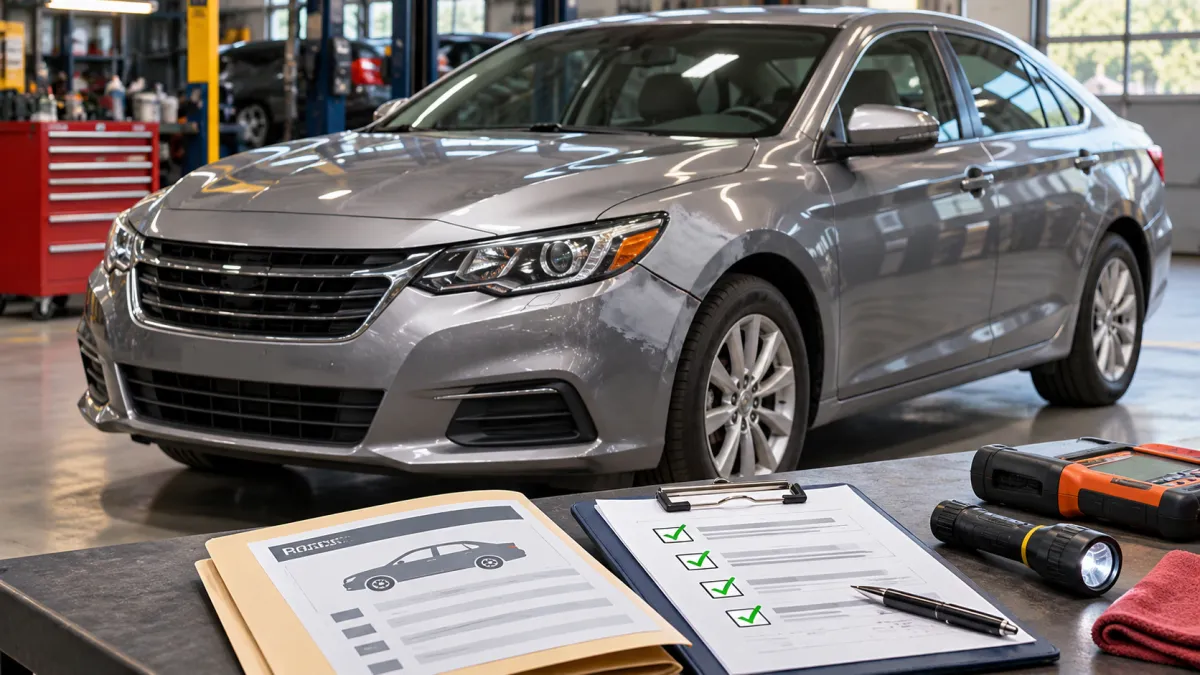
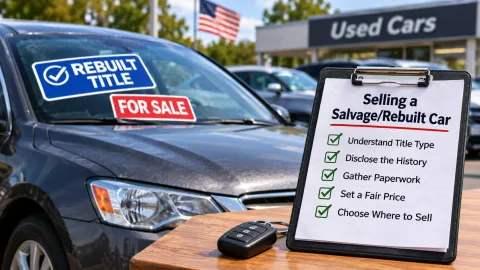
A car with a rebuilt title can cost substantially less than a comparable vehicle with a clean title, but the lower price comes with important trade-offs. The car may have experienced a serious accident, flood, fire, or other damage that led an insurer or state to classify it as a salvage vehicle. After repairs and any required state process, it may be eligible for a rebuilt title.
You may want to buy a rebuilt-title car if the damage history is documented, the repairs are professionally completed, an independent mechanic finds no major safety problems, and the total cost makes financial sense. However, a rebuilt title is not a guarantee that the vehicle is safe, reliable, easy to insure, or worth its asking price.
Before buying one, you need to understand what the title brand means, how to investigate the vehicle’s history, what to inspect, and how the title may affect insurance, financing, and resale. These steps can help you decide whether the savings justify the risk.
What Is a Rebuilt Title?
A rebuilt title is a vehicle title designation used in many US states for a vehicle that was previously branded as salvage and later repaired or processed under applicable state requirements.
A vehicle may receive a salvage designation after being declared a total loss because of damage. The circumstances can vary, including:
-
A serious collision
-
Flood or water damage
-
Fire damage
-
Theft recovery
-
Other damage that meets the state’s salvage-title criteria
After repairs, the vehicle may qualify for a rebuilt or similar title brand. Terminology and procedures vary by state, so the precise meaning of the title should be checked with the state motor vehicle agency.
A rebuilt title does not mean that the vehicle was restored to its original factory condition. It also does not establish that every repair was performed correctly or that every damaged component was replaced.
The title brand is an important part of the vehicle’s history. It should be considered alongside repair records, a vehicle history report, and an independent inspection.
Rebuilt Title vs. Salvage Title vs. Clean Title
These title types are not interchangeable.
| Title type | General meaning | What a buyer should understand |
|---|---|---|
| Clean title | The title does not carry a salvage or rebuilt brand in the current record | It does not automatically prove that the vehicle has never experienced serious damage |
| Salvage title | The vehicle has been branded salvage under applicable state rules, often following significant damage or a total loss | It may not be legally eligible for ordinary road use until repaired and processed |
| Rebuilt title | The vehicle was previously salvage-branded and has since completed the applicable rebuilding/title process | The damage history remains important, and the title is not a guarantee of repair quality |
A vehicle’s current title status may not tell its complete history. A title brand can be recorded in vehicle history databases even when a buyer is looking at a later title document.
For more background on vehicle identification, see KnowBrook’s guide to what a VIN number is.
The Main Risks of Buying a Rebuilt-Title Car
The discount may be attractive, but a rebuilt-title vehicle can present risks that are harder to evaluate than those of a typical used car.
Hidden Structural Damage
A serious collision can affect a vehicle’s frame, unibody structure, suspension mounting points, or other critical components. Repairs may restore the vehicle’s appearance without correcting every structural problem.
Potential consequences include:
-
Uneven tire wear
-
Poor alignment
-
Reduced handling stability
-
Premature suspension wear
-
Compromised crash protection
A visual inspection alone may not reveal structural damage. An independent mechanic or qualified collision-repair professional should examine the vehicle, including areas that are not readily visible.
Poorly Completed Repairs
Repair quality is one of the biggest concerns with rebuilt-title vehicles. A car may look polished because its exterior panels have been repaired or replaced, while underlying problems remain.
Examples include improperly repaired wiring, mismatched parts, incomplete sealing, or repairs that do not meet appropriate specifications.
Ask for documentation showing what was damaged, which parts were replaced, and who performed the work. If the seller cannot explain the repairs or provide records, uncertainty increases.
Flood or Water Damage
Flood-damaged vehicles can be especially difficult to assess. Water may affect electrical systems, connectors, sensors, interior materials, and mechanical components. Some problems may appear long after the vehicle has been repaired.
Warning signs can include:
-
A musty odor
-
Water lines or unusual staining
-
Corrosion in places that should remain dry
-
Damp carpets or upholstery
-
Mud or debris in concealed areas
-
Electrical features that operate inconsistently
These clues are not conclusive by themselves. A professional inspection is particularly important when flood damage is suspected.
Airbag and Safety-System Problems
A collision may deploy airbags or damage components connected to the vehicle’s safety systems. Replacing an airbag does not necessarily mean the entire system has been restored correctly.
Ask the inspector to check relevant airbags, seat-belt components, warning lights, sensors, and diagnostic codes. A dashboard without warning lights is not sufficient proof that all safety systems are functioning properly.
Unexpected Repair and Ownership Costs
A rebuilt-title vehicle may have a low purchase price but require additional work after purchase. The cost of correcting hidden damage can quickly reduce the initial savings.
Possible expenses include:
-
Mechanical repairs
-
Electrical troubleshooting
-
Suspension or alignment work
-
Tire replacement
-
Additional safety-system repairs
-
Inspection or title-related expenses, where applicable
The purchase decision should be based on the expected total cost of ownership, not just the seller’s price.
Insurance and Financing Limitations
Insurance companies may have different rules for rebuilt-title vehicles. Some may offer certain coverage types, while others may impose restrictions or decline coverage. The availability of comprehensive and collision coverage can be particularly important.
Lenders may also have their own policies regarding branded-title vehicles. A buyer should not assume that a rebuilt-title car will qualify for the same financing terms as a clean-title car.
Contact the insurer and lender before committing to the purchase. Ask about the exact vehicle, its title brand, and the coverage or financing terms available.
Lower Resale Value
A rebuilt-title vehicle may be harder to sell later. Some buyers avoid branded titles, and dealerships may be less willing to accept them as trade-ins.
The future resale price depends on factors such as the make and model, age, mileage, repair quality, type of damage, local market, and title history. There is no single depreciation percentage that applies to every rebuilt-title vehicle.
Compare actual listings for similar rebuilt-title and clean-title vehicles. Consider how much you could realistically receive when selling the car—not just what the current seller is asking.
How to Check a Rebuilt-Title Car Before Buying
Do not rely on the seller’s explanation alone. Investigate the vehicle using its VIN, available records, and an independent inspection.
1. Get the VIN and Verify the Title
Ask the seller for the vehicle identification number (VIN). Compare it against the VIN displayed on the vehicle and the title paperwork.
Check that the information is consistent. If the VIN appears altered, the paperwork does not match, or the seller refuses to provide it, do not proceed until the discrepancy is resolved.
You can use the VIN to investigate the vehicle’s history and check for open safety recalls through the National Highway Traffic Safety Administration (NHTSA).
2. Obtain a Vehicle History Report
A vehicle history report can help identify recorded title brands, reported accidents, odometer information, and other available records.
The National Motor Vehicle Title Information System (NMVTIS) is a US system designed to provide important vehicle title and history information through approved providers. Its reports may include title information, certain salvage or total-loss data, and odometer information.
However, an NMVTIS report is not a complete record of every repair made to a vehicle. Reporting coverage, timing, and available data can vary. A report should be treated as one source of information, not a substitute for an inspection.
Compare the report with the seller’s paperwork. Look for inconsistencies in title history, mileage, damage records, and the timeline of ownership.
3. Ask for Repair Documentation
Request as much information as the seller can reasonably provide, such as:
-
Photos taken before repairs
-
Repair estimates
-
Itemized invoices
-
Parts receipts
-
Body shop information
-
Records of replaced safety components
-
Applicable state inspection or title documents
The records should help you understand the original damage and how it was repaired.
Be cautious if the seller provides only vague assurances such as “everything was fixed” or “the state approved it.” A title process does not necessarily establish the quality of every repair.
4. Check for Open Recalls
Use the NHTSA VIN Recall Lookup to check whether the vehicle has open safety recalls. A recall may concern a safety component that needs attention regardless of the title brand.
A rebuilt-title vehicle may have both previous damage-related issues and outstanding manufacturer recall concerns. Investigate each separately.
5. Verify the State’s Title Requirements
Title and inspection procedures differ among states. The seller’s state and the state where you plan to register the car may have different requirements.
Contact the relevant state motor vehicle agency to confirm:
-
Whether the title brand is valid and properly recorded
-
Whether the vehicle can be registered for road use
-
Whether additional inspections or documents are required
-
Whether the title will retain a rebuilt or similar brand after transfer
Do not assume that a vehicle processed in one state will automatically be treated identically in another.
Frequently asked questions
1. Does a rebuilt title stay on a vehicle's history permanently?
A rebuilt or salvage-related title brand is generally retained in the vehicle's reported title history. When a vehicle is transferred between states, its title branding and records may also be reported through vehicle-history systems such as NMVTIS. Reporting coverage and timing can vary, so buyers should check both the current title and available historical records.
2. Does an NMVTIS vehicle history report show the actual repairs made to a rebuilt-title car?
No. An NMVTIS report can provide title and brand history, odometer information, and certain salvage or total-loss indicators, but it does not provide a complete record of repairs performed. Ask the seller for available repair invoices, parts receipts, photographs, and other documentation. Have an independent mechanic inspect the vehicle before purchasing it.
3. Can a car have a clean title even though it was previously declared a total loss?
It is possible for a vehicle's current title to fail to show a previously reported brand, including because of differences in state reporting or title-branding practices. Buyers should check historical title information through NMVTIS and other reliable vehicle-history sources. A clean-looking paper title alone should not be treated as proof that the vehicle has never been declared a total loss.

Olivia Bennett writes practical automotive content covering car buying, ownership costs, maintenance, vehicle features, reliability, and everyday driving decisions. Her work focuses on helping readers understand automoti...