What Is Vanpooling? How It Works, Costs, and How to Find a Ride
Vanpooling is a shared commuting option that allows people traveling along similar routes to ride together in a van. Learn how vanpooling works, how costs are shared, how to find and join a vanpool, and how it compares with carpooling and driving alone. This guide also explains common program types, pickup arrangements, potential benefits, and important details to check before joining a vanpool in the United States.
In this article
- What Is Vanpooling?
- How Does Vanpooling Work?
- 1. Commuters Find or Form a Group
- 2. The Group Establishes a Route
- 3. A Driver Is Assigned
- 4. The Group Follows a Regular Schedule
- 5. Participants Share the Costs
- Types of Vanpool Programs
- Owner-Operated Vanpools
- Vanpools Through Private Providers
- Employer-Sponsored Vanpools
- Public or Regional Transportation Agency Vanpools
- How Much Does Vanpooling Cost?
- What Is Usually Included in the Cost?
- An Illustrative Vanpool Cost-Sharing Example
- Compare Vanpool Costs With Your Current Commute
- How to Find and Join a Vanpool
- Step 1: Check Your Regional Transportation Agency
- Step 2: Ask Your Employer
- Step 3: Explore Vanpool Providers
- Step 4: Search for Commuters With Similar Routes
- Step 5: Review the Terms Before Joining
- Vanpool vs. Carpool vs. Driving Alone
- Vanpooling vs. Carpooling
- Vanpooling vs. Driving Alone
- Benefits of Vanpooling
- Shared Transportation Expenses
- Fewer Vehicles on the Road
- Less Daily Driving
- Potential Employer Commuter Benefits
- A More Consistent Commute Arrangement
- Drawbacks and Limitations of Vanpooling
- Limited Schedule Flexibility
- Dependence on Other Participants
- Pickup Locations May Not Be Convenient
- Less Privacy
- Availability Depends on Your Area
- Are Vanpool Expenses Eligible for Employer Commuter Benefits?
- Is Vanpooling Right for Your Commute?
- Calculate the Full Cost of Your Commute
- Check the Backup Transportation Plan
- Review the Commitment
- Conclusion
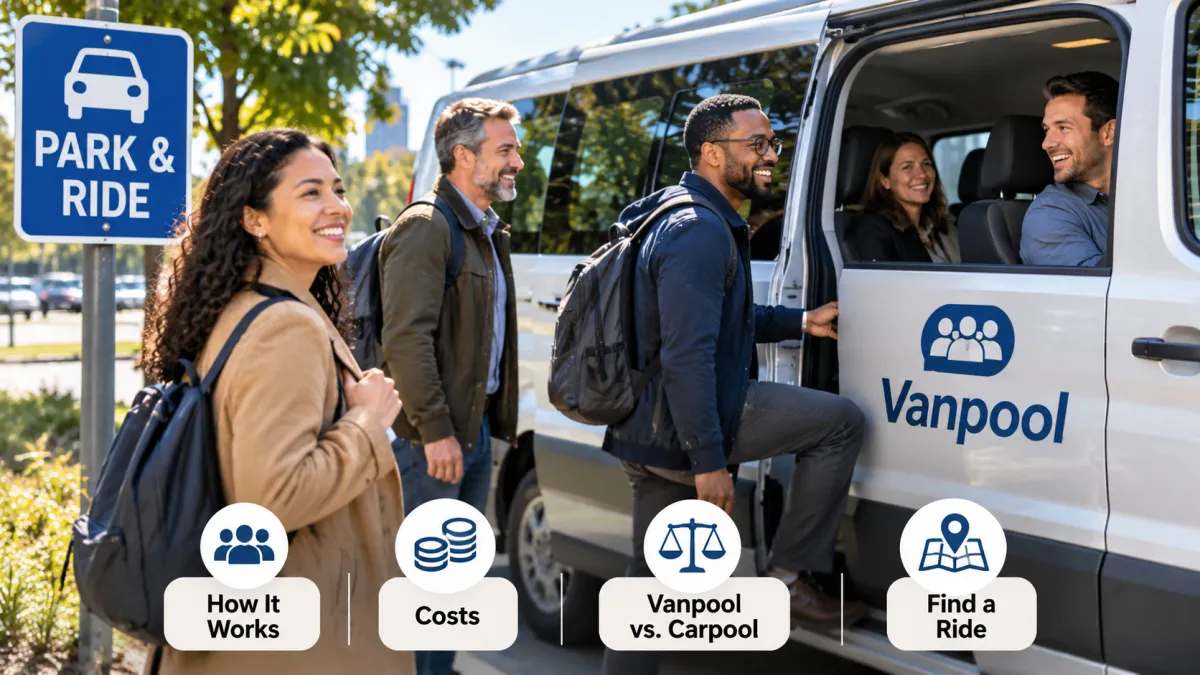
Vanpooling is a shared commuting option that allows people traveling along similar routes to ride together in a van instead of driving separate vehicles. It is commonly used by employees and other commuters who live in the same general area and travel to nearby workplaces.
A vanpool can help commuters share transportation expenses, reduce the number of vehicles on the road, and make a long daily commute less stressful. Depending on the program, a van may be provided through a regional transportation agency, a private vanpool service, an employer, or a group of commuters.
However, vanpooling is not the same as taking a public bus or joining an informal carpool. Most vanpools follow a regular commute schedule, use designated pickup locations, and divide operating costs among participants.
Understanding how vanpooling works, how costs are shared, and how to find a suitable program can help you decide whether it fits your daily commute.
What Is Vanpooling?
Vanpooling is a form of ridesharing in which multiple commuters use one van to travel to and from work. The participants generally have similar origins, destinations, or commuting routes.
For example, several employees may live in the same suburban area and work at an office park in a nearby city. Instead of each person driving alone, they can travel together in a van.
The van may be driven by one of the participants or by a designated driver, depending on the program. The commuters typically share the costs associated with operating the vehicle.
Vanpooling is particularly useful for people who:
-
Commute long distances to work
-
Live in areas with limited public transportation
-
Work at the same employer or nearby workplaces
-
Have relatively consistent work schedules
-
Want to reduce individual commuting expenses
-
Prefer not to drive every day
Vanpool arrangements vary by location. Some programs provide vans through transportation agencies or private providers, while others are organized by employers or commuter groups.
The essential idea is simple: people with compatible commuting routes share one vehicle and its expenses.
How Does Vanpooling Work?
Most vanpool programs follow a structured process. Commuters are matched with a group, agree on pickup arrangements, establish a schedule, and share the cost of the ride.
Although individual programs differ, the process generally includes the following steps.
1. Commuters Find or Form a Group
A vanpool usually begins with a group of people who travel along similar routes.
Participants may be coworkers, employees from nearby businesses, or commuters matched through a regional rideshare program.
Some transportation agencies offer online matching services that help people find others with similar commuting patterns.
The number of participants depends on the van's capacity and the program's rules. For example, 511.org in the San Francisco Bay Area describes vanpools with groups of 7 to 15 people. King County Metro in Washington describes a vanpool program involving five or more participants.
These are examples of local program arrangements, not a universal requirement for every vanpool in the United States.
2. The Group Establishes a Route
The participants determine where the van will pick up riders and where it will drop them off.
Pickup arrangements may include:
-
A designated park-and-ride lot
-
A commuter's home or nearby meeting point
-
A central location within a neighborhood
-
A workplace parking area
-
A location convenient for several participants
Home pickup is not guaranteed. Many vanpools use centralized pickup points because collecting every passenger individually could make the commute longer and more complicated.
The route should balance convenience with reasonable travel time.
3. A Driver Is Assigned
Most vanpools need a designated driver. Some programs also arrange backup drivers to cover absences.
The driver may be a participating commuter, a person assigned by an employer, or someone arranged through the vanpool provider.
Driver qualifications depend on the vehicle and program. A standard driver's license may be sufficient in some arrangements, but other programs have specific requirements involving driving records, age, vehicle type, or licensing.
Participants should confirm the driver's responsibilities and qualification requirements before joining.
4. The Group Follows a Regular Schedule
Vanpools are generally designed for commuters with consistent work schedules.
For example, a group may travel to work in the morning and return in the late afternoon. Pickup times and routes are usually agreed upon in advance.
A regular schedule makes it easier for participants to coordinate their daily commute. However, it may be less convenient for people who frequently work late, change shifts, or need to make unexpected stops.
5. Participants Share the Costs
The vanpool's operating expenses are usually divided among participants.
Depending on the program, costs may include:
-
Vehicle leasing or rental
-
Fuel
-
Insurance
-
Maintenance
-
Program administration
-
Parking or other applicable expenses
The amount each rider pays depends on the arrangement, the distance traveled, the number of participants, and the program's pricing structure.
Some programs provide employer or transportation-agency assistance that reduces the amount commuters pay.
Types of Vanpool Programs
Vanpooling is not organized in just one way. The vehicle provider, driver arrangement, and payment structure can vary.
Owner-Operated Vanpools
In an owner-operated vanpool, a commuter or group may arrange the vehicle and manage the daily operation.
The group may share expenses such as fuel, insurance, maintenance, and vehicle payments.
This model can offer flexibility because participants have more control over the route and schedule. However, it also requires someone to manage the vehicle, expenses, and group coordination.
The responsibilities should be clearly agreed upon before the group begins commuting.
Vanpools Through Private Providers
Some vanpool services provide vehicles through a leasing or transportation arrangement.
A private provider may help with vehicle availability, maintenance, insurance arrangements, or program administration. The exact services depend on the provider and contract.
For example, Commute with Enterprise offers vanpool commuting arrangements. Its program information can help commuters understand how a provider-managed vanpool works.
This option may be useful for people who do not want to independently purchase or manage a vehicle for commuting.
Employer-Sponsored Vanpools
An employer may organize or support a vanpool for employees.
The employer might coordinate participants, help arrange transportation, or provide financial assistance through a commuter benefit program.
Employer-sponsored vanpools can be convenient when many employees work at the same location and have similar schedules.
However, employer participation does not automatically mean the ride is free. Employees should check the contribution amount, eligibility requirements, and payment arrangements.
Public or Regional Transportation Agency Vanpools
Regional transportation agencies sometimes offer vanpool programs to help commuters reduce single-occupancy vehicle travel.
These programs may provide participant matching, vehicle arrangements, subsidies, or other commuting assistance.
For example, King County Metro operates a vanpool program in the Seattle-area region, while Fairfax County Transportation provides vanpool information and commuter services in Northern Virginia.
These examples illustrate how local programs can differ. A commuter should use the transportation agency serving their own area to find relevant options.
How Much Does Vanpooling Cost?
Vanpooling costs vary by program. There is no single nationwide monthly price.
The amount a commuter pays depends on several factors, including:
-
The total distance traveled
-
The vehicle used
-
The number of riders sharing the expenses
-
Fuel prices
-
Vehicle leasing or rental costs
-
Parking expenses
-
Insurance and maintenance arrangements
-
Employer or transportation-agency subsidies
A longer commute may cost more because the van uses more fuel and may have higher operating expenses. A larger group may be able to divide certain shared costs among more participants, although the exact pricing method depends on the program.
What Is Usually Included in the Cost?
Depending on the arrangement, a vanpool payment may cover some or all of the following:
| Expense | How it may affect the cost |
|---|---|
| Vehicle lease or rental | May be a major fixed monthly expense |
| Fuel | Depends on mileage and fuel prices |
| Insurance | May be included in a provider's fee |
| Maintenance | May be managed by the provider or group |
| Parking | May be included or charged separately |
| Program administration | May be part of the monthly payment |
| Subsidies | Can reduce the amount paid by commuters |
Always review the program's cost details. A quoted monthly payment may not include every possible expense.
An Illustrative Vanpool Cost-Sharing Example
Consider a hypothetical vanpool group with six commuters, including the driver.
Assume the group's total monthly operating expenses are $1,800. If those expenses are divided equally among all six participants, each person would contribute:
$1,800 ÷ 6 = $300 per month.
This is an illustrative calculation, not a typical or guaranteed vanpool price. Actual costs can be higher or lower depending on the vehicle, route, provider, and local program.
Some vanpool programs use a different payment structure. The driver may receive a reduced payment, a subsidy may cover part of the cost, or the group may divide expenses according to an agreed arrangement.
Compare Vanpool Costs With Your Current Commute
Before joining a vanpool, compare its monthly cost with what you currently spend driving alone.
Your individual driving expenses may include:
-
Gasoline
-
Parking
-
Tolls
-
Vehicle maintenance
-
Tires
-
Depreciation
-
Insurance
Not every expense will disappear if you join a vanpool. You may still own a car and pay insurance, registration, and other fixed vehicle expenses.
However, if you use your personal vehicle less often, you may reduce some mileage-related expenses.
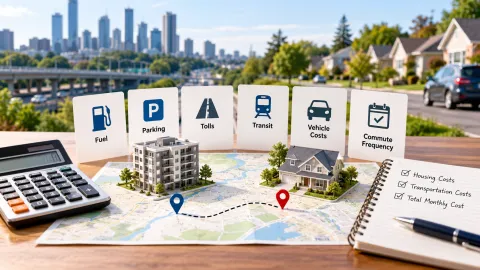
For a more detailed calculation, you can use KnowBrook's guide on how much your commute really costs, including gas, parking, tolls, and more.
The most useful comparison is your actual monthly transportation cost rather than fuel expenses alone.
How to Find and Join a Vanpool
Finding a vanpool usually begins with identifying transportation services and commuters who travel along your route.
The following steps can help you locate a suitable arrangement.
Step 1: Check Your Regional Transportation Agency
Start with the transportation agency that serves your city, county, or metropolitan area.
Some agencies provide vanpool information, participant matching, commuter assistance, or financial incentives.
For example:
-
511.org provides vanpool information for the San Francisco Bay Area.
-
King County Metro offers vanpool services in its service area.
-
Fairfax County Transportation provides vanpool information for commuters in Northern Virginia.
-
Utah Transit Authority offers vanpool services in Utah.
These programs are geographically limited. A service available in one region may not be available in another.
Search for your local transportation agency's rideshare or commuter services section.
Step 2: Ask Your Employer
Your employer may already have a commuter transportation program.
Contact the human resources department, employee benefits team, or transportation coordinator.
Ask whether the company:
-
Operates an employee vanpool
-
Matches employees with nearby commuters
-
Offers commuter transportation subsidies
-
Provides parking or pickup arrangements
-
Supports qualified commuter benefits
An employer may be able to connect you with coworkers who live in the same area.
Step 3: Explore Vanpool Providers
Private vanpool providers may help commuters locate or organize a group.
A provider can be useful if you need a vehicle arrangement rather than simply finding other commuters.
Review the provider's service area, monthly pricing, driver requirements, vehicle arrangements, and cancellation policy.
Do not assume a provider operates in your area without checking.
Step 4: Search for Commuters With Similar Routes
If a formal program is not available, you may be able to find a vanpool group through your workplace or a local commuter network.
The best potential matches usually have:
-
Similar starting locations
-
Nearby destinations
-
Compatible work schedules
-
Similar commuting days
-
Reasonable pickup arrangements
A group with a slightly different route may still be practical if the pickup point is convenient and the additional travel time is manageable.
Step 5: Review the Terms Before Joining
Before committing to a vanpool, make sure you understand how it operates.
Confirm the monthly cost, payment schedule, route, pickup location, driver arrangement, and program rules.
It is also important to understand how the group handles absences, schedule changes, and unexpected transportation problems.
A vanpool may be a good fit when the arrangement is reliable and the expectations are clear.
Vanpool vs. Carpool vs. Driving Alone
Vanpooling, carpooling, and driving alone all provide different commuting experiences.
| Feature | Vanpooling | Carpooling | Driving alone |
|---|---|---|---|
| Number of commuters | Usually a larger group | Often a smaller group | One driver |
| Vehicle arrangement | Often organized through a provider, employer, or program | Frequently arranged informally | Personal vehicle |
| Cost sharing | Costs generally shared among participants | Costs may be shared | Driver pays individual expenses |
| Schedule | Usually regular and planned | Can be flexible or planned | Most flexible |
| Pickup arrangements | Often designated pickup points | May involve direct pickups | No passenger pickups |
| Driving responsibility | Designated driver or program arrangement | Often shared or agreed | Driver handles everything |
| Privacy | Limited | Limited | Greater privacy |
| Flexibility for personal stops | Usually limited | Depends on the group | High |
Vanpooling vs. Carpooling
The main difference is the size and structure of the commuting arrangement.
A carpool often involves two or a few commuters sharing a personal vehicle. It may be organized informally between coworkers, neighbors, or friends.
A vanpool generally involves a larger group and may use a vehicle provided through a formal program.
Vanpools can be particularly useful for longer or more organized commuting routes, while carpools may be easier to arrange for a small group with flexible schedules.
Vanpooling vs. Driving Alone
Driving alone provides greater control over your departure time, route, and stops.
Vanpooling requires coordination with other participants. You may need to follow a fixed pickup schedule and wait for the group.
However, a vanpool can reduce the number of days you need to drive your own vehicle and may reduce your commuting expenses.
The best option depends on how much you value flexibility, cost sharing, convenience, and independence.
Benefits of Vanpooling
Vanpooling can offer several practical benefits to commuters.
Shared Transportation Expenses
When several commuters use one vehicle, they can share certain operating expenses.
This may reduce the individual cost of commuting compared with driving alone, particularly when the route is long and the group has a reasonable number of participants.
The actual savings depend on the vanpool payment structure and your existing transportation expenses.
Fewer Vehicles on the Road
A vanpool can replace several individual vehicles with one shared vehicle.
This can reduce the number of cars traveling along the same commute route. The effect on traffic and emissions depends on factors such as vehicle occupancy, route, distance, and whether the vanpool replaces individual driving trips.
Less Daily Driving
Participants do not necessarily need to drive every day.
When another participant is driving, riders can avoid some of the responsibilities associated with operating a personal vehicle during the commute.
This may be helpful for commuters who find daily driving tiring.
Potential Employer Commuter Benefits
Some employers offer commuter assistance or qualified transportation benefits.
Depending on the employer's plan and applicable rules, these benefits may help reduce eligible commuting expenses.
For tax year 2026, the IRS qualified transportation fringe benefit exclusion limit for commuter highway vehicle transportation and transit passes is $340 per month, subject to applicable requirements.
This is a tax exclusion limit, not a guaranteed employer subsidy or automatic monthly payment. Eligibility and treatment depend on the benefit arrangement and applicable tax rules.
Employees should review their employer's commuter benefit policy and IRS Publication 15-B for current guidance.
A More Consistent Commute Arrangement
A well-organized vanpool can provide a predictable routine.
Participants know the pickup location, departure time, route, and expected return schedule. This can be useful for commuters whose work hours remain consistent.
Drawbacks and Limitations of Vanpooling
Vanpooling is not suitable for every commuter. Its advantages depend heavily on the group's schedule, route, and organization.
Limited Schedule Flexibility
Vanpools usually follow a shared schedule.
If you need to leave work early, stay late, attend an appointment, or make an unexpected stop, you may not be able to do so without affecting other participants.
This can be a major limitation for people with unpredictable work schedules.
Dependence on Other Participants
A vanpool requires coordination.
If a participant changes their schedule or leaves the group, the arrangement may need to be adjusted. A smaller group may be particularly affected by changes in participation.
A reliable group should have clear expectations for attendance, payments, and communication.
Pickup Locations May Not Be Convenient
A vanpool may not pick you up directly at home.
You might need to drive, walk, or use another transportation option to reach a designated pickup point.
If the pickup location is far from your home, the time and cost of reaching it may reduce the overall convenience of vanpooling.
Less Privacy
You share the vehicle with other commuters.
Some people enjoy the social aspect, while others prefer a quiet and private commute.
The group may also need to agree on practical matters such as music, conversation, temperature, and passenger behavior.
Availability Depends on Your Area
Vanpool programs are not available everywhere.
A suitable group may be difficult to find if you live in a rural area, have an unusual work schedule, or commute to a location with few other workers.
A vanpool may also be impractical if the group would need to travel far out of its way to collect participants.
Are Vanpool Expenses Eligible for Employer Commuter Benefits?
Some vanpool expenses may qualify for employer-provided commuter benefits under applicable federal rules.
Qualified transportation fringe benefits can include transportation in a commuter highway vehicle, subject to requirements.
Generally, a commuter highway vehicle must meet specific criteria, including seating capacity and commuting use. The statutory criteria include transportation between an employee's residence and workplace, at least six adults excluding the driver, and commuting mileage conditions.
These rules do not mean every shared van automatically qualifies for a tax benefit.
The eligibility of a particular vanpool depends on the vehicle, transportation arrangement, employer's benefit plan, and applicable tax rules.
Employers and employees should consult current IRS guidance, including Publication 15-B, rather than assuming that any vanpool payment is tax-free.
If your employer offers commuter benefits, ask:
-
Whether vanpool expenses are included
-
Whether the vanpool must meet specific requirements
-
How the benefit is administered
-
Whether a monthly limit applies
-
What documentation is required
The benefit may lower your out-of-pocket commuting cost, but it is not available automatically to every vanpool participant.
Is Vanpooling Right for Your Commute?
Vanpooling can be a practical option when your commute is predictable and other people travel along a similar route.
Before joining, evaluate your commute using the following factors.
| Factor | Vanpool may be a good fit when… | It may be less suitable when… |
|---|---|---|
| Work schedule | Your hours are consistent | Your schedule changes frequently |
| Commute route | You share a route with other commuters | Your destination is difficult to match |
| Pickup location | A central pickup point is convenient | The pickup point is far away |
| Transportation cost | Shared expenses are lower than your current commute | The payment is similar to or higher than your current costs |
| Flexibility | You can follow a group schedule | You frequently need unexpected stops |
| Reliability | The group has a clear driver and backup plan | There is no dependable arrangement |
| Personal preference | You are comfortable sharing a vehicle | You strongly prefer privacy |
Calculate the Full Cost of Your Commute
Do not compare vanpool costs only with the gasoline you currently purchase.
Consider parking, tolls, maintenance, vehicle depreciation, and other mileage-related costs.
You can also compare transportation expenses when choosing where to live, especially if you are evaluating a longer commute or a move to a different area.
Check the Backup Transportation Plan
A vanpool should have a plan for situations in which the driver is unavailable or a participant needs to leave work unexpectedly.
Some employers or regional programs offer an emergency ride home benefit for qualifying situations. However, this benefit is not universal, and restrictions may apply.
Confirm whether such a benefit exists, which circumstances qualify, and how it works before relying on it.
Review the Commitment
Some arrangements are designed for ongoing monthly participation, while others may allow different terms.
Check the payment agreement, cancellation policy, and procedures for changing your schedule.
A vanpool is more likely to work well when participants understand the commitment and can reliably follow the agreed arrangement.
Conclusion
Vanpooling is a shared commuting option that allows people traveling along similar routes to use one van instead of driving separate vehicles. It can help commuters share transportation costs, reduce individual driving, and establish a predictable commute routine.
The most important factors are the route, schedule, pickup location, monthly cost, driver arrangement, and availability of a suitable group. Regional transportation agencies, employers, and private vanpool providers can help commuters find available options.
Before joining, compare the total cost with your current commute and confirm the program's terms, responsibilities, and backup arrangements. Vanpooling may be a practical choice for commuters with consistent work schedules and compatible routes, but it is less suitable for people who need frequent flexibility or have difficulty matching with other riders.
Frequently asked questions
1. Can I join a vanpool if I do not know the other commuters?
Yes. Many regional vanpool programs help commuters connect with people traveling along similar routes and schedules. You can check with a local transportation agency, employer commuter program, or vanpool provider to find an existing group. Availability depends on your location and commute.
2. Does a vanpool pick passengers up at their homes?
Not necessarily. Many commuter vanpools use designated pickup locations such as Park & Ride lots or other agreed-upon meeting points. Some groups may arrange additional stops, but door-to-door service is not a standard feature of every vanpool.
3. What happens if the vanpool driver is sick or unavailable?
Some vanpool groups have approved backup drivers who can take over when the primary driver is unavailable. If no backup is available, passengers may need to arrange another way to commute. Ask the provider or group about its backup-driver plan before joining.
4. Is vanpooling a month-to-month commitment?
Many vanpool programs use monthly participation or fare arrangements, but cancellation terms and required notice can vary. Review the provider's agreement to understand how much notice is needed if you want to leave the group.
5. Do vanpool riders get a free emergency ride home?
Some employers and regional transportation agencies offer Emergency Ride Home programs for eligible commuters. These programs may help with transportation during qualifying emergencies, but availability, enrollment, reimbursement rules, and limits vary. It is not a universal vanpool benefit.
6. Do vanpool drivers need a special driver's license?
Driver requirements depend on the vanpool program, vehicle, and applicable regulations. Some programs may require an approved license, minimum age, acceptable driving history, or additional qualifications. Check the specific program's driver requirements before volunteering.

Olivia Bennett writes practical automotive content covering car buying, ownership costs, maintenance, vehicle features, reliability, and everyday driving decisions. Her work focuses on helping readers understand automoti...