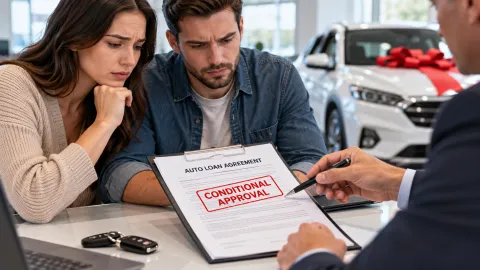
Can a Car Dealer Charge More Than the Advertised Price? What Buyers Should Know
Learn when a car dealer may charge more than an advertised vehicle price, which fees may be added, how rebates and financing conditions affect pricing, and what to do when the written price is higher than the ad.
In this article
- What the FTC Says About Advertised Car Prices
- What Generally Has to Be Included
- What Can Be Excluded
- Why the Dealer's Price May Be Higher Than the Advertisement
- Taxes, Title and Registration
- Mandatory Dealer Fees
- Document Fees
- Optional Add-Ons
- Conditional Rebates and Discounts
- Financing-Related Conditions
- The Advertised Vehicle Is No Longer Available
- Mandatory Dealer Fees vs. Government Charges
- What Is an Out-the-Door Price?
- What to Do If the Dealer Wants More Than the Advertised Price
- Save the Advertisement
- Confirm the Exact Vehicle
- Ask for an Itemized Written Price
- Separate Mandatory Charges From Optional Products
- Check Rebate and Financing Conditions
- Compare the Paperwork With the Advertisement
- Do Not Sign Until You Understand the Numbers
- Preserve Records and Consider Reporting
- What If You Are in California?
- How to Protect Yourself Before Visiting a Dealership
- 1. Save the Listing
- 2. Identify the Exact Vehicle
- 3. Ask for the Itemized Price in Writing
- 4. Check Every Condition
- 5. Compare Financing Separately
- 6. Review the Final Paperwork
- 7. Keep Your Records
- The Bottom Line
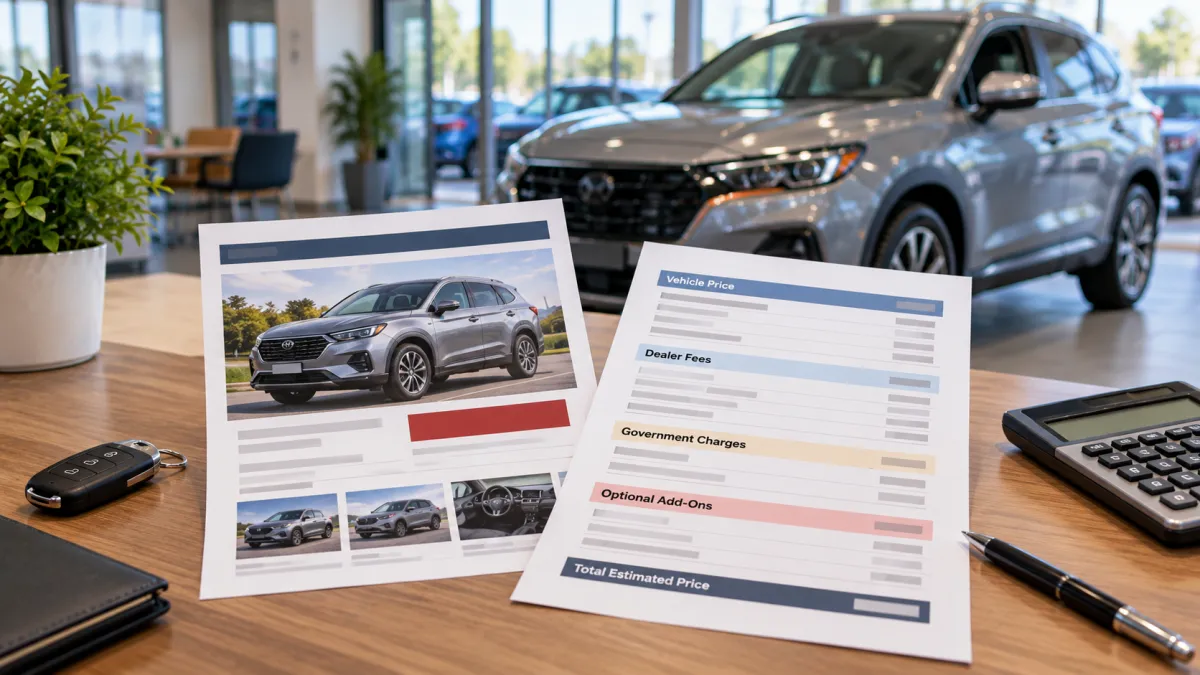
Yes, a car dealer may present a final amount that is higher than the advertised vehicle price, but the reason for the difference matters.
For example, taxes, title and registration charges may increase what you ultimately pay. But if a dealership advertises a vehicle at one price and then adds mandatory dealer fees that every buyer must pay, that is a different situation. The Federal Trade Commission (FTC) says its current automobile pricing guidance requires an advertised price to reflect the actual price any consumer can pay, with an exception for government-required charges that the government requires the consumer to pay directly.
The FTC published its Automobile Industry Pricing Transparency FAQs in September 2026. The FAQs are FTC staff guidance about applying the FTC Act; they are not a standalone federal regulation or binding rule. The FTC also emphasizes that whether a particular advertisement is misleading depends on the specific circumstances.
That distinction is important because a higher final amount does not automatically mean a dealer has violated the law. The key question is what caused the price to increase and whether that difference was properly disclosed.
What the FTC Says About Advertised Car Prices
When you see a vehicle advertised for a particular price, the basic expectation is that the advertised amount represents the price a consumer can actually pay to purchase that vehicle.
The FTC's September 2026 guidance says that if a dealer requires a consumer to pay a fee to purchase a vehicle, that fee generally must be included in the advertised price. The guidance specifically addresses dealer-required fees, including fees that a government may authorize but does not require the consumer to pay directly.
The FTC's position is based on a broader principle under the FTC Act: an advertisement's overall impression should not be misleading to a reasonable consumer. The agency says that consumers encounter automobile prices through dealership websites, third-party websites, social media, print advertisements, roadside signs, phone calls and text messages, and the same basic transparency principle applies across those formats.
What Generally Has to Be Included
Suppose a dealer advertises a vehicle at $40,000 and every consumer purchasing that vehicle is required to pay an $85 document fee.
Under the FTC's example, the advertised price should be $40,085 rather than $40,000 followed by an additional mandatory $85 dealer fee.
The important point is not the particular dollar amount. It is the structure of the pricing.
If a fee is mandatory and the dealer requires the consumer to pay it as part of purchasing the vehicle, the buyer should not have to discover that fee only after arriving at the dealership or reaching the paperwork stage.
The FTC warned 97 auto dealership groups in March 2026 that advertised prices must be the total price, including mandatory fees consumers must pay. The warning emphasized that advertised prices should match the prices dealers actually charge.
What Can Be Excluded
The FTC guidance makes an important distinction for government-required charges.
A dealer may generally exclude amounts that a federal, state or local government requires the consumer to pay directly. These can include certain taxes, title charges or registration-related amounts, depending on the circumstances and the applicable government requirements.
This means an advertisement does not necessarily have to equal the buyer's final out-the-door amount.
For example:
Advertised vehicle price: $30,000
Government-required charges paid by the consumer: additional amount
Final amount: higher than $30,000
That does not automatically mean the dealer advertised the vehicle deceptively.
The more important question is whether the additional amount is a government-required charge the consumer pays directly or a dealer-required charge that should have been reflected in the advertised price.
Why the Dealer's Price May Be Higher Than the Advertisement
There are several reasons a buyer may see a higher number when reviewing the final purchase paperwork.
Some are legitimate additions to the vehicle price. Others can raise concerns depending on how they were advertised and disclosed.
Taxes, Title and Registration
Taxes and government-related title or registration charges can increase the amount you ultimately pay.
These charges are different from a dealer simply adding its own mandatory fee after advertising a lower price.
The exact government charges vary by state and sometimes by local jurisdiction. For that reason, there is no single nationwide formula for turning an advertised vehicle price into an out-the-door price.
When reviewing the paperwork, ask the dealer to identify which amounts are government charges and which amounts are dealer charges.
That simple distinction can make a confusing worksheet much easier to understand.
Mandatory Dealer Fees
Mandatory dealer fees deserve closer attention.
If the dealership requires every buyer to pay a particular fee as a condition of purchasing the vehicle, the FTC's current guidance says that fee generally belongs in the advertised price rather than being added later.
This can include document or processing fees when the dealer requires them.
A dealer may have to disclose certain fees separately because of state requirements, but separate disclosure does not necessarily mean the fee can be left out of the advertised price. The FTC specifically says the advertised price should reflect mandatory dealer charges while allowing additional disclosures required by state law.
Document Fees
Document fees are a common source of confusion because states treat them differently.
Some states regulate how these fees are disclosed, while others may impose different requirements or limits. The FTC's current guidance focuses on whether the fee is mandatory and whether the consumer is required to pay it to purchase the vehicle.
The practical question for a buyer is straightforward:
Is this fee required for me to purchase the vehicle, or is it optional?
If it is mandatory, compare it with the advertised price rather than assuming it is simply an unavoidable extra.
Optional Add-Ons
Dealerships may offer products and services such as protection packages, accessories, service contracts or other optional products.
An optional product is different from a mandatory dealer fee.
The FTC says dealers can offer additional options as long as they do not mislead consumers. The agency specifically identifies practices such as falsely representing an optional add-on as required, misrepresenting its cost, or charging for an option the consumer did not agree to as problematic.
Before signing, ask the dealer to identify every add-on included in the purchase agreement.
If you do not want a particular product, make sure the paperwork reflects that decision.
Conditional Rebates and Discounts
A low advertised price may sometimes depend on a discount, rebate or other eligibility condition.
That does not mean every conditional discount is automatically improper. The important issue is whether the advertisement gives consumers a truthful and understandable picture of the price available to them.
The FTC says a dealer can, for example, offer a discount for using dealer financing as long as the price that any consumer could pay using any financing is the most prominent advertised price.
Buyers should therefore look beyond the large price displayed in an advertisement.
Check the fine print and conditions for:
-
Manufacturer rebates
-
Customer eligibility requirements
-
Dealer financing conditions
-
Trade-in requirements
-
Down-payment requirements
-
Other conditions attached to the advertised price
If you do not qualify for a discount, the dealer should not leave you believing that the discounted price is the price available to you when it is not.
Financing-Related Conditions
Vehicle price and financing cost are related, but they are not the same thing.
A dealership may arrange financing through a bank, credit union or other lender. The Consumer Financial Protection Bureau explains that a lender may provide the dealer with a "buy rate," while the interest rate offered to the consumer may be higher.
That means you should evaluate two separate questions:
-
What is the price of the vehicle?
-
What will the financing cost me?
A dealer may offer one price for a vehicle with a financing incentive and a different price for another transaction structure, but the conditions should be clear.
It is also worth comparing financing offers from banks or credit unions. The CFPB notes that consumers can shop around for auto financing rather than automatically accepting the dealer's financing offer.
The Advertised Vehicle Is No Longer Available
Another situation occurs when the exact vehicle advertised is no longer available.
If you arrive at the dealership and the advertised vehicle has genuinely been sold, the dealer may not be able to sell you that specific vehicle.
The important issue is whether the advertisement accurately represented availability and pricing when it was presented.
If a dealer says the advertised vehicle is unavailable but immediately tries to sell you another vehicle at a higher price, do not assume the replacement vehicle has the same price or terms.
Ask for the stock number or vehicle identification information for the advertised vehicle and compare it with the vehicle you are being offered.
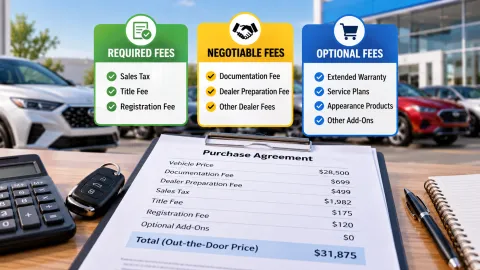
Mandatory Dealer Fees vs. Government Charges
One of the easiest ways to misunderstand a car price is to treat every additional charge as the same type of fee.
They are not.
| Charge type | Who generally controls it? | What to check |
|---|---|---|
| Vehicle price | Dealer/manufacturer pricing | Compare it with the advertisement |
| Mandatory dealer fee | Dealer | Determine whether it was included in the advertised price |
| Government-required charge | Government | Determine who is legally required to pay it and how it is collected |
| Optional add-on | Buyer/dealer transaction | Confirm that you agreed to purchase it |
| Financing cost | Lender/dealer-arranged financing | Compare APR, term and total financing cost |
This distinction is particularly useful when reviewing an itemized buyer's order.
A dealership may legitimately collect government-related amounts as part of the transaction. That does not necessarily mean those amounts should have been included in the advertised vehicle price under the FTC's framework.
On the other hand, a dealer-required fee is a different matter.
The FTC's guidance says that if the dealer requires the consumer to pay a fee to purchase the car, that fee must generally be reflected in the advertised price.
What Is an Out-the-Door Price?
The out-the-door price is the amount you are actually expected to pay for the vehicle transaction after applicable charges are accounted for.
It is useful because it moves the conversation away from one headline number and toward the complete transaction.
When asking a dealership for pricing, request an itemized written breakdown showing at least:
-
Vehicle selling price
-
Dealer-required fees
-
Government charges
-
Optional products or add-ons
-
Trade-in credit, if applicable
-
Down payment, if applicable
-
Financing terms, if applicable
-
Final amount due
You do not have to rely solely on a monthly payment quote.
A monthly payment can change because of the loan amount, interest rate, loan term, down payment or trade-in. Looking only at the monthly payment can make it harder to identify what you are actually paying for the vehicle.
What to Do If the Dealer Wants More Than the Advertised Price
If the number on the dealership's paperwork is higher than the number you saw in an advertisement, slow the process down.
You do not need to decide immediately.
Save the Advertisement
Take a screenshot or save a copy of the original listing.
Preserve:
-
Advertised price
-
Vehicle description
-
Stock number or identifying information
-
Stated conditions
-
Disclosures
-
Date you saw the advertisement
-
URL or platform where it appeared
This is particularly important with online advertisements because listings can change or disappear.
The FTC specifically encourages consumers reporting potentially deceptive practices to provide supporting documents such as advertisements and contracts.
Confirm the Exact Vehicle
Make sure you are comparing the same vehicle.
Check the vehicle identification number, stock number, trim, model, mileage and major equipment when possible.
A price difference can sometimes be explained by the fact that the dealer is discussing a different vehicle.
Ask for an Itemized Written Price
Instead of asking, "What's the final price?" ask for the complete itemized breakdown.
You want to see exactly where the difference comes from.
If the advertisement says one amount and the paperwork shows another, ask the dealer to identify every additional charge.
A written breakdown is much easier to compare than a verbal explanation.
Separate Mandatory Charges From Optional Products
Look at each line item and ask:
Is this required for me to buy the vehicle, or is it optional?
If an add-on is optional, make sure you understand its price and whether you actually want it.
If a dealer says an item is mandatory, ask why and request that the requirement be explained in writing.
Check Rebate and Financing Conditions
If the advertised price depends on a rebate or financing arrangement, verify whether you qualify.
Do not assume that a large discount applies automatically.
Also separate the vehicle's selling price from the cost of financing. A lower vehicle price tied to financing may not necessarily produce the lowest overall cost once interest and loan terms are considered.
Compare the APR, loan term, amount financed and total repayment—not just the monthly payment.
Compare the Paperwork With the Advertisement
At this point, compare the two side by side.
For example:
Advertisement: vehicle price
Purchase worksheet: vehicle price + mandatory dealer fee
Then ask why the mandatory fee was not reflected in the advertised price.
Or:
Advertisement: vehicle price after a stated rebate
Buyer: does not qualify for that rebate
In that situation, ask what price is actually available to you and whether the original advertisement clearly disclosed the eligibility condition.
The reason for the difference matters.
Do Not Sign Until You Understand the Numbers
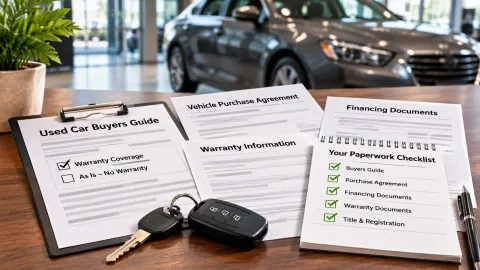
You should understand the purchase agreement before signing it.
If a line item is unclear, ask what it represents.
If the dealer changes the price or adds a product you did not expect, take the time to review the revised paperwork rather than assuming the difference is unavoidable.
You can also leave and compare the offer with another dealership.
Preserve Records and Consider Reporting
If you believe an advertisement was deceptive, keep the advertisement, messages, emails, purchase worksheets and other relevant records.
The FTC accepts reports of suspected fraud and deceptive business practices through ReportFraud.ftc.gov.
You can also look to your state attorney general, consumer-protection agency or motor vehicle agency for state-specific complaint options.
A complaint does not guarantee that an individual dispute will be resolved, so keep realistic expectations about what a government report can accomplish.
What If You Are in California?
California provides an example of how state law can add protections beyond the federal baseline.
The California Combating Auto Retail Scams (CARS) Act took effect October 1, 2026. According to the California DMV, it applies to licensed California dealers selling or leasing covered light-duty vehicles and includes requirements concerning total pricing, advertising, financing and add-on disclosures.
Among other provisions, the California DMV says a "Total Price" must appear in advertisements or initial written communications that reference a specific vehicle or financing terms, subject to the law's scope and exemptions. The law also addresses misrepresentations involving purchase, financing or lease costs, vehicle availability at the advertised price, and add-on products.
California also has existing consumer protections concerning vehicle purchases. Its DMV advises buyers to read and understand the purchase contract and notes that charges cannot be added to certain contracts without full disclosure and the buyer's consent.
These California requirements should not be treated as a nationwide rule. Other states may have different requirements concerning advertising, documentation fees, add-ons and consumer remedies.
If you are buying outside California, check your own state's motor vehicle agency or consumer-protection authority for additional protections.
How to Protect Yourself Before Visiting a Dealership
You can reduce the chance of a pricing surprise by doing much of the work before you arrive.
1. Save the Listing
Do not rely on remembering the advertised price.
Save a screenshot or PDF of the listing, including any conditions attached to the price.
2. Identify the Exact Vehicle
If possible, record the stock number or VIN and confirm that the advertised vehicle is the one you intend to inspect.
3. Ask for the Itemized Price in Writing
A written quote gives you something concrete to compare with the advertisement.
Ask the dealer to separate the vehicle price, dealer fees, government charges, optional products and financing terms.
4. Check Every Condition
Look for requirements involving:
-
Financing
-
Rebates
-
Trade-ins
-
Down payments
-
Memberships or eligibility
-
Specific customer categories
-
Optional products
A price with conditions is different from a price available to any consumer.
5. Compare Financing Separately
If you need financing, get competing offers when possible.
The CFPB recommends comparing financing options, including offers from banks and credit unions, rather than assuming the dealership's financing is automatically the best available option.
6. Review the Final Paperwork
Before signing, compare the buyer's order or purchase agreement with the price you were quoted.
Look for new fees, add-ons, changes in vehicle price, financing changes or other differences.
7. Keep Your Records
Save the advertisement and important communications until the transaction is complete and you are satisfied that the paperwork matches what you agreed to.
The Bottom Line
A car dealer can present a final price that is higher than an advertised vehicle price for legitimate reasons, including certain government-required charges that are added to the transaction. But a dealer-required fee is different from a government charge, and the FTC's current automobile pricing guidance says mandatory dealer charges generally must be reflected in the advertised price.
The safest approach is to focus on the reason for every difference rather than assuming that either the advertisement or the final paperwork tells the whole story.
Save the advertisement, confirm the exact vehicle, request an itemized written price, separate dealer fees from government charges, check rebate and financing conditions, and review every add-on before signing.
If the numbers still do not make sense, you can walk away and compare another offer. A clear written breakdown gives you a much better basis for deciding whether the deal matches what was advertised.
Frequently asked questions
Can a car dealer add taxes and registration fees to the advertised price?
Taxes, title, registration, and similar government-required charges can increase the amount a buyer ultimately pays beyond the advertised vehicle price. The key distinction is whether the charge is a government-required amount the consumer pays directly or a dealer-required fee that the dealer requires the consumer to pay to purchase the vehicle.
Can a dealer require me to buy an add-on that wasn't included in the advertised price?
A dealer should not deceptively represent an optional product or service as mandatory or charge for something without the buyer's agreement. Buyers should ask for an itemized written price and identify which products or services are optional before signing.
Can a dealer advertise a low price that only applies if I finance through the dealership?
A financing condition can affect the price a consumer is offered, so buyers should carefully check the advertisement's terms and the financing agreement. The vehicle price and the cost of dealer-arranged financing are separate issues, and consumers can compare financing offers from banks or credit unions.
What should I do if a dealer refuses to honor the advertised price?
Save a copy or screenshot of the advertisement, confirm that it describes the exact vehicle, and request an itemized written price. Ask the dealer to explain every difference between the advertised amount and the amount being requested. If you believe the pricing is deceptive, preserve the relevant records and consider reporting the issue to the appropriate consumer-protection agency.
Does the advertised car price include the dealer's documentation fee?
Under current FTC staff guidance on automobile pricing transparency, a fee the dealer requires the consumer to pay to purchase the vehicle generally must be included in the advertised price. This can include a dealer-required fee that a government authorizes but does not require the consumer to pay directly.
Can a dealer advertise a price that requires a rebate I don't qualify for?
Buyers should check whether an advertised discount or rebate has eligibility conditions. If the advertised price depends on a rebate that the buyer does not qualify for, the advertisement's conditions should be clear enough for consumers to understand the actual price available to them.
Does the rule apply to car prices advertised on Facebook, Instagram, or other websites?
1. The FTC's general principle is that advertising must not be misleading to a reasonable consumer. Where and how a vehicle is advertised does not by itself make deceptive pricing acceptable. Buyers should preserve screenshots or copies of online advertisements, including the listed price and any stated conditions.

Olivia Bennett writes practical automotive content covering car buying, ownership costs, maintenance, vehicle features, reliability, and everyday driving decisions. Her work focuses on helping readers understand automoti...