Car Maintenance Schedule by Mileage and Time: What to Service at 5,000, 30,000, 60,000 and 100,000 Miles
Learn how car maintenance schedules work by mileage and time, what commonly comes due at major mileage milestones, how severe driving changes maintenance needs, and why your vehicle’s manufacturer schedule should always be the final reference.
In this article
- How a Car Maintenance Schedule Works
- Why Mileage and Time Both Matter
- What to Expect Around 5,000 Miles
- What to Expect Around 30,000 Miles
- What to Expect Around 60,000 Miles
- What to Expect Around 100,000 Miles
- Maintenance After 100,000 Miles
- Normal Driving vs. Severe Driving
- Inspection, Service, and Replacement Are Different
- Inspect
- Service
- Replace
- How to Evaluate Dealer or Repair-Shop Recommendations
- What to Do When You Do Not Know the Maintenance History
- Gas Cars, Hybrids, Plug-In Hybrids, and EVs
- Gasoline vehicles
- Hybrid and plug-in hybrid vehicles
- Electric vehicles
- The Best Way to Build Your Personal Maintenance Schedule
- Common Maintenance-Schedule Mistakes to Avoid
- Treating 30,000 miles as a universal service package
- Ignoring time because the car has low mileage
- Following a generic online chart instead of the owner's manual
- Assuming severe driving does not apply
- Confusing inspection with replacement
- Assuming 100,000 miles means maintenance is finished
- Applying the same schedule to every powertrain
- Ignoring incomplete records
- Where to Find the Right Maintenance Schedule
- A Practical Mileage-and-Time Maintenance Strategy
- Conclusion
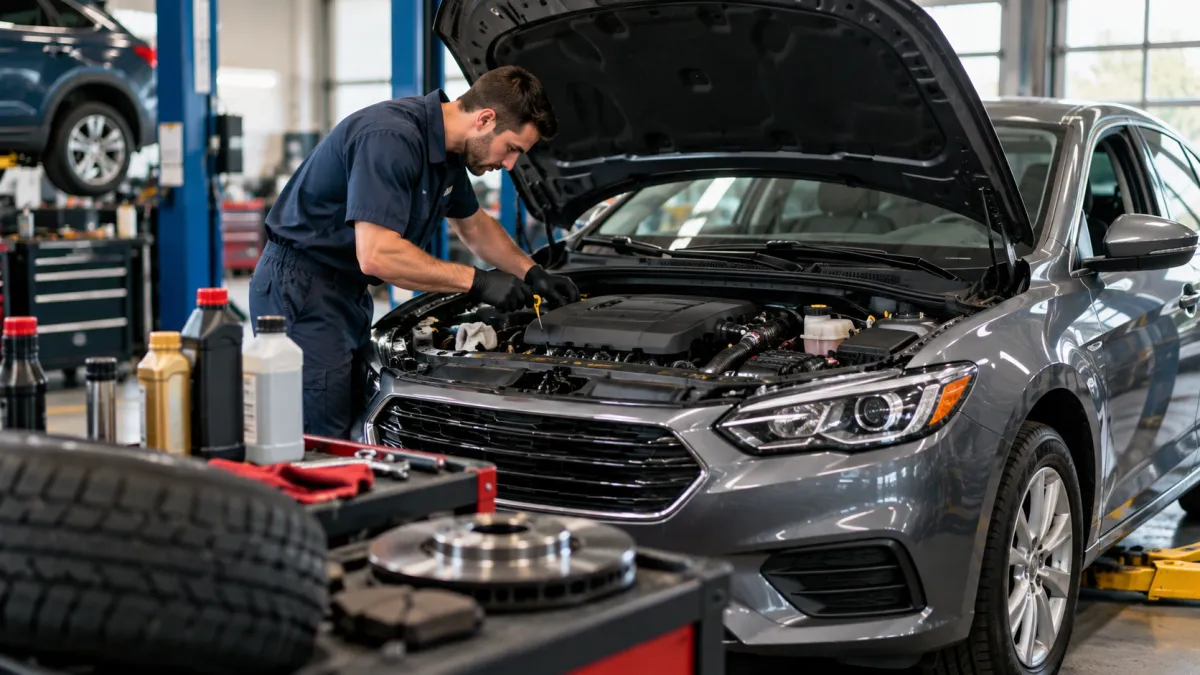
A car maintenance schedule is not simply a list of services that every vehicle needs at the same mileage. The right schedule depends on your vehicle's make, model, model year, powertrain, driving conditions, and the maintenance schedule provided by the manufacturer.
Mileage milestones such as 5,000, 30,000, 60,000, and 100,000 miles can be useful planning points, but they should not be treated as universal service packages. One vehicle may call for an inspection or fluid service at a particular mileage, while another may have a different interval—or no scheduled replacement at all.
Time matters, too. A vehicle that travels only a few thousand miles each year can still need maintenance because some services are based on months or years rather than mileage.
The most reliable approach is to use the manufacturer's maintenance schedule as the starting point, then account for how and where you drive and the vehicle's actual condition.
How a Car Maintenance Schedule Works
A vehicle maintenance schedule tells you when the manufacturer recommends inspections, services, adjustments, or replacements. These intervals can be based on mileage, time, or specific operating conditions.
For example, a manufacturer's schedule might specify a maintenance item at a particular mileage or after a certain period. In other cases, an item may be required more frequently if the vehicle is operated under severe conditions.
This is why a generic chart saying "every car needs X at 30,000 miles" can be misleading.
Your maintenance plan should account for several factors:
-
Make and model: Different manufacturers use different maintenance schedules.
-
Model year: Requirements can change between model years.
-
Powertrain: Gasoline vehicles, hybrids, plug-in hybrids, and EVs do not have identical maintenance needs.
-
Drivetrain: Some maintenance requirements differ between front-wheel drive, rear-wheel drive, and all-wheel-drive vehicles.
-
Mileage: Certain services are tied to accumulated miles.
-
Time: Some maintenance is required based on age even when mileage is low.
-
Driving conditions: Severe or demanding use can shorten some service intervals.
-
Maintenance history: Previous work affects what may be due next.
The owner's manual or the manufacturer's official service information should therefore take priority over a generic mileage chart.
Why Mileage and Time Both Matter
Many drivers think of maintenance in terms of mileage because mileage is easy to track. But a vehicle can age even when it sits in the driveway.
Consider two cars that are both five years old. One has 80,000 miles, while the other has 20,000 miles. They will not necessarily have the same maintenance needs.
The higher-mileage vehicle may have experienced more wear from regular use. The lower-mileage vehicle may have fewer mileage-related services due but can still have time-based maintenance requirements.
Some maintenance items are affected by age, exposure, or deterioration rather than simply the number of miles driven.
For that reason, do not assume that low mileage automatically means maintenance can be postponed.
At the same time, do not automatically perform every service listed on a generic "every 30,000 miles" or "every 100,000 miles" checklist. Check the manufacturer's schedule for your specific vehicle first.
If the manufacturer specifies a mileage interval, a time interval, or whichever comes first, follow that instruction as written.
What to Expect Around 5,000 Miles
A 5,000-mile point can be a useful routine-maintenance checkpoint, but it is not a universal service requirement for every vehicle.
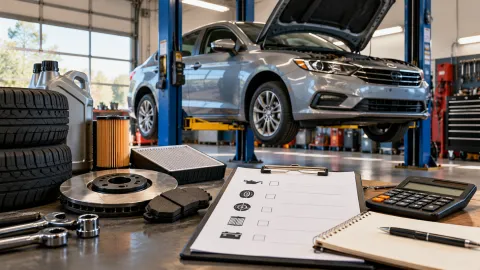
Depending on the vehicle, a routine visit around this mileage may involve some combination of inspections, fluid checks, tire-related checks, or an oil and filter service. The exact work depends on the manufacturer's recommendations.
A practical 5,000-mile checkpoint can include reviewing:
-
Engine oil level and condition
-
Oil and filter replacement if specified
-
Tire pressure
-
Tire condition and tread
-
Brake condition
-
Fluid levels
-
Lights and other basic vehicle functions
-
Visible leaks or unusual wear
-
Warning lights or recently developed symptoms
The important distinction is between checking something and replacing something.
A technician may inspect a component without recommending replacement. A fluid may need to be checked without needing to be changed. A filter may have a manufacturer-defined replacement interval that does not coincide with an oil change.
That distinction helps prevent routine maintenance from turning into unnecessary parts replacement.
If your vehicle's manufacturer calls for a different interval, use that schedule instead of treating 5,000 miles as a mandatory rule.
What to Expect Around 30,000 Miles
The 30,000-mile mark is often described as a major service milestone, but there is no universal 30,000-mile package that applies to every car.
What is actually due depends on the vehicle manufacturer's maintenance schedule.
Around this mileage, a vehicle's maintenance plan may call for more extensive inspections or specific service items than a basic routine visit. Depending on the vehicle, this could involve items such as fluid service, filter replacement, inspection of brakes or suspension components, or other manufacturer-specified maintenance.
But a generic list should not be used as a substitute for the owner's manual.
A useful way to approach the 30,000-mile point is to ask:
-
What does the manufacturer specifically recommend at this mileage?
-
Are any time-based services also due?
-
Does the vehicle qualify for a severe-service schedule?
-
What maintenance has already been completed?
-
Are there signs of wear or problems that require attention?
This approach is more reliable than automatically purchasing a package simply because a vehicle has reached 30,000 miles.
What to Expect Around 60,000 Miles
At 60,000 miles, the maintenance history becomes especially important.
By this point, the vehicle may have accumulated enough mileage for several scheduled maintenance items to come due. Depending on the model, the manufacturer may specify additional inspections, fluid services, filter replacements, or other work.
However, 60,000 miles does not automatically mean that every vehicle needs the same set of services.
Before approving a major maintenance visit, compare the proposed work with the manufacturer's schedule.
A useful checklist is:
| Question | Why it matters |
|---|---|
| What does the manufacturer require at this mileage? | Establishes the vehicle-specific baseline |
| What time-based maintenance is due? | Mileage is not the only maintenance trigger |
| What has already been completed? | Prevents unnecessary repeat services |
| Has the vehicle been driven under severe conditions? | Some schedules change for demanding use |
| What did the inspection actually find? | Separates scheduled maintenance from condition-based repairs |
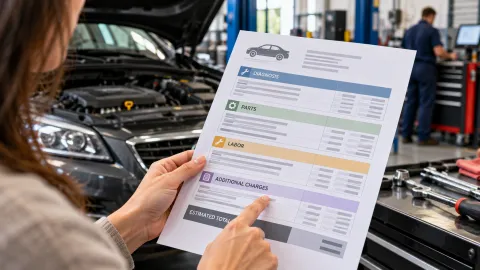
This distinction is particularly useful when a repair shop or dealer presents a long list of recommended services. Some recommendations may be manufacturer-scheduled maintenance, while others may be based on inspection findings, vehicle age, driving conditions, or preventive recommendations.
Those categories should not automatically be treated as the same thing.
What to Expect Around 100,000 Miles
Reaching 100,000 miles is an important ownership milestone, but it does not mean every vehicle needs a universal "100K service."
The actual requirements depend on the manufacturer's maintenance schedule and what has already been completed.
For some vehicles, significant maintenance items may be scheduled around this mileage. For others, important services may occur earlier, later, or at different intervals.
The maintenance history matters just as much as the odometer.
For example, if a required component was already replaced before 100,000 miles and the manufacturer specifies a longer replacement interval afterward, replacing it again solely because the odometer reached 100,000 miles may not make sense.
On the other hand, a vehicle with incomplete records may require closer attention because you cannot confidently determine which scheduled services have been completed.
At the 100,000-mile point, review:
-
The complete manufacturer maintenance schedule
-
Previous service records
-
Time-based maintenance
-
Fluid service history
-
Filters and other scheduled replacement items
-
Tire and brake condition
-
Suspension and steering condition
-
Any warning lights or symptoms
-
Maintenance requirements that continue beyond 100,000 miles
Most importantly, do not think of 100,000 miles as the end of the maintenance schedule.
Maintenance After 100,000 Miles
A vehicle does not stop needing maintenance at 100,000 miles.
In fact, keeping accurate records can become even more valuable as a vehicle gets older and accumulates additional mileage.
After 100,000 miles, continue following the manufacturer's scheduled maintenance rather than switching to an assumption that everything should simply be replaced periodically.
At the same time, age and condition can become increasingly important. Components may experience wear over time, and a vehicle that has spent years in demanding conditions may need attention that is not captured by a simple mileage number.
A post-100,000-mile maintenance plan should therefore combine three things:
Scheduled maintenance: Follow the manufacturer's recommended intervals.
Condition-based maintenance: Address legitimate wear, leaks, warning lights, symptoms, and inspection findings.
Maintenance history: Keep track of what has already been replaced or serviced.
This approach can help you avoid both extremes: neglecting an aging vehicle and replacing parts unnecessarily.
Normal Driving vs. Severe Driving
One of the most overlooked parts of a vehicle maintenance schedule is the difference between normal and severe operating conditions.
Manufacturers may define severe service differently, but conditions can include frequent short trips, heavy stop-and-go driving, extensive idling, towing, dusty environments, mountain driving, or certain extreme temperature conditions.
A driver who primarily takes long highway trips may put different demands on a vehicle than someone who drives through heavy traffic every day.
For example, consider two vehicles with identical mileage:
-
Vehicle A is driven mostly on longer highway trips.
-
Vehicle B is used primarily for short trips with frequent starts, stops, and extended idling.
Their odometers show the same number, but their operating conditions are not identical.
If your owner's manual provides a severe-service schedule, use the manufacturer's definition rather than deciding for yourself that your driving is "normal."
This is one reason a generic online maintenance chart cannot replace the vehicle-specific schedule.
Inspection, Service, and Replacement Are Different
Maintenance discussions often use words such as "inspect," "service," and "replace" as though they mean the same thing. They do not.
Inspect
An inspection means checking a component or system for condition, wear, damage, leaks, or proper operation.
An inspection does not necessarily mean that the component needs to be replaced.
Service
Service can refer to a maintenance action such as changing a fluid, adjusting a component, cleaning or maintaining a system, or performing another manufacturer-specified procedure.
The exact meaning depends on the vehicle and the maintenance schedule.
Replace
Replacement means removing an existing component or consumable item and installing a new one.
A replacement may be required at a manufacturer-specified interval, or it may be recommended because an inspection finds wear or damage.
Keeping these terms separate makes it easier to understand what a maintenance recommendation actually means.
If a service advisor recommends several items, ask which ones are:
-
Required by the manufacturer's scheduled maintenance
-
Recommended because of severe driving conditions
-
Recommended because of the vehicle's age or mileage
-
Needed because an inspection found wear or damage
-
Optional or preventive recommendations
That conversation can make a maintenance visit much easier to evaluate.
How to Evaluate Dealer or Repair-Shop Recommendations
Dealers and repair shops may recommend work beyond the basic items you expected. That does not automatically mean the recommendation is unnecessary, but it also does not mean every recommendation should automatically be approved.
Start by comparing the recommendation with the manufacturer's maintenance schedule.
Then ask why the work is being recommended.
For scheduled maintenance, the answer should connect to the manufacturer's specified interval.
For condition-based repairs, ask what was found during the inspection. A technician should be able to explain the observed issue, affected component, and reason the work is recommended.
You can also ask whether the recommendation is urgent, scheduled maintenance, or something that can be monitored.
This is particularly important when several services are presented as one large package. Breaking the recommendations into individual items makes it easier to understand what your vehicle actually needs.
The goal is not to reject maintenance. It is to make maintenance decisions based on the vehicle's documented requirements and actual condition.
What to Do When You Do Not Know the Maintenance History
Used-car owners sometimes inherit a vehicle without complete service records.
In that situation, guessing what has or has not been done can create problems.
Start by identifying the exact vehicle, including its make, model, model year, engine or powertrain, and relevant drivetrain information. Then locate the manufacturer's maintenance schedule.
Next, collect whatever records are available. These might include repair invoices, service records, inspection documents, or information provided by the previous owner.
If the history remains uncertain, a professional vehicle inspection or repair evaluation can help establish the vehicle's current condition.
An inspection does not recreate a complete maintenance history. Instead, it can help identify visible wear, leaks, damaged components, or other conditions that deserve attention.
From there, you can build a maintenance plan based on three pieces of information:
-
What the manufacturer says should have been done.
-
What records confirm has already been done.
-
What the vehicle's current condition indicates.
That is a much stronger starting point than simply performing every service associated with every mileage milestone.
Gas Cars, Hybrids, Plug-In Hybrids, and EVs
Not all vehicles follow the same type of maintenance schedule.
Gasoline vehicles
Traditional gasoline vehicles have maintenance requirements associated with an internal combustion engine and its related systems. Depending on the vehicle, scheduled maintenance may include engine oil and filter service, fluid checks or replacement, filters, inspections, and other manufacturer-specific items.
The exact schedule varies by vehicle.
Hybrid and plug-in hybrid vehicles
Hybrid and plug-in hybrid vehicles combine electric-drive components with an internal combustion engine.
That means they can still require many types of maintenance associated with an engine-powered vehicle, even though the electric system changes how the vehicle operates.
Their maintenance schedule should be followed according to the manufacturer's specific recommendations.
Electric vehicles
Battery-electric vehicles generally require less routine mechanical maintenance than conventional gasoline vehicles because they do not have a gasoline engine and have fewer moving mechanical components.
That does not mean an EV requires no maintenance.
Tires, brakes, cabin filtration, fluid-related systems where applicable, and vehicle-specific inspections can still matter. The manufacturer's maintenance recommendations remain the best reference for the particular EV.
Do not apply a gasoline-car maintenance checklist to an EV simply because the vehicle has reached the same mileage.
The Best Way to Build Your Personal Maintenance Schedule
A useful maintenance schedule does not need to be complicated.
Start with the manufacturer's schedule for your exact vehicle. Then turn it into a simple record that combines mileage and calendar dates.
For example, you can track:
| Maintenance item | Mileage | Date completed | Next manufacturer interval | Notes |
|---|---|---|---|---|
| Routine service | Record actual mileage | Record date | Follow manual | Note work performed |
| Fluid service | Record actual mileage | Record date | Follow manual | Identify the fluid |
| Filter replacement | Record actual mileage | Record date | Follow manual | Record filter type |
| Inspection | Record actual mileage | Record date | Follow manual | Note findings |
| Other scheduled service | Record actual mileage | Record date | Follow manual | Keep invoice |
The purpose is not to create your own universal service interval. It is to make the manufacturer's schedule easier to follow.
Keep receipts and service records whenever possible. A consistent history can help you determine what has already been completed and what may be coming due next.
It can also be valuable if you later sell the vehicle because maintenance records help document how the vehicle has been cared for.
Common Maintenance-Schedule Mistakes to Avoid
Treating 30,000 miles as a universal service package
A 30,000-mile service may be significant for one vehicle and different for another. Check the manufacturer's schedule before assuming a particular package applies.
Ignoring time because the car has low mileage
A vehicle that is rarely driven can still have time-based maintenance requirements.
Following a generic online chart instead of the owner's manual
Generic charts are useful for understanding the concept of maintenance intervals, but they cannot account for every vehicle-specific requirement.
Assuming severe driving does not apply
If your driving includes frequent short trips, heavy traffic, extensive idling, towing, dusty conditions, mountain driving, or other demanding conditions identified by your manufacturer, check whether a severe-service schedule applies.
Confusing inspection with replacement
A component can be inspected without automatically needing replacement. Ask what was found and why replacement is recommended.
Assuming 100,000 miles means maintenance is finished
Maintenance continues beyond 100,000 miles. The schedule simply moves into the next stage of the vehicle's ownership.
Applying the same schedule to every powertrain
Gasoline vehicles, hybrids, plug-in hybrids, and EVs have different maintenance requirements. Use the schedule designed for your vehicle.
Ignoring incomplete records
If you cannot verify previous maintenance, do not assume that every item has been completed. Establish what is known and use the manufacturer's schedule and a professional inspection when appropriate.
Where to Find the Right Maintenance Schedule
The most useful starting point is your vehicle's owner's manual. It provides information specific to the vehicle rather than relying on a generic mileage chart.
Many manufacturers also provide online owner or service portals where vehicle-specific maintenance information may be available.
If you cannot determine the vehicle's current condition, or if you notice warning lights, leaks, unusual noises, braking concerns, steering problems, or other symptoms, a qualified professional inspection or repair evaluation can provide another important piece of information.
The key is to use these resources for their appropriate purpose:
-
Owner's manual: Find the manufacturer's maintenance requirements for your vehicle.
-
Official manufacturer portal: Locate vehicle-specific service information when available.
-
Professional inspection: Evaluate actual vehicle condition and identify potential wear or problems.
These resources work together. The maintenance schedule tells you what is expected; the vehicle's history tells you what has already been done; and an inspection can help identify what the vehicle currently needs.
A Practical Mileage-and-Time Maintenance Strategy
If you want a simple way to manage maintenance, think of your schedule as a combination of checkpoints rather than a universal list of services.
At routine mileage intervals: Check what the manufacturer specifies and keep track of basic vehicle condition.
At larger mileage milestones: Review the manufacturer's schedule carefully for additional maintenance or inspections that may be due.
At every major time milestone: Check whether age-based maintenance applies even if the vehicle has accumulated relatively few miles.
When driving conditions change: Review whether your manufacturer's severe-service recommendations apply.
When buying a used vehicle: Establish the maintenance history and current condition before assuming the previous schedule was followed.
After major mileage milestones: Continue following the manufacturer's schedule rather than treating a milestone such as 100,000 miles as the end of maintenance.
This method gives you a more accurate picture of maintenance than a one-size-fits-all chart.
Conclusion
A good car maintenance schedule is built around your specific vehicle, not a generic mileage number.
The 5,000-, 30,000-, 60,000-, and 100,000-mile points can serve as useful planning milestones, but they should not be treated as universal service packages. The manufacturer's maintenance schedule should be the primary reference, with mileage, time, driving conditions, maintenance history, powertrain, and actual vehicle condition all considered together.
For routine ownership, keep your maintenance records, pay attention to both mileage and time, understand whether your driving qualifies as severe service, and distinguish scheduled maintenance from condition-based repairs.
Most importantly, maintenance does not stop at 100,000 miles. A vehicle can continue to provide useful transportation well beyond that point when its maintenance needs are tracked and addressed according to the manufacturer's recommendations and its actual condition.
Frequently asked questions
Do all cars need a 30,000-mile service?
No. A 30,000-mile service is not a universal requirement for every vehicle. Maintenance varies by make, model, model year, powertrain, driving conditions, and the manufacturer's schedule. Use a generic mileage milestone only as a planning reference and check your vehicle's owner's manual for the actual requirements.
What if I drive very little but my car is several years old?
Low mileage does not necessarily mean maintenance can be postponed indefinitely. Some maintenance is based on time as well as mileage. Check your vehicle manufacturer's schedule for time-based requirements and follow the interval that applies to your vehicle.
Is 100,000 miles a major maintenance milestone?
It can be an important maintenance milestone for some vehicles, but there is no universal 100,000-mile service package. The maintenance due at that point depends on the vehicle's manufacturer schedule, previous maintenance, age, mileage, and condition.
What is considered severe driving for car maintenance?
Severe driving can include conditions such as frequent short trips, heavy stop-and-go traffic, extensive idling, towing, dusty conditions, mountain driving, or certain extreme operating conditions. The exact definition varies by manufacturer, so check your vehicle's maintenance documentation.
Should I follow the owner's manual or the maintenance schedule my dealer gives me?
Your vehicle's manufacturer's maintenance schedule should be the starting point for determining required maintenance. If a dealer or repair shop recommends additional work, ask why it is needed and whether it is based on the manufacturer's schedule, your driving conditions, an inspection, or the vehicle's actual condition.
What maintenance does a car need after 100,000 miles?
Maintenance continues after 100,000 miles. The specific work depends on the vehicle's manufacturer schedule, age, condition, mileage, driving conditions, and maintenance history. A 100,000-mile milestone should not be treated as the end of scheduled maintenance.
Does an electric car have the same maintenance schedule as a gas car?
No. Fully electric vehicles generally require less routine maintenance because they have fewer moving parts and do not require many of the engine-related services used by gasoline vehicles. EVs still require maintenance such as tire care, brake-related inspections, cabin filtration, and other vehicle-specific checks.
What should I do if I don't have my car's maintenance records?
1. Start by identifying the exact vehicle and locating its manufacturer's maintenance schedule. Then review any available service records and consider having the vehicle inspected to establish its current condition and identify maintenance that may be overdue or uncertain.

Olivia Bennett writes practical automotive content covering car buying, ownership costs, maintenance, vehicle features, reliability, and everyday driving decisions. Her work focuses on helping readers understand automoti...