Quarterly Estimated Taxes: Who Must Pay, How to Calculate, and When They’re Due
Learn who needs to pay quarterly estimated taxes in the United States, how to estimate payments using IRS Form 1040-ES, the 2026 payment deadlines, available payment methods, and how to understand underpayment penalties. Includes guidance for self-employed workers, people with irregular income, and taxpayers who may be able to adjust paycheck withholding.
In this article
- What Are Quarterly Estimated Taxes?
- Who Needs to Pay Estimated Taxes?
- Self-employed workers and freelancers
- Gig workers
- Investors and landlords
- Employees with insufficient withholding
- How to Calculate Your Estimated Tax Payments
- Step 1: Estimate your total income
- Step 2: Estimate deductions and taxable income
- Step 3: Estimate your federal tax
- Step 4: Subtract withholding and applicable credits
- Step 5: Check the IRS payment requirements
- A simplified example
- 2026 Estimated Tax Payment Deadlines
- Why the payment dates are not evenly spaced
- What if you start earning income later in the year?
- What about the January 2027 installment?
- How to Pay Federal Estimated Taxes
- IRS Direct Pay
- IRS Individual Online Account
- Other available payment methods
- Keep payment records
- What Happens If You Underpay Estimated Taxes?
- How the underpayment penalty works
- Why a refund does not answer every penalty question
- Ways to reduce the risk of underpayment
- How to Handle Irregular Income and Changing Tax Circumstances
- Update your estimate during the year
- Consider the annualized income installment method
- Consider additional withholding
- State Estimated Taxes Are a Separate Consideration
- Common Estimated-Tax Mistakes to Avoid
- Assuming all self-employment income is profit
- Ignoring self-employment tax
- Dividing the expected tax bill by four without checking the rules
- Waiting until the filing deadline
- Forgetting to account for paycheck withholding
- Failing to keep payment confirmations
- A Practical Checklist for Estimated Tax Payments
- Conclusion
Quarterly estimated taxes are payments made directly to the IRS during the year to cover federal income tax that is not fully paid through paycheck withholding. They are especially relevant to freelancers, independent contractors, gig workers, business owners, landlords, and investors who receive income without enough tax withheld.
You generally need to consider estimated tax payments if you expect to owe at least $1,000 in federal tax after subtracting withholding and refundable credits, and your withholding and credits do not meet the applicable IRS payment requirements. The exact rules depend on your circumstances, including your prior-year tax liability and income.
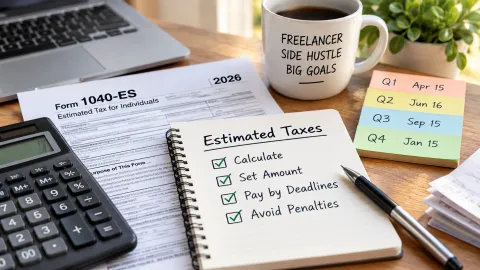
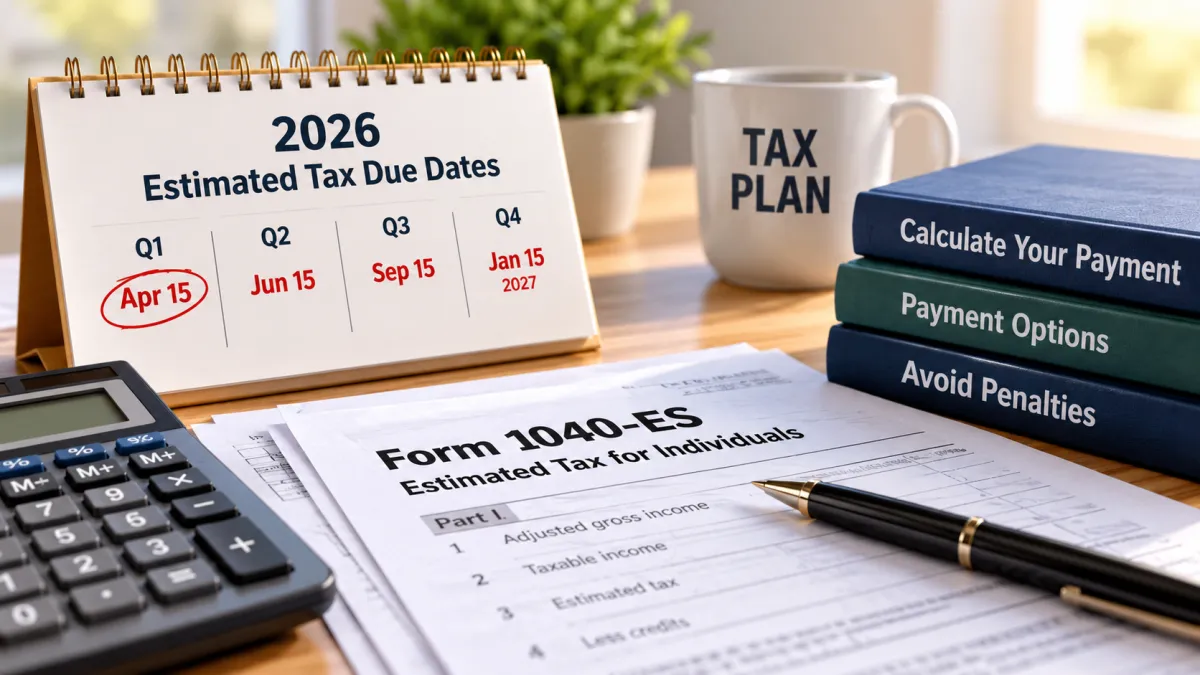
For the 2026 tax year, the regular federal estimated-tax payment dates are April 15, June 15, and September 15, 2026, followed by January 15, 2027. Special rules can change the timing or amount of payments you need to make.
Understanding the rules can help you plan cash flow, avoid a surprise tax bill, and reduce the risk of underpayment penalties.
What Are Quarterly Estimated Taxes?
The federal income tax system generally expects taxpayers to pay taxes throughout the year as they earn income. Employees often meet this requirement through taxes withheld from their paychecks. However, many people receive income without automatic withholding or have withholding that does not cover their full tax liability.
Estimated tax payments help fill that gap.
For example, an independent contractor may receive payments from several clients throughout the year. Unlike a traditional employee, the contractor may not have federal income tax withheld from those payments. The contractor may therefore need to calculate and send estimated payments to the IRS.
Estimated taxes can cover more than income from self-employment. Depending on your circumstances, they may also cover tax on:
-
Interest and dividends
-
Capital gains
-
Rental income
-
Business income
-
Certain taxable retirement income
-
Other income that is not sufficiently covered by withholding
Estimated payments are not a separate tax imposed simply because you are self-employed. They are a way to pay expected tax liability during the year.
Self-employed individuals may also owe self-employment tax for Social Security and Medicare. That liability should be considered when estimating total federal tax.
Who Needs to Pay Estimated Taxes?
Not everyone must make quarterly estimated payments. The requirement generally depends on how much tax you expect to owe and whether you have already paid enough through withholding and refundable credits.
For most individual taxpayers, the general rules require attention when both of the following conditions apply:
-
You expect to owe at least $1,000 in federal tax after subtracting withholding and refundable credits.
-
Your withholding and refundable credits are expected to be less than the smaller of 90% of your tax for the current year or 100% of your tax for the previous year.
Special rules apply to some taxpayers, including people with higher prior-year adjusted gross income, farmers, fishers, and certain individuals with unusual tax circumstances.
Self-employed workers and freelancers
Freelancers, consultants, independent contractors, and sole proprietors often receive income without federal income tax withholding.
If you expect a significant tax bill, you may need to make estimated payments. Your calculation should account for both expected income tax and any self-employment tax you owe.
Business expenses and eligible deductions may reduce taxable income, so estimate your net business profit rather than treating every dollar received from clients as taxable profit.
Gig workers
People earning money through delivery services, rideshare platforms, online marketplaces, or other gig work may need estimated payments.
The fact that a platform reports payments or issues a tax form does not automatically mean enough tax has been paid. Review your total income, eligible expenses, withholding, and expected tax liability.
Investors and landlords
You may need estimated payments if you receive substantial taxable investment income, capital gains, rental income, or other income that is not adequately covered by withholding.
The result depends on your complete tax situation, not just one income source.
Employees with insufficient withholding
Having a regular job does not automatically eliminate estimated-tax obligations. If you also earn freelance income, receive investment income, or have other taxable income, your paycheck withholding may not cover your full tax bill.
Before making separate payments, consider whether adjusting withholding through your employer could help meet your payment requirements.
How to Calculate Your Estimated Tax Payments
The goal is to estimate your total federal tax for the year and determine how much must be paid during the year to meet the applicable IRS requirements.
The IRS provides Form 1040-ES, Estimated Tax for Individuals, with worksheets and instructions to help taxpayers make this calculation.
Step 1: Estimate your total income
Start by estimating the income you expect to receive during the tax year.
Include relevant sources such as:
-
Wages and salaries
-
Freelance or business profits
-
Interest and dividends
-
Capital gains
-
Rental income
-
Other taxable income
If your income changes throughout the year, update the estimate rather than relying on an outdated projection.
Step 2: Estimate deductions and taxable income
Determine which deductions you expect to claim and calculate your estimated taxable income.
For self-employed individuals, this generally means accounting for eligible business expenses when estimating net profit. Depending on your situation, other deductions may also affect taxable income.
Do not assume that every expense is deductible or that every payment you receive is taxable in the same way. Use the applicable IRS rules and records for your circumstances.
Step 3: Estimate your federal tax
Use the applicable tax-year worksheet and instructions to estimate your federal income tax.
If you are self-employed, include any expected self-employment tax and other applicable taxes in your overall calculation.
Your estimated liability should reflect your expected tax situation for the entire year, not simply the amount of tax you would owe on one month's income.
Step 4: Subtract withholding and applicable credits
Account for federal income tax expected to be withheld from wages, pensions, or other eligible payments, as well as applicable refundable credits.
This step is important for people who have both employment income and self-employment income. You may already be paying part of your expected tax through paycheck withholding.
Step 5: Check the IRS payment requirements
Use Form 1040-ES and the applicable IRS instructions to determine the amount you should pay and whether you meet the required-payment rules.
The general safe-harbor calculation compares the amount paid through withholding and estimated payments with the smaller of:
-
90% of your current-year tax, or
-
100% of your prior-year tax.
The prior-year percentage generally rises to 110% for taxpayers whose prior-year adjusted gross income exceeded the applicable $150,000 threshold, or $75,000 for married taxpayers filing separately. Special rules and exceptions may apply.
Meeting an applicable safe harbor can help protect you from an underpayment penalty, but it does not necessarily mean your payments will cover your entire final tax bill.
A simplified example
Suppose a self-employed taxpayer estimates a federal tax liability of $12,000 for the year and expects no withholding or refundable credits.
For illustration, if the taxpayer determines that four equal installments of $3,000 are appropriate under the applicable IRS calculation, those installments would total $12,000.
This is a simplified example, not a universal rule. The required amount could differ because of prior-year tax, safe-harbor rules, irregular income, withholding, credits, or other circumstances.
Use the Form 1040-ES worksheet rather than automatically dividing your expected tax bill by four.
2026 Estimated Tax Payment Deadlines
For many calendar-year individual taxpayers, the regular federal estimated-tax payment dates for the 2026 tax year are:
| Payment period | Regular due date |
|---|---|
| First payment | April 15, 2026 |
| Second payment | June 15, 2026 |
| Third payment | September 15, 2026 |
| Fourth payment | January 15, 2027 |
These are the regular dates for the relevant payment periods, not a guarantee that every taxpayer must make four equal payments. Weekend and holiday rules, special taxpayer rules, and changes in income can affect how the requirements apply.
Why the payment dates are not evenly spaced
The estimated-tax calendar does not divide the year into four identical three-month periods. The second payment is generally due in June, and the third is generally due in September.
This can be confusing if you assume each installment covers exactly one calendar quarter. Use the IRS payment schedule rather than creating your own dates.
What if you start earning income later in the year?
If you begin freelancing, sell an investment, or receive substantial taxable income later in the year, your payment obligations may differ from those of someone earning income steadily from January onward.
Depending on the circumstances, the annualized income installment method may help calculate payments based on when income was earned. Consult the relevant Form 1040-ES instructions and IRS Publication 505.
What about the January 2027 installment?
The January 15, 2027 payment generally relates to the 2026 tax year. Certain eligible calendar-year taxpayers may avoid that installment by filing their 2026 federal income tax return and paying the full balance by the applicable January return deadline.
However, the precise filing deadline and eligibility conditions must be checked against the applicable IRS instructions. Filing early does not automatically eliminate possible penalties for earlier underpayments.
How to Pay Federal Estimated Taxes
Once you have calculated the amount due, use an IRS-supported payment method and make sure the payment is assigned to the correct tax year and payment type.
IRS Direct Pay
IRS Direct Pay allows eligible taxpayers to make federal tax payments directly from a bank account.
Before submitting a payment, review the requested details carefully, including the tax year and reason for payment. Save the confirmation information for your records.
You can find the service through the official IRS payment options page.
IRS Individual Online Account
An IRS Individual Online Account can provide access to available tax information and payment records.
After making a payment, check the available account information when appropriate. Records may not appear immediately, so retain your own confirmation and bank records rather than relying exclusively on the online account.
Other available payment methods
The IRS provides additional payment options, which may include electronic payment services and other permitted methods. Availability, processing times, and any fees depend on the method selected.
Start from the official IRS payments page to review current options instead of relying on an unofficial payment website.
Keep payment records
For each estimated payment, retain:
-
The payment date
-
The amount paid
-
The tax year and payment type selected
-
The confirmation number or receipt
-
Relevant bank records
These records can help you reconcile payments when preparing your annual return or investigating a payment that does not appear in your available IRS account information.
What Happens If You Underpay Estimated Taxes?
Paying less than the required amount or paying too late can result in an underpayment penalty. Whether a penalty applies depends on your tax situation, payment history, timing, and any applicable exceptions.
The penalty is not determined solely by whether you owe money when you file your annual return.
How the underpayment penalty works
The IRS generally evaluates whether sufficient tax was paid by the required installment dates. If an installment is short, the timing and amount of the shortfall can matter.
A later payment may reduce the period during which an amount remains underpaid, but it does not necessarily erase a penalty associated with an earlier installment.
The IRS has detailed rules for calculating the penalty and determining whether an exception applies. Review the official IRS underpayment penalty guidance and Publication 505 for the relevant tax year.
Why a refund does not answer every penalty question
Your final refund or balance due is only one part of the picture. The IRS installment rules consider when tax was paid as well as how much was paid.
For that reason, keep your payment records and review the applicable instructions instead of assuming that a refund or a payment made later in the year resolves every possible underpayment issue.
Ways to reduce the risk of underpayment
Consider these practical steps:
-
Estimate your total tax using the applicable IRS worksheet.
-
Recalculate when your income or deductions change materially.
-
Track each required installment and its due date.
-
Consider whether additional paycheck withholding could help.
-
Review safe-harbor rules and any exceptions that may apply.
-
Keep records of all payments and withholding.
If your circumstances are complicated, a qualified tax professional can help evaluate your expected liability and payment timing.
How to Handle Irregular Income and Changing Tax Circumstances
Estimated payments can be more difficult when income is unpredictable. A contractor may earn very little in one month and receive several large payments in another. An investor may realize a significant capital gain late in the year.
A single estimate made early in the year may no longer reflect your actual situation.
Update your estimate during the year
Review your income, deductible expenses, withholding, and expected tax liability periodically. When your circumstances change, recalculate your projected tax using the applicable instructions.
Do not assume that paying the same amount every period will always be the most accurate or appropriate approach.
Consider the annualized income installment method
The annualized income installment method may be useful when income is earned unevenly during the year. Rather than treating income as if it arrived at a steady rate, this method uses the timing of income to calculate required installments under IRS rules.
The method can involve more detailed calculations, so consult IRS Publication 505 and the relevant Form 1040-ES instructions before relying on it.
Consider additional withholding
If you have a job that withholds federal income tax, adjusting your Form W-4 may be an alternative to making separate estimated payments, or it may help cover part of your liability.
Whether this works depends on your income, tax liability, withholding, and the timing of the adjustments. Recheck your estimates after making a change.
State Estimated Taxes Are a Separate Consideration
Federal estimated-tax payments do not automatically satisfy state income-tax obligations.
Some states require estimated payments from taxpayers who expect to owe state income tax and have insufficient withholding. The rules, thresholds, payment schedules, and forms vary by state.
If you live in a state with an income tax, operate a business across state lines, or receive income from another state, review the relevant state tax agency's instructions.
Do not assume that the federal payment dates or federal eligibility thresholds apply to your state. Use the official state revenue or taxation department website to identify the rules for your circumstances.
Common Estimated-Tax Mistakes to Avoid
A few recurring mistakes can make tax planning more difficult or lead to unexpected liabilities.
Assuming all self-employment income is profit
Business receipts and business profit are not necessarily the same. Eligible business expenses can affect the amount used in your tax calculation. Keep reliable records and apply the relevant tax rules when estimating net profit.
Ignoring self-employment tax
Estimating only federal income tax can leave out another significant part of the liability for many self-employed taxpayers. Include applicable self-employment tax in your calculation.
Dividing the expected tax bill by four without checking the rules
Equal payments may be appropriate in many situations, but the required amount can depend on safe-harbor calculations, withholding, and the timing of income. Use the official worksheet.
Waiting until the filing deadline
Estimated payments are intended to cover tax during the year. Waiting until the annual return is due may leave earlier installments unpaid and can increase the risk of a penalty.
Forgetting to account for paycheck withholding
If you have both wage income and freelance income, withholding from your job may cover part of your total tax liability. Ignoring it can distort your estimate, while assuming it covers everything can leave you short.
Failing to keep payment confirmations
Without records, it can be harder to confirm that a payment was submitted for the intended tax year and payment type. Save confirmations and reconcile them with your records.
A Practical Checklist for Estimated Tax Payments
Use this checklist when reviewing your payment obligations:
The checklist is a planning aid, not a substitute for the tax-year-specific IRS instructions. If you are unsure how the rules apply to you, consult the relevant IRS guidance or a qualified tax professional.
Conclusion
Quarterly estimated taxes help taxpayers pay federal tax during the year when paycheck withholding does not cover their expected liability. They are especially important for freelancers, independent contractors, business owners, investors, and people with other income that is not fully covered by withholding.
Start by estimating your total tax, accounting for withholding and credits, and checking the IRS payment requirements and safe-harbor rules. Use Form 1040-ES to calculate appropriate payments, follow the applicable installment dates, and keep a record of each transaction.
If your income changes throughout the year, revisit your estimate rather than assuming the same payment will always be sufficient. Check state requirements separately, and use current IRS instructions for any deadline exception or penalty question.
Frequently asked questions
1. Can I avoid quarterly estimated tax payments by increasing my paycheck withholding?
Possibly. If you have wages subject to federal income tax withholding, you may be able to increase withholding through your employer using Form W-4. Additional withholding can help cover tax on freelance income, investments, or other sources. Whether it is sufficient depends on your total tax liability and applicable estimated-tax rules.
2. Do I have to make four equal estimated tax payments?
Not necessarily. Equal installments are the general approach for many taxpayers, but special rules may apply. If your income varies substantially during the year, the annualized income installment method may allow you to calculate payments based on when income was earned. Review IRS Publication 505 to determine whether the method applies to your situation.
3. What happens if my income changes during the year?
Recalculate your expected annual income, deductions, credits, withholding, and tax liability as circumstances change. If income increases, you may need larger payments to avoid an underpayment. If income arrives unevenly, check whether the annualized income installment method can help determine the required installments.
4. Can I skip the January 15, 2027 estimated-tax payment if I file my 2026 return early?
Eligible calendar-year individual taxpayers generally may avoid the January installment by filing their 2026 federal income tax return and paying the full remaining balance by the applicable January return deadline. However, eligibility and timing rules matter, and this does not automatically eliminate penalties for earlier underpayments. Confirm the applicable deadline and instructions in the IRS’s 2026 Form 1040-ES materials before relying on this exception.
5. How can I check whether the IRS received my estimated tax payment?
Check your IRS Individual Online Account for available payment records. If you paid through IRS Direct Pay, keep the confirmation number and use the payment information provided by the IRS to help verify the transaction. Save payment confirmations and bank records for your own files.
6. What happens if I miss an estimated-tax payment deadline?
You may owe an underpayment penalty, depending on how much you paid, when payments were made, your tax liability, and whether an exception applies. The IRS generally evaluates underpayments by installment period, so making a later payment does not necessarily eliminate a penalty for an earlier shortfall. Consult IRS Publication 505 and the IRS underpayment penalty guidance for details.

Daniel Brooks writes practical content about personal finance, budgeting, saving, credit, banking, taxes, and everyday money decisions. His work focuses on explaining financial topics in straightforward language and help...