What to Do If Your Homeowners Insurance Is Canceled or Not Renewed
Learn what to do after a homeowners insurance cancellation or nonrenewal notice, including checking the notice, asking the insurer to reconsider, finding replacement coverage, avoiding a coverage gap, and handling mortgage or force-placed insurance issues.
In this article
- Cancellation vs. Nonrenewal: What Is the Difference?
- Why Might an Insurer Cancel or Not Renew a Homeowners Policy?
- What to Do After Receiving a Cancellation or Nonrenewal Notice
- 1. Read the notice carefully
- 2. Contact your insurer
- 3. Address property problems when possible
- 4. Start shopping for replacement coverage immediately
- 5. Compare the replacement policies carefully
- What If You Cannot Find Another Insurer?
- State Rules Can Be Very Different
- What Happens to Your Mortgage If Insurance Ends?
- Avoid a Gap Between Insurance Policies
- What If the Problem Is Your Roof or Property Condition?
- When Should You Contact Your State Insurance Department?
- Keep a Record of Everything
- Common Mistakes to Avoid
- Waiting until the policy expires
- Assuming cancellation and nonrenewal are identical
- Assuming one state's rules apply nationwide
- Ignoring the mortgage servicer
- Choosing coverage based only on price
- Assuming a repair guarantees renewal
- Letting a quote create a false sense of security
- A Practical Action Plan
- Conclusion

Getting a homeowners insurance cancellation or nonrenewal notice can be stressful, especially if you have a mortgage and need continuous coverage. The most important thing is to act before the current policy ends.
Start by reading the notice carefully, identifying the reason and effective date, and contacting the insurer if you believe the decision can be reconsidered. At the same time, begin looking for replacement coverage rather than waiting until the last minute. If standard insurers will not cover the home, your state insurance department may be able to explain other options.
Cancellation and nonrenewal are not the same thing, and the rules governing them vary by state. There is no single nationwide notice period that applies to every homeowner. Your state's insurance rules and the specific circumstances of your policy determine what requirements apply.
Cancellation vs. Nonrenewal: What Is the Difference?
The first thing to determine is whether your insurer is canceling your policy or not renewing it.
A cancellation generally means the insurance company is ending your policy before its normal expiration date. A nonrenewal means the insurer is declining to continue the policy when the current policy term ends. The distinction matters because different state rules can apply to each situation.
| Situation | What it generally means | What you should do |
|---|---|---|
| Cancellation | Coverage is being ended before the normal policy expiration | Review the reason and effective date immediately and begin arranging replacement coverage |
| Nonrenewal | The insurer will not continue coverage after the current policy term expires | Use the remaining time to address the issue and shop for another policy |
| Coverage gap | Your old policy ends before qualifying replacement coverage begins | Contact insurers immediately and work to have replacement coverage active before the old policy ends |
| Force-placed insurance | A mortgage servicer obtains insurance after required coverage is missing | Obtain your own qualifying coverage and provide proof to the servicer as quickly as possible |
Your notice should provide important information about the decision. Keep the complete notice and any related correspondence so you have a record of what the insurer said.
Why Might an Insurer Cancel or Not Renew a Homeowners Policy?
Insurance companies evaluate the risk associated with a property and the policyholder. A cancellation or nonrenewal can happen for different reasons, and the reason given in your notice is important.
Possible reasons can include:
-
Nonpayment of the premium
-
Changes in the condition of the property
-
Roof deterioration or other maintenance concerns
-
Claims history
-
Increased risk associated with the property
-
Changes in the insurer's underwriting standards
-
Increased exposure to severe weather or other catastrophe risks
-
An insurer reducing or withdrawing its business in a particular market
These are examples, not a universal list of reasons that apply in every state or to every policy.
For example, a homeowner whose roof has deteriorated may receive a notice because the insurer considers the roof condition an unacceptable risk. Another homeowner could face nonrenewal because the insurer has changed its approach to properties in an area with increased catastrophe exposure.
The important point is not to assume that every cancellation or nonrenewal has the same cause. Read the notice and ask the insurer for clarification if the reason is unclear.
What to Do After Receiving a Cancellation or Nonrenewal Notice
Once you receive the notice, work through the situation in an organized way. Waiting until the final days of the policy can make finding replacement coverage more difficult.
1. Read the notice carefully
Look for:
-
The type of notice
-
The effective date
-
The reason for the decision
-
Any instructions from the insurer
-
Information about your rights or available options
-
Contact information for questions or reconsideration
Keep a copy of the notice with your current insurance documents.
Do not rely on a general statement such as "your policy is ending." You need to know exactly when the existing coverage ends and why the insurer is taking the action.
2. Contact your insurer
If the reason is unclear, contact the insurance company and ask for an explanation.
You may also ask whether the decision can be reconsidered. For example, if the insurer identified a property condition that can be corrected, ask what documentation would be needed to demonstrate that the problem has been addressed.
Reconsideration is not guaranteed. The insurer's decision and your rights depend on the circumstances and applicable state rules.
3. Address property problems when possible
If the notice involves the condition of your home, determine whether there is a practical way to correct the problem.
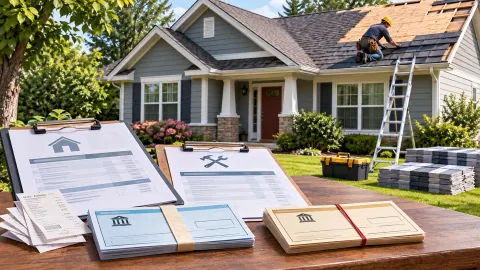
A roof-related issue, for example, may require inspection, repair, or replacement. If you make repairs, keep useful documentation such as invoices, inspection reports, photographs, and other records.
Do not assume that making a repair automatically means the insurer must restore or renew your policy. Instead, ask the insurer what documentation it needs and whether the completed work could affect its decision.
4. Start shopping for replacement coverage immediately
Do not wait until the existing policy expires.
Contact multiple insurers or independent insurance professionals and explain that your current policy is being canceled or nonrenewed. Be accurate about the reason given by your existing insurer.
Have information about the property and your insurance history available. Depending on the insurer, you may need information about the home's age, roof, construction, previous claims, current coverage, and other property characteristics.
The goal is to have qualifying replacement coverage active before the existing policy ends.
5. Compare the replacement policies carefully
The cheapest policy is not necessarily the best replacement.
When comparing policies, look at more than the premium. Consider:
-
Dwelling coverage
-
Personal property coverage
-
Liability coverage
-
Additional living expense coverage
-
Deductibles
-
Covered and excluded causes of loss
-
Special limits
-
Replacement-cost or actual-cash-value provisions
-
Any property-specific requirements
A policy that costs less but provides significantly different protection may not be an equivalent replacement.
What If You Cannot Find Another Insurer?
Some homeowners have difficulty finding replacement coverage, particularly when the property has significant underwriting concerns or is located in an area where insurers have reduced their exposure.
If several standard insurers decline the property, do not simply stop looking. Contact your state's insurance department and ask what options are available in your state.
The National Association of Insurance Commissioners maintains a directory that can help consumers locate their state insurance department. State regulators can provide information about applicable rules and may explain available market or consumer-assistance options.
Some states also have FAIR Plans or other residual-market mechanisms designed for eligible property owners who cannot obtain coverage through the standard market. These programs are not identical nationwide. Eligibility, coverage, availability, and cost vary by state.
A residual-market option can be an important fallback, but it should not be treated as an automatic guarantee that coverage will be available.
State Rules Can Be Very Different
One of the biggest mistakes homeowners can make is assuming that an insurance rule that applies in one state automatically applies everywhere in the United States.
Cancellation and nonrenewal requirements are state-specific. The amount of notice required, permitted reasons, and consumer protections can differ.
For example, Oklahoma changed its requirements in 2026. Effective July 25, 2026, Oklahoma increased the notification time for homeowners insurance nonrenewal and cancellation to 60 days.
California provides another example of why homeowners should check their state's rules rather than relying on a nationwide assumption. California's Department of Insurance explains different requirements for cancellation and nonrenewal, including specific notice periods and circumstances under which cancellation may be permitted.
These examples should not be treated as rules for homeowners in other states.
If you receive a notice and are unsure whether the insurer followed the applicable requirements, your state insurance department is an appropriate place to verify the rules for your situation.
What Happens to Your Mortgage If Insurance Ends?
A homeowners insurance problem can also become a mortgage problem because mortgage agreements commonly require borrowers to maintain property insurance.
If your required coverage ends and your mortgage servicer does not receive evidence of qualifying replacement coverage, the servicer may obtain insurance on the property. This is commonly called force-placed insurance.
The Consumer Financial Protection Bureau explains that force-placed insurance is generally obtained to protect the lender's interest in the property. It may not provide the same level of protection for the homeowner as a standard homeowners policy and is often more expensive.
That makes it important to deal with the insurance problem rather than simply allowing the existing policy to expire.
If you obtain qualifying homeowners insurance, provide proof of coverage to your mortgage servicer promptly. Under federal mortgage-servicing rules, when a servicer has obtained force-placed insurance and receives evidence of qualifying coverage, certain requirements apply to canceling the force-placed policy and addressing overlapping charges.
Federal rules also establish notice requirements before a mortgage servicer can assess certain force-placed insurance charges.
Your mortgage documents and the applicable federal and state rules determine the details of your situation.
Avoid a Gap Between Insurance Policies
One of the most important goals is avoiding a period when your home is uninsured.
Suppose your existing homeowners policy ends on June 30 and a new policy does not begin until July 10. The home could have a coverage gap during those dates.
That can create serious financial exposure if a covered event would otherwise have occurred during the uninsured period.
A better approach is to arrange replacement coverage so that it begins before or when the existing coverage ends, subject to the terms of the new policy.
Do not cancel the existing policy simply because you have requested a quote from another insurer. A quote is not the same thing as active coverage.
Confirm the effective date of the replacement policy and keep the documentation showing that coverage is in force.
What If the Problem Is Your Roof or Property Condition?
Property condition is a common concern when insurers review whether to continue coverage.
If your notice identifies your roof, exterior, electrical system, plumbing, trees, or another property feature, focus on the specific issue identified by the insurer.
Start by determining exactly what the insurer wants addressed. In some situations, an inspection or written documentation may help clarify the problem.
If repairs are required, keep records of the work. Depending on the circumstances, useful documentation may include:
-
Contractor invoices
-
Receipts
-
Inspection reports
-
Photographs
-
Permits when applicable
-
Documentation describing completed repairs
Then ask the insurer whether it will reconsider the decision based on the completed work.
At the same time, continue looking for replacement coverage. You should not assume that an attempted reconsideration will succeed.
When Should You Contact Your State Insurance Department?
Your state insurance department can be especially useful when you need to understand state-specific requirements or believe there may be an issue with the way your policy was canceled or not renewed.
Consider contacting the regulator when:
-
You do not understand the reason for the notice
-
You are unsure whether the notice period is correct
-
You believe the insurer may not be following state requirements
-
You are having difficulty understanding your available options
-
You cannot find coverage through the standard market
-
You need information about a state FAIR Plan or residual-market option
State insurance departments do not necessarily replace the insurer's underwriting process or guarantee that you will receive a policy. Their role and available consumer assistance vary by state.
The NAIC's state insurance department directory can help you identify the appropriate regulator.
Keep a Record of Everything
A cancellation or nonrenewal can involve several conversations with insurers, agents, contractors, mortgage servicers, and possibly state regulators.
Keep your records together.
Save:
-
The cancellation or nonrenewal notice
-
Your current insurance policy
-
Emails and letters from the insurer
-
Notes from phone conversations
-
Repair estimates and invoices
-
Inspection documents
-
Quotes for replacement coverage
-
The new policy and declarations page
-
Proof provided to your mortgage servicer
-
Communications concerning force-placed insurance
Having a clear record can make it much easier to explain your situation to a new insurer or regulator.
Common Mistakes to Avoid
Waiting until the policy expires
The biggest practical mistake is delaying the search for replacement coverage. Start as soon as you know the policy will end.
Assuming cancellation and nonrenewal are identical
They are different actions and may be subject to different state requirements. Identify which type of notice you received.
Assuming one state's rules apply nationwide
Insurance regulation is heavily state-specific. Verify the rules that apply where the property is located.
Ignoring the mortgage servicer
If your home is financed, your mortgage servicer may require proof of insurance. Failing to address the issue can lead to force-placed insurance.
Choosing coverage based only on price
A lower premium does not necessarily mean equivalent protection. Compare the coverage, deductibles, exclusions, and limits.
Assuming a repair guarantees renewal
Fixing a roof or another property issue may help, but it does not automatically require an insurer to renew or reinstate coverage.
Letting a quote create a false sense of security
A quote is not active insurance. Confirm that the replacement policy has actually been issued and that the effective date meets your needs.
A Practical Action Plan
If you have just received a homeowners insurance cancellation or nonrenewal notice, the process can feel overwhelming. Breaking it into a sequence makes it easier to manage.
First, identify the deadline. Find the effective date on the notice and determine when your current coverage ends.
Second, understand the reason. Read the notice carefully and contact the insurer if the explanation is unclear.
Third, ask about reconsideration. If there is an issue you can correct, ask whether the insurer will reconsider after you provide appropriate documentation.
Fourth, shop for replacement coverage. Contact insurers or insurance professionals immediately rather than waiting for the current policy to expire.
Fifth, address property problems. If the decision involves the roof or another physical condition, obtain the information and documentation needed to address it.
Sixth, protect your mortgage. If you have a mortgage, make sure your servicer receives evidence of qualifying coverage and understand what happens if your existing policy ends.
Seventh, investigate state options if necessary. If standard insurers will not cover the property, contact your state insurance department and ask about available options, including any applicable residual-market program.
Finally, confirm that the new coverage is active. Keep the policy documents and proof of coverage in your records.
Conclusion
A homeowners insurance cancellation or nonrenewal notice does not mean you should wait until the policy ends to figure out what comes next. The best response is to act early: understand the notice, identify the reason, ask whether the insurer will reconsider, address property issues when possible, and begin searching for replacement coverage.
Because insurance rules vary by state, do not assume that a notice period or consumer protection described elsewhere applies to your home. Your state insurance department can help you verify the rules and understand available options.
If standard insurers will not cover the property, investigate whether your state offers a FAIR Plan or another residual-market option. And if you have a mortgage, address the situation promptly so that your lender or servicer does not obtain force-placed insurance because required coverage has ended.
The central goal is simple: understand why the existing policy is ending, know exactly when it ends, and work to have appropriate replacement coverage in place before there is a gap.
Frequently asked questions
Can I get homeowners insurance after being canceled or nonrenewed?
Yes. Losing a policy does not necessarily prevent you from getting new homeowners insurance. Start shopping for replacement coverage as soon as you receive the notice and be prepared to provide information about your home, claims history, property condition, and current or previous coverage.
Can I ask my insurance company to reconsider a cancellation or nonrenewal?
You can ask the insurer to explain the decision and reconsider it, particularly if you believe the information used in the decision is incorrect or you can address a property-related issue. Whether the insurer must reverse the decision depends on the circumstances and applicable state rules.
What happens if I cannot find homeowners insurance after being dropped?
Contact your state insurance department to understand available options and whether your state has a FAIR Plan or another residual-market option. Availability and eligibility vary by state. Do not allow your existing coverage to expire without actively pursuing replacement coverage.
How long do I have to find new homeowners insurance after a nonrenewal notice?
There is no single nationwide deadline. Notice requirements and the amount of time available to obtain replacement coverage vary by state and by the circumstances of the policy. Check the effective date on your notice and confirm the applicable requirements with your state insurance department.
What should I do if my mortgage servicer says I need force-placed insurance?
First, obtain or reinstate qualifying homeowners insurance as quickly as possible and provide proof to your mortgage servicer. Force-placed insurance may be purchased by the servicer when required hazard coverage is missing and generally protects the lender's interest rather than providing the same homeowner protection as a standard policy. It may also be more expensive.
Is homeowners insurance more expensive after being canceled or nonrenewed?
It can be, but there is no universal outcome. The reason for the cancellation or nonrenewal, your home's condition and location, claims history, available insurers, and state-specific market conditions can all affect the options and premiums you receive.
What should I do if my homeowners insurance is canceled because of my roof?
1. Ask the insurer for the specific reason and determine what roof condition needs to be addressed. If repairs or replacement can resolve the issue, document the work and ask whether the insurer will reconsider the decision. At the same time, begin shopping for replacement coverage rather than waiting until the existing policy ends.

Daniel Brooks writes practical content about personal finance, budgeting, saving, credit, banking, taxes, and everyday money decisions. His work focuses on explaining financial topics in straightforward language and help...