What to Do When a Debt Collector Contacts You About a Debt You Don’t Recognize
If a debt collector contacts you about an unfamiliar debt, don’t ignore the notice or rush to pay. This guide explains how to verify the debt, send a written dispute, recognize collection scams, protect your credit, understand your rights under federal law, and respond if you receive a court summons.
In this article
- Why a Debt Collector Might Contact You About an Unknown Debt
- The debt belongs to someone else
- The debt is connected to an account you forgot about
- The debt may involve identity theft
- The original creditor or collection agency changed
- The collector's records may be inaccurate
- What to Do First When You Receive an Unfamiliar Debt Collection Notice
- 1. Stay calm and do not make an immediate payment
- 2. Ask for information about the debt
- 3. Keep the collection notice
- 4. Check your own financial records
- How to Verify Whether the Debt Is Yours
- Review the creditor's identity
- Compare the account details
- Check your credit reports
- How to Dispute a Debt You Don't Recognize
- Understand the 30-day validation period
- Send a written dispute
- Example of a debt dispute letter
- What happens after you send the dispute?
- What If the Debt Is Connected to Identity Theft?
- Dispute the account with the collector
- Review your credit reports for other unfamiliar accounts
- Consider an identity theft report
- Consider a credit freeze
- How to Recognize a Debt Collection Scam
- Verify the collector independently
- Do not confuse a legitimate collector with a scammer
- What If the Debt Is Old?
- Check the debt's age
- Understand that time limits vary by state
- Be careful before making a payment or acknowledgment
- What If a Debt Collector Threatens to Sue You?
- Do not ignore a court summons
- Review the court documents
- Get legal assistance when necessary
- Your Rights When Dealing With a Debt Collector
- The right to dispute a debt
- Protection against certain abusive practices
- The right to request that communications stop
- Protection against false representations
- Common Mistakes to Avoid When You Don't Recognize a Debt
- Paying before verifying the debt
- Ignoring the collection notice
- Relying only on a phone conversation
- Assuming a credit report dispute is enough
- Sharing sensitive information too quickly
- Missing a court deadline
- Conclusion
Receiving a call or letter from a debt collector about an unfamiliar debt can be unsettling. You may not recognize the creditor, remember opening the account, or understand why someone says you owe money. The debt could involve an incorrect record, an account opened through identity theft, a debt that belongs to someone else, or a legitimate obligation you no longer remember.
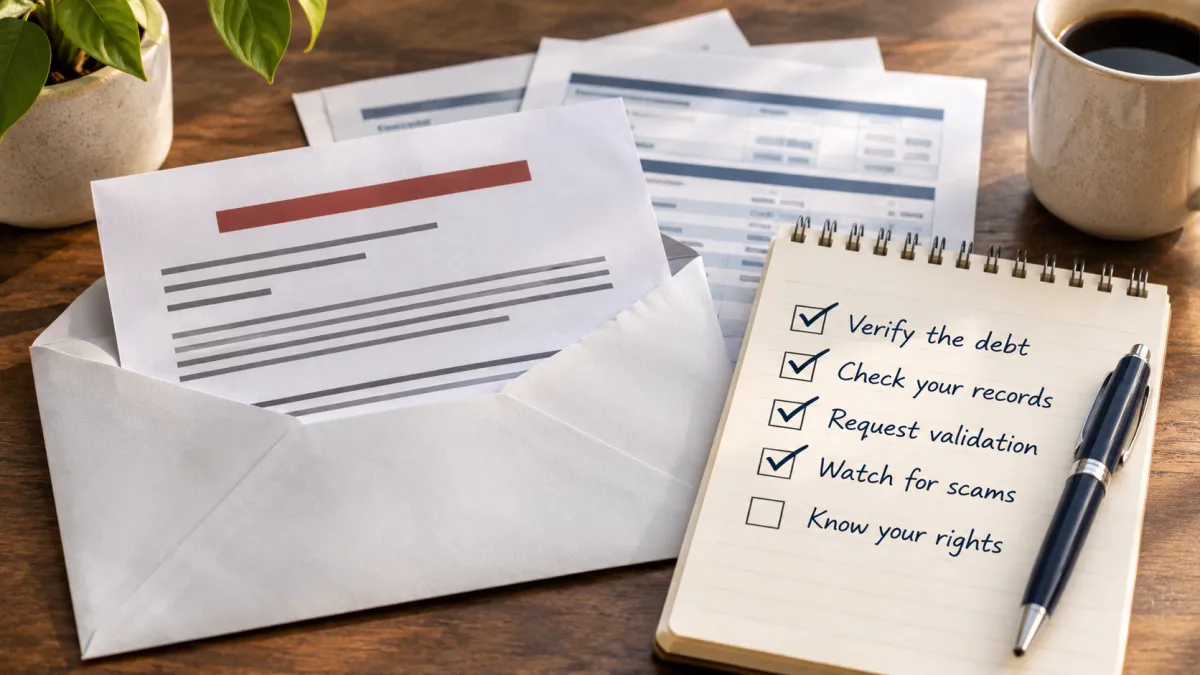
If a debt collector contacts you about a debt you don't recognize, do not rush to pay it or ignore the notice. First, verify the collector and the debt, review your records, and consider sending a written dispute. Federal law provides certain protections for consumers dealing with third-party debt collectors, including a process for requesting verification of a debt.
The steps you take matter. A written dispute can help you challenge inaccurate information, while responding properly to a court summons can help protect your legal rights. This guide explains how to handle an unfamiliar collection notice, what information to check, how to dispute the debt, and what to do if the situation involves identity theft or a possible scam.
Why a Debt Collector Might Contact You About an Unknown Debt
An unfamiliar collection notice does not automatically mean that you owe the money. Several situations can lead to a debt collector contacting you about an account you do not recognize.
The debt belongs to someone else
A collector may have incorrect information about the person responsible for a debt. This can happen when two people have similar names, a phone number is associated with the wrong account, or records contain inaccurate identifying details.
For example, a person named Michael Johnson may receive a collection call intended for another Michael Johnson. The collector may have matched the account using incomplete or incorrect information.
If you believe the debt belongs to someone else, explain that in your dispute and ask the collector to verify the account.
The debt is connected to an account you forgot about
You might recognize the original creditor but not remember the account. An old credit card, unpaid utility bill, medical bill, or other obligation could have been transferred to a collection agency.
This possibility does not mean the collector's amount is correct. You should still review the account details, payment history, and claimed balance.
The debt may involve identity theft
Someone could have used your personal information to open an account or obtain services without your permission.
Signs that identity theft may be involved include:
-
A collection account connected to a credit card you never opened
-
A debt from a company you have never used
-
An unfamiliar address or phone number associated with the account
-
Multiple collection notices involving accounts you do not recognize
-
Credit report entries showing accounts you did not authorize
If identity theft is suspected, you should dispute the debt and consider taking additional steps to protect your personal information.
The original creditor or collection agency changed
A debt may be transferred or sold to another company. The new collector's name may be unfamiliar even if the original account was legitimate.
A collection notice should provide information that helps you identify the creditor and understand the debt. Do not assume that an unfamiliar collection agency is automatically fraudulent, but do not assume it is legitimate either.
The collector's records may be inaccurate
Collection records can contain errors involving balances, account numbers, dates, payments, or the identity of the person responsible.
A collector may claim that you owe money even when the account has already been paid, the amount is incorrect, or the debt was assigned to the wrong person.
The appropriate response is to verify the information rather than relying only on the collector's initial claim.
What to Do First When You Receive an Unfamiliar Debt Collection Notice
The first steps should focus on protecting your information and gathering enough details to evaluate the claim.
1. Stay calm and do not make an immediate payment
Do not pay simply because a collector sounds confident, threatens consequences, or insists that the matter must be resolved immediately.
An unfamiliar debt should be reviewed before you decide whether to pay, dispute, or take another action.
Avoid making statements that you are responsible for the debt before you have checked the details. Be particularly careful with old debts because certain actions may affect the applicable statute of limitations in some states.
2. Ask for information about the debt
If a collector contacts you by phone, you can ask for basic information, such as:
-
The name of the collection agency
-
The name of the original creditor
-
The amount claimed
-
The account reference number
-
The date or period associated with the debt
-
The collector's mailing address
You do not need to provide sensitive financial information to establish whether the collector's claim is legitimate.
Avoid sharing your bank account number, debit card details, passwords, or unnecessary personal information with an unverified caller.
3. Keep the collection notice
If you receive a letter, save the original notice and any envelope it came in. If the notice arrives electronically, preserve the message and its details.
The notice may include important information about the debt, the collector, and the deadline for disputing it.
Keep a record of:
-
The date you received the notice
-
The date of any phone calls
-
The collector's name and contact information
-
What the collector said
-
Any letters or emails you sent
-
Any responses you received
This documentation can be useful if the dispute continues.
4. Check your own financial records
Review your credit card statements, bank statements, old bills, account records, and payment confirmations.
Look for evidence that may help determine whether the debt is legitimate. For instance, a payment confirmation could show that an account was paid, while an old statement may identify the original creditor.
Do not assume that a debt is valid merely because it appears in a collection notice or on a credit report. The information should be checked.
How to Verify Whether the Debt Is Yours
Verification is an important part of dealing with an unfamiliar collection claim. The goal is to establish what the debt relates to, who is responsible for it, and whether the amount is accurate.
Review the creditor's identity
Start by identifying the original creditor. The original creditor may be a bank, credit card issuer, medical provider, utility company, lender, or another business.
If you recognize the creditor, check whether you ever had an account with that organization.
If you do not recognize the creditor, ask the collector for more information about the account and its origin.
Compare the account details
Review the information provided by the collector and compare it with your own records.
| Information to check | Why it matters |
|---|---|
| Original creditor | Helps identify where the debt originated |
| Account reference | May help you match the claim with your records |
| Amount claimed | Helps identify possible balance errors |
| Account dates | May reveal an unfamiliar or incorrect account |
| Payment history | Can help determine whether payments were credited |
| Your identifying information | Helps identify whether the account belongs to someone else |
You may not receive every detail immediately. However, discrepancies can help you explain what needs to be verified.
Check your credit reports
An unfamiliar collection account may appear on your credit report.
You can review your credit reports through AnnualCreditReport.com, the federally authorized source for free credit reports.
Check whether the account appears on one or more reports from the major credit reporting companies. Review the creditor name, balance, account dates, and other available information.
If you find an inaccurate entry, you may need to dispute it with the credit reporting company and the company that furnished the information.
KnowBrook's guide on how to dispute an error on your credit report explains the credit-report dispute process.
Disputing a debt with a collector and disputing an error on your credit report are separate actions. You may need to take both steps if the debt is unfamiliar and the collection account is being reported inaccurately.
How to Dispute a Debt You Don't Recognize
The Fair Debt Collection Practices Act (FDCPA) provides a federal debt-validation process for covered debt collectors.
Generally, a debt collector must provide certain information about the debt in its initial communication or in a validation notice sent within five days of the initial communication, unless an exception applies.
The notice should explain the amount of the debt, the creditor, and how a consumer can dispute the debt. It also includes information about the consumer's validation rights.
Understand the 30-day validation period
Under the FDCPA, consumers generally have 30 days after receiving the validation notice to dispute the debt in writing.
If you send a timely written dispute, the collector generally must stop collection of the disputed amount until it provides verification of the debt or a copy of a judgment.
The exact deadline should be reviewed using the information in your notice.
Missing the 30-day period does not automatically mean that you legally owe the debt. However, the collector may not be required to pause collection under the federal validation process if the dispute is not timely.
Send a written dispute
If you do not recognize the debt, a written dispute is often a practical way to communicate your concerns.
Your letter should include:
-
Your name and mailing address
-
The collection agency's name and address
-
The account reference number, if available
-
A clear statement that you dispute the debt
-
A brief explanation of why you do not recognize it
-
A request for verification of the debt
-
A request for information about the original creditor, if needed
You do not need to write a long explanation. The letter should clearly communicate that you dispute the debt and want it verified.
Send the dispute to the address provided in the validation notice. Consider using a mailing method that provides proof of delivery, and keep a copy of the letter.
Example of a debt dispute letter
The following is a general example you can adapt. It is not a substitute for legal advice.
[Your Name]
[Your Mailing Address]
[Date][Collection Agency Name]
[Collection Agency Address]Subject: Dispute of Debt — Account Reference [Account Number]
I am writing to dispute the debt referenced in your collection notice. I do not recognize this debt and do not believe the information provided establishes that I am responsible for it.
Please provide verification of the debt and information identifying the original creditor. I request that you review the account and provide the information required under applicable debt collection laws.
I dispute the debt and request that collection of the disputed amount be paused as required by law while the debt is verified.
Sincerely,
[Your Name]
Only include statements that are accurate for your situation. If you believe the account involves identity theft or belongs to another person, you can explain that specifically.
What happens after you send the dispute?
The collector may review its records and send verification or other information about the debt.
If the collector provides information that establishes the debt is yours, you can evaluate the next step. You may still dispute the amount or other inaccurate details.
If the collector cannot verify the debt, the collection process may be affected under applicable law. However, a dispute does not automatically erase every record of the debt or guarantee that a credit reporting entry will be removed.
Keep all responses and continue documenting the matter.
What If the Debt Is Connected to Identity Theft?
If you believe someone opened an account using your personal information, treat the issue as more than an ordinary collection dispute.
Dispute the account with the collector
Explain that you do not recognize the account and believe it may have been opened through identity theft.
Request verification and avoid making a payment on an account you believe you did not authorize.
Review your credit reports for other unfamiliar accounts
Identity theft may affect more than one account. Check your credit reports for other unfamiliar creditors, collection accounts, or changes to personal information.
If you find additional inaccurate information, consider disputing each affected entry.
Consider an identity theft report
The Federal Trade Commission provides information and assistance for people dealing with identity theft through IdentityTheft.gov.
The site can help you create an identity theft report and develop a recovery plan.
An identity theft report may be useful when communicating with creditors, collectors, or credit reporting companies. The steps needed to resolve an account will depend on the circumstances.
Consider a credit freeze
A credit freeze can restrict access to your credit report by certain prospective creditors and may help reduce the risk of someone opening new credit accounts in your name.
You can place a freeze with each of the three major credit reporting companies:
-
Equifax
-
Experian
-
TransUnion
A credit freeze does not resolve an existing collection debt. It is a separate protective step that may be appropriate if you believe your personal information has been compromised.
How to Recognize a Debt Collection Scam
Some collection calls and messages are attempts to obtain money or personal information through deception.
A suspicious collector may claim that you owe a debt you have never heard of, use aggressive threats, or demand immediate payment through an unusual method.
Be cautious if a caller:
-
Refuses to identify the collection agency
-
Will not provide information about the original creditor
-
Demands immediate payment before you can review the debt
-
Requests gift cards, cryptocurrency, or unusual payment methods
-
Threatens arrest simply because you have not paid a debt
-
Requests passwords or unnecessary banking information
-
Pressures you not to contact anyone else
-
Uses contact details that cannot be independently verified
These warning signs do not by themselves prove that every claim is fraudulent, but they justify caution.
Verify the collector independently
Do not rely only on the phone number or website supplied by the caller.
Look for reliable contact information for the company and independently verify its identity. If the collector claims to represent a particular creditor, contact the creditor using information from its official website or your existing account records.
Avoid clicking suspicious links in collection emails or text messages.
Do not confuse a legitimate collector with a scammer
A real collection agency may contact consumers about debts they do not remember. A scammer may also impersonate a real collection agency.
The key is to verify both the collector and the debt. A recognizable company name does not prove that the person contacting you actually represents that company.
You can also review consumer protection information from the Federal Trade Commission and report suspected scams through its official reporting resources.
What If the Debt Is Old?
An unfamiliar debt may be several years old. Old debts require additional care because the legal rules governing collection and lawsuits can differ from those that apply to newer debts.
Check the debt's age
Review the dates associated with the original account, last payment, and collection activity.
The age of the debt can matter when determining whether a lawsuit may be time-barred under the applicable state statute of limitations.
Understand that time limits vary by state
The statute of limitations for debt collection lawsuits depends on the state and the type of debt. There is no single nationwide deadline that applies to every consumer debt.
A debt may still exist even if the time limit for filing a lawsuit has expired. The legal consequences of an old debt depend on the applicable law and facts.
Be careful before making a payment or acknowledgment
In some states, a payment or acknowledgment of an old debt may affect the statute of limitations.
Before making a payment on a debt you do not recognize or an old debt you believe may be time-barred, consider obtaining legal advice.
You can review information from the Consumer Financial Protection Bureau (CFPB) about debt collection and old debts.
What If a Debt Collector Threatens to Sue You?
A collection dispute can become more serious if a collector says it intends to file a lawsuit or if you receive actual court documents.
Do not ignore a court summons
If you receive a court summons or complaint, read the documents carefully and identify the response deadline.
Sending a debt validation letter is not a substitute for responding to a lawsuit.
Even if you do not recognize the debt, you should take the court process seriously. Failure to respond may result in a default judgment, depending on the circumstances and applicable law.
Review the court documents
Check the name of the plaintiff, the claimed amount, the court, and the deadline to respond.
If the debt is unfamiliar, gather your records and consider speaking with a consumer law attorney or legal aid organization.
Get legal assistance when necessary
A lawsuit involving an unfamiliar debt can raise issues about identity theft, inaccurate records, the statute of limitations, or whether the collector has the legal right to pursue the claim.
A qualified attorney can help you evaluate the court documents and determine how to respond under the applicable state rules.
Do not assume that a collector's threat is the same as a filed lawsuit. However, once official court papers arrive, act promptly.
Your Rights When Dealing With a Debt Collector
The Fair Debt Collection Practices Act establishes protections against certain unfair, deceptive, or abusive debt collection practices.
The law generally applies to third-party debt collectors collecting covered consumer debts. It does not apply in the same way to every original creditor, although other federal or state laws may provide protections.
Important protections include:
The right to dispute a debt
Consumers generally have a 30-day validation period to dispute a debt in writing after receiving the required validation notice.
A timely written dispute generally requires the collector to pause collection of the disputed amount until it provides verification or a copy of a judgment.
Protection against certain abusive practices
Covered collectors are restricted from using certain abusive, deceptive, or unfair collection practices.
For example, the law places limits on harassment, misleading representations, and certain threats.
The right to request that communications stop
You can send a written request asking a covered debt collector to stop contacting you.
The collector generally must comply with certain restrictions after receiving the request. However, this does not eliminate the debt, prevent every legally permitted action, or necessarily stop a lawsuit.
Protection against false representations
A covered debt collector cannot use certain false or misleading statements to collect a debt.
If a collector misrepresents the amount owed, the identity of the creditor, or the legal consequences of nonpayment, the conduct may raise concerns under applicable law.
These protections do not mean that every collection claim is invalid. They provide a framework for handling collection activity lawfully.
Common Mistakes to Avoid When You Don't Recognize a Debt
A few mistakes can make an unfamiliar debt more difficult to resolve.
Paying before verifying the debt
An immediate payment may be unnecessary if the debt belongs to someone else, involves identity theft, or contains errors.
Review the claim first.
Ignoring the collection notice
Ignoring the notice may cause you to miss the validation period or other important information.
If court documents arrive, ignoring them can have more serious consequences.
Relying only on a phone conversation
A phone call may help you obtain basic information, but a written dispute creates a clearer record of what you communicated.
Keep copies of your correspondence.
Assuming a credit report dispute is enough
A dispute with a credit reporting company does not necessarily replace a written dispute sent directly to the debt collector.
If both the collection claim and credit report entry are inaccurate, you may need to address both.
Sharing sensitive information too quickly
Do not provide banking information, passwords, or other sensitive data to an unverified caller.
Verify the collector before discussing information that could expose you to financial or identity theft risks.
Missing a court deadline
A debt may be unfamiliar or incorrect, but a lawsuit still requires attention.
Read the court papers, identify the deadline, and seek legal help if you need assistance responding.
Conclusion
When a debt collector contacts you about a debt you don't recognize, the most important step is to verify the claim before deciding what to do. An unfamiliar debt could involve a legitimate old account, inaccurate records, identity theft, a debt assigned to the wrong person, or a scam.
Review the collection notice, check your financial records and credit reports, and consider sending a written dispute within the applicable validation period. Keep copies of your communications and avoid sharing sensitive personal or financial information with an unverified collector.
If the debt involves identity theft, take steps to protect your credit and personal information. If you receive a court summons, respond according to the court's deadline rather than relying on a debt validation letter alone.
You do not have to accept an unfamiliar collection claim without reviewing it. Verify the information, document your actions, and use the consumer protections available under applicable federal and state law.
Frequently asked questions
1. Can a debt collector still collect a debt after I dispute it?
If you send a written dispute within the applicable 30-day validation period, a debt collector generally must stop collection of the disputed amount until it provides verification or a copy of a judgment. After verification is provided, collection may resume. A dispute does not automatically erase the debt.
2. Does missing the 30-day debt dispute deadline mean I legally owe the debt?
No. Missing the validation-period deadline does not automatically mean you owe the debt or that the collector’s information is correct. You may still dispute the debt, but the collector may not be required to pause collection under the federal validation process. You should also review your credit reports if the debt appears there.
3. Can I ask a debt collector for the name of the original creditor?
Yes. You can request information about the original creditor if it is different from the current collector. The validation notice should provide important details about the debt, including the creditor’s identity and the amount claimed.
4. Should I give a debt collector my Social Security number or bank account information?
Do not provide sensitive personal or financial information until you have independently verified the collector and the debt. Scammers may impersonate legitimate collection agencies. Verify the collector using reliable contact information rather than relying only on the caller’s number or links in a message.
5. Can I stop a debt collector from contacting me?
You can send a written request asking a debt collector to stop contacting you. Under the Fair Debt Collection Practices Act, certain restrictions apply after the collector receives such a request. However, stopping contact does not eliminate the debt, and the collector may still take certain legally permitted actions, including filing a lawsuit.
6. What should I do if a debt collector contacts me about an old debt?
Check the debt’s age, original creditor, payment history, and applicable state statute of limitations. These time limits vary by state and debt type. Be cautious before making a payment or acknowledging an old debt because, in some states, those actions may affect the limitation period. Consider seeking legal advice before taking action.
7. What should I do if I receive a court summons for a debt I don't recognize?
Read the summons and respond by the deadline stated in the court documents. Do not assume that sending a debt validation letter is a substitute for responding to a lawsuit. If you do not recognize the debt, consider contacting a consumer law attorney or legal aid organization promptly.

Daniel Brooks writes practical content about personal finance, budgeting, saving, credit, banking, taxes, and everyday money decisions. His work focuses on explaining financial topics in straightforward language and help...