What Is Recoverable Depreciation in Homeowners Insurance? How to Get the Remaining Claim Payment
Learn what recoverable depreciation means in homeowners insurance, how it differs from actual cash value and replacement cost value, and how to request the remaining eligible claim payment after repairs. This guide explains claim calculations, required documentation, repair-cost differences, deadlines, and what to do if an insurer delays or refuses payment.
In this article
- Recoverable Depreciation Explained
- Actual Cash Value vs. Replacement Cost Value
- Why insurers may pay ACV first
- What is non-recoverable depreciation?
- How Recoverable Depreciation Is Calculated
- How the deductible affects the final claim
- How to Recover Depreciation From a Homeowners Insurance Claim
- Step 1: Review your insurance claim estimate
- Step 2: Confirm that your policy provides replacement-cost coverage
- Step 3: Complete the eligible repairs or replacement
- Step 4: Collect repair documentation
- Step 5: Submit your recoverable depreciation request
- Step 6: Review the insurer’s final payment calculation
- What Happens When Your Actual Repair Costs Are Lower Than the Insurance Estimate?
- Why the contractor’s bill may be lower
- What to Do if the Repair Cost Is Higher Than the Insurance Estimate
- Request a supplemental claim review
- Common Mistakes That Can Delay Recoverable Depreciation
- Missing the policy deadline
- Submitting incomplete invoices
- Failing to keep proof of payment
- Assuming every repair is covered
- Ignoring correspondence from the adjuster
- How Recoverable Depreciation Applies to Different Property Types
- Dwelling repairs
- Other structures
- Personal property
- What to Do if Your Insurance Company Refuses to Release Recoverable Depreciation
- Ask for a written explanation
- Review your claim documents
- Submit additional supporting evidence
- Contact your state department of insurance
- How to Keep Your Recoverable Depreciation Claim Organized
- Conclusion
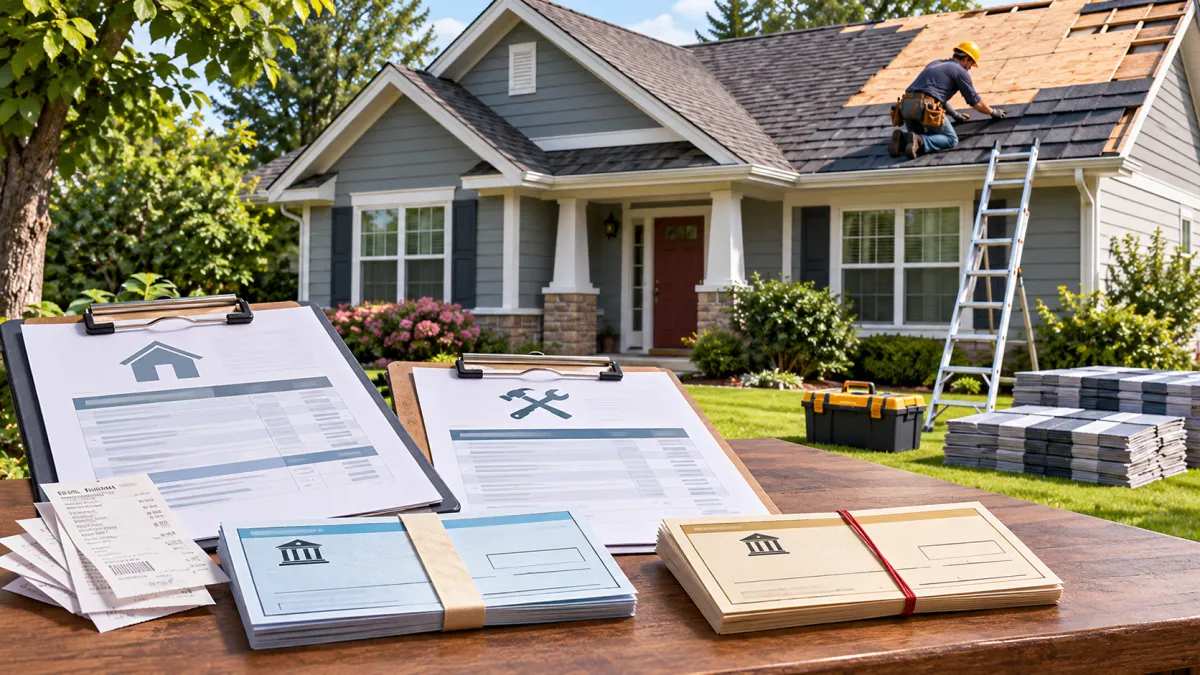
If your homeowners insurance company has paid only part of your property damage claim, the settlement may include an amount called recoverable depreciation. This is money the insurer may withhold initially and release later after you complete eligible repairs or replacement and provide the required proof.
Recoverable depreciation is most common with replacement-cost coverage. The insurer may first calculate the damaged property’s actual cash value, which accounts for depreciation, and then pay the eligible difference after repairs. The amount you can collect depends on your policy, the covered damage, your repair costs, and the insurer’s claim requirements.
Knowing how the process works can help you understand your settlement estimate, avoid missing documentation, and request the remaining payment appropriately. This guide explains how recoverable depreciation works, how it differs from your deductible, how to submit a request, and what to do if the final payment is less than expected.
Recoverable Depreciation Explained
Recoverable depreciation is the portion of a covered property insurance claim that an insurer may initially withhold because the damaged property has lost value through age, wear, or use.
With a replacement-cost-value (RCV) policy, the insurer may issue an initial payment based on actual cash value (ACV). Once you repair or replace the damaged property and provide acceptable documentation, the insurer may release the withheld depreciation, subject to the policy’s terms.
For example, suppose a storm damages your roof. Your insurer estimates that replacing the damaged roof with similar materials will cost $18,000. Because the existing roof had aged, the insurer calculates its actual cash value at $13,000.
The difference is $5,000 in depreciation.
The insurer may initially pay the ACV amount, adjusted for your deductible and other applicable claim provisions. If you complete eligible repairs and satisfy the insurer’s requirements, you may qualify to receive some or all of the $5,000 withheld.
This does not mean every homeowner automatically receives the entire depreciation amount. The final payment depends on the covered repair costs, policy limits, deductible, and settlement conditions.
Actual Cash Value vs. Replacement Cost Value
Understanding the difference between ACV and RCV is essential because it determines whether depreciation may be recovered.
Actual cash value accounts for depreciation. Replacement cost value generally refers to the cost of repairing or replacing damaged property with materials of similar kind and quality without deducting depreciation.
The National Association of Insurance Commissioners (NAIC) explains that replacement-cost policies may initially pay ACV and then pay the difference after the policyholder provides evidence of repairs or replacement.
| Feature | Actual Cash Value (ACV) | Replacement Cost Value (RCV) |
|---|---|---|
| Depreciation deduction | Generally deducted | Generally not deducted from eligible final replacement cost |
| Initial payment | Based on depreciated value | May initially be based on ACV |
| Additional payment after repairs | Usually not available for depreciation | May be available as recoverable depreciation |
| Repair or replacement proof | Depends on policy | Commonly required to recover withheld depreciation |
| Final payment | Depends on ACV settlement terms | Subject to eligible replacement costs and policy conditions |
Why insurers may pay ACV first
An insurer may initially pay the depreciated value to establish the amount of the covered loss while waiting for repairs or replacement to occur.
This process helps ensure that the final payment reflects eligible work actually completed rather than automatically paying the full replacement estimate before the repairs take place.
However, the exact payment structure varies. Some policies, coverages, and claim circumstances may have different settlement provisions.
What is non-recoverable depreciation?
Non-recoverable depreciation is an amount deducted from a claim that the policy does not allow the homeowner to collect later.
For example, an ACV-only policy may settle a covered loss at the depreciated value. If the policy does not provide replacement-cost reimbursement, the homeowner generally cannot recover that depreciation simply by completing repairs.
Some policies also have specific limitations or endorsements that affect whether depreciation is recoverable.
Before planning your repair budget, check whether your settlement estimate identifies the depreciation as recoverable or non-recoverable.
How Recoverable Depreciation Is Calculated
Recoverable depreciation is commonly calculated as the difference between the replacement cost estimate and the actual cash value estimate for eligible damaged property.
A simplified calculation is:
Recoverable depreciation = Replacement cost value − Actual cash value
Consider this hypothetical example:
| Claim item | Amount |
|---|---|
| Estimated replacement cost | $18,000 |
| Depreciation deducted | $5,000 |
| Actual cash value | $13,000 |
| Potential recoverable depreciation | $5,000 |
In this example, the $5,000 is the potential withheld amount before considering the final eligible repair costs and other policy provisions.
How the deductible affects the final claim
Your homeowners insurance deductible is the amount you are responsible for paying toward a covered loss. It is separate from depreciation.
Suppose the claim estimate shows:
| Claim calculation | Amount |
|---|---|
| Replacement cost estimate | $18,000 |
| Depreciation | $5,000 |
| ACV amount | $13,000 |
| Deductible | $1,500 |
| Initial payment, simplified | $11,500 |
| Potential depreciation payment | $5,000 |
| Total claim payments, simplified | $16,500 |
This example assumes the full replacement cost is eligible, the repairs cost the estimated amount, and no other limits, adjustments, or exclusions apply.
The deductible remains your responsibility. Recovering depreciation does not automatically reimburse the deductible.
Your insurer’s estimate may use a different calculation or payment structure, so use the actual settlement documents rather than relying on a simplified example.
How to Recover Depreciation From a Homeowners Insurance Claim
The process generally involves completing eligible repairs, collecting documentation, and submitting a request to your insurance company.
Step 1: Review your insurance claim estimate
Start with the estimate provided by your insurer or claims adjuster.
Look for terms such as:
-
Replacement Cost Value (RCV)
-
Actual Cash Value (ACV)
-
Depreciation
-
Recoverable Depreciation
-
Non-Recoverable Depreciation
-
Deductible
-
Net Claim Payment
The estimate should help you understand the replacement cost, the depreciation deducted, and the initial payment.
If the estimate is unclear, ask the adjuster to explain the calculations in writing.
Step 2: Confirm that your policy provides replacement-cost coverage
Do not assume that every homeowners insurance policy includes recoverable depreciation.
Review your policy’s loss-settlement provisions to determine whether the damaged property is covered on an ACV or replacement-cost basis.
Coverage can differ between the dwelling, other structures, and personal property. The policy may also contain specific conditions for receiving replacement-cost benefits.
If the policy language is difficult to understand, ask your insurance agent or claims representative to explain the applicable coverage.
Step 3: Complete the eligible repairs or replacement
The insurer may require you to repair or replace the covered damaged property before releasing withheld depreciation.
For example, if the claim involves a damaged roof, you may need to complete the eligible roof replacement. If the claim involves damaged flooring, the insurer may require proof that the covered flooring was replaced.
Follow the policy and claim instructions carefully.
Before beginning permanent repairs, make sure the insurer has had an opportunity to inspect and assess the damage when required. Keep records of any necessary temporary repairs and related expenses.
Step 4: Collect repair documentation
Once the work is completed, organize the paperwork needed to support your request.
Useful documents may include:
-
Contractor’s final invoice
-
Itemized repair estimate
-
Receipts for materials
-
Proof of payment
-
Contractor’s certificate of completion, if available
-
Photographs of completed repairs
-
Supplemental repair estimates, if applicable
-
The insurer’s original claim estimate
-
Your claim number and settlement correspondence
The insurer may not require every document listed above. Follow the specific instructions provided for your claim.
For example, some insurers may request an itemized estimate or receipts along with proof of payment or a contractor’s certificate of completion to request recoverable depreciation.
Step 5: Submit your recoverable depreciation request
Contact your claims adjuster or use the insurer’s designated claims portal.
Include your claim number and clearly explain that you are requesting the release of recoverable depreciation after completing the eligible repairs.
A simple message could read:
I have completed the covered repairs related to my homeowners insurance claim. I am submitting the final invoices and supporting documentation for review. Please review the documents and let me know whether I qualify for the release of recoverable depreciation. If additional information is needed, please identify the specific documents required.
Attach the documentation requested by the insurer.
Keep a copy of your submission, including the date sent and any confirmation received.
Step 6: Review the insurer’s final payment calculation
After reviewing your documents, the insurer may issue an additional payment if you qualify.
Check the final settlement calculation carefully. It should account for the applicable replacement-cost amount, previous payments, deductible, eligible repair costs, and policy limitations.
If the amount is lower than expected, request a written explanation.
Do not assume that a lower payment is automatically an error. The insurer may have adjusted the claim based on actual repair costs, uncovered work, policy limits, or other settlement provisions.
What Happens When Your Actual Repair Costs Are Lower Than the Insurance Estimate?
A common complication occurs when the contractor’s final bill is less than the insurer’s original replacement-cost estimate.
Recoverable depreciation is not necessarily a fixed amount that every homeowner receives in full. The payment may be limited by the eligible costs you actually incur and the policy’s settlement provisions.
Consider this hypothetical example:
| Claim item | Amount |
|---|---|
| Insurer’s replacement cost estimate | $18,000 |
| Depreciation withheld | $5,000 |
| Initial ACV amount before deductible | $13,000 |
| Final eligible repair cost | $16,000 |
The actual repair cost is $2,000 below the insurer’s original estimate.
Depending on the policy, the insurer may calculate the additional payment using the eligible actual repair cost rather than automatically releasing the full $5,000 depreciation.
The final settlement may also be affected by the deductible and prior payments.
Why the contractor’s bill may be lower
Repair costs can differ from the insurer’s estimate for several reasons:
-
The contractor negotiated lower material prices.
-
The work required fewer materials than expected.
-
The contractor used a different but acceptable repair method.
-
Some estimated work was unnecessary.
-
The scope of completed repairs differed from the original estimate.
A lower repair cost does not necessarily mean that the contractor did anything wrong or that the insurer made an error.
If the difference is substantial, compare the final invoice with the insurer’s estimate line by line.
What to Do if the Repair Cost Is Higher Than the Insurance Estimate
The opposite situation can also occur: your contractor estimates that repairs will cost more than the amount approved by the insurer.
For example, the insurer may estimate the covered roof repairs at $18,000, while the contractor’s itemized estimate is $21,000.
The difference could be related to labor, material pricing, additional damage, code-related work, or a disagreement about the scope of repairs. Whether those additional costs are covered depends on the policy and claim facts.
Request a supplemental claim review
If you believe the insurer’s estimate does not account for necessary covered repairs:
-
Compare the insurer’s estimate with the contractor’s estimate.
-
Identify the specific items and costs that differ.
-
Ask the contractor for an itemized explanation.
-
Provide supporting photographs or documentation of additional damage.
-
Submit the information to your adjuster.
-
Request a written review of the disputed estimate items.
Do not assume that every difference between a contractor’s estimate and the insurer’s estimate will be paid. The insurer must determine whether the additional work is covered under the policy.
If the insurer approves a supplemental amount, that may affect the overall claim settlement and the amount of depreciation available for recovery.
Common Mistakes That Can Delay Recoverable Depreciation
Even when a claim includes recoverable depreciation, errors in the repair and documentation process can delay payment.
Missing the policy deadline
One of the most important mistakes is waiting too long to complete repairs or submit documentation.
Recoverable-depreciation time limits may vary according to state law and the policy. Some policies provide a deadline measured in months, while others may have different requirements. These periods are not universal.
Your actual deadline may differ.
Check the settlement letter and policy for the applicable time limit. If repairs are delayed because of contractor availability, material shortages, or disaster-related circumstances, contact the insurer promptly and ask whether an extension is available.
Do not assume an extension will be granted automatically.
Submitting incomplete invoices
A contractor’s invoice that only shows a total amount may not provide enough detail for the insurer to verify the completed work.
If the insurer requests an itemized invoice, ask the contractor to list the completed repairs, materials, labor, and relevant costs.
Submit the requested documents together whenever possible.
Failing to keep proof of payment
An invoice may show what the contractor charged, but the insurer may also request proof that you paid the repair costs.
Depending on the claim requirements, proof could include a payment receipt, canceled check, or other acceptable documentation.
Keep copies of all payment records.
Assuming every repair is covered
Not every expense related to repairing your home is necessarily covered by the insurance claim.
For example, improvements that go beyond restoring the damaged property may not be included in the original covered replacement-cost calculation.
Ask the insurer to explain which repair items qualify under the policy.
Ignoring correspondence from the adjuster
If the insurer requests additional information, respond promptly.
A missing document or unanswered question may delay the review. Keep a record of correspondence and make sure you understand what the insurer needs before submitting additional materials.
How Recoverable Depreciation Applies to Different Property Types
Recoverable depreciation may apply to different categories of insured property, but the terms can vary.
Dwelling repairs
Dwelling coverage generally relates to the insured home itself, including covered structural components such as roofs, walls, and flooring.
When replacement-cost coverage applies, depreciation may be withheld from the initial settlement and released after eligible repairs are completed.
The specific requirements depend on the policy and the damaged property.
Other structures
Other structures may include detached garages, fences, or sheds, depending on the policy.
Coverage limits and settlement terms for these structures may differ from those for the main dwelling.
Review the relevant coverage section before assuming that the same depreciation calculation applies.
Personal property
Personal property refers to belongings such as furniture, clothing, and other household items.
Some homeowners policies provide replacement-cost coverage for eligible belongings. In those cases, the insurer may require proof that the damaged or lost items were replaced before releasing withheld depreciation.
Other policies may settle personal property claims at actual cash value.
Review the personal property loss-settlement provisions and the insurer’s instructions for the items involved in your claim.
What to Do if Your Insurance Company Refuses to Release Recoverable Depreciation
If the insurer denies your request or pays less than you expected, take a structured approach rather than immediately assuming the claim was handled incorrectly.
Ask for a written explanation
Contact the adjuster and ask why the remaining payment was denied or reduced.
The explanation should help you identify whether the issue relates to:
-
Missing repair documentation
-
Repair costs below the original estimate
-
Work that was not covered
-
A policy deadline
-
A coverage limitation
-
A disagreement over the repair scope
-
A calculation error
Ask the insurer to identify the relevant policy provision or settlement condition.
Review your claim documents
Compare the insurer’s explanation with the original estimate, settlement letter, policy, and final repair invoice.
Check whether the disputed amount is classified as recoverable or non-recoverable depreciation.
If the issue involves a calculation, request an itemized breakdown.
Submit additional supporting evidence
If you believe the insurer overlooked eligible work or documentation, provide the supporting evidence.
This may include a contractor’s detailed invoice, photographs, proof of payment, or an explanation of the completed repairs.
Keep your submission factual and organized.
Contact your state department of insurance
If you cannot resolve the dispute with the insurer, your state department of insurance may provide consumer assistance or explain the complaint process.
The National Association of Insurance Commissioners (NAIC) provides information about homeowners insurance and links to state insurance resources.
A state regulator may be able to review complaints about claim handling, but it does not guarantee that a disputed payment will be approved.
For complex disputes, consider obtaining advice from a qualified insurance professional or attorney familiar with your state’s insurance laws.
How to Keep Your Recoverable Depreciation Claim Organized
A well-organized claim file can make it easier to respond to requests and track the remaining payment.
Create a folder containing the following:
| Document | Why it matters |
|---|---|
| Homeowners insurance policy | Shows coverage and settlement conditions |
| Original claim estimate | Identifies replacement cost and depreciation |
| Initial settlement letter | Explains the insurer’s payment |
| Contractor estimate | Documents proposed repair work |
| Final invoice | Shows completed work and costs |
| Receipts | Supports materials and expenses |
| Proof of payment | Shows that repair costs were paid |
| Repair photographs | Documents the condition and completed repairs |
| Adjuster correspondence | Tracks claim decisions and requests |
| Depreciation request submission | Records when you requested the remaining payment |
You may also want to maintain a simple claim timeline with dates for the initial payment, repair completion, document submission, and insurer responses.
This can help you identify outstanding tasks and avoid overlooking a deadline stated in your policy.
Conclusion
Recoverable depreciation is a potential additional payment under homeowners insurance replacement-cost coverage. It represents the difference between the initial depreciated settlement and the eligible replacement-cost amount that may be paid after covered repairs or replacement.
The most important steps are to review your claim estimate and policy, confirm that the depreciation is recoverable, complete eligible repairs, and submit the documentation your insurer requires.
Your final payment may be lower than the original depreciation amount if actual repair costs are less than the estimate or if policy conditions limit the reimbursement. Deadlines also vary, so check your settlement documents rather than relying on a general timeframe.
If your insurer delays or refuses the payment, request a written explanation, compare it with your policy and repair records, and consider contacting your state department of insurance if the dispute remains unresolved.
A careful review of your claim paperwork and a timely, well-documented request can help you understand what remaining payment you may be eligible to receive.
Frequently asked questions
1. Can you recover depreciation without making repairs?
Generally, recoverable depreciation under replacement-cost coverage requires the homeowner to complete eligible repairs or replacement and provide proof. However, requirements depend on the policy, claim type, and applicable state law. Review your settlement letter and policy before assuming you qualify for the withheld amount.
2. Is recoverable depreciation the same as my homeowners insurance deductible?
No. Recoverable depreciation is generally the difference between replacement cost and actual cash value that may be paid after eligible repairs or replacement. A deductible is the amount the policyholder must pay toward a covered loss. Both can affect the final claim settlement.
3. Does recoverable depreciation apply to personal property as well as the house?
It depends on the policy. Some homeowners policies provide replacement-cost coverage for personal belongings, while others settle personal property claims using actual cash value. Review the personal property loss-settlement provisions to determine whether depreciation may be recoverable.
4. Who receives the recoverable depreciation payment—the homeowner, contractor, or mortgage company?
The payment recipient depends on the claim arrangements, policy, and mortgage involvement. A mortgage company may be named on the insurance check and may require an endorsement or follow its own claim-payment process. Check with your insurer and mortgage servicer before depositing or distributing the payment.
5. What should you do if your insurance company refuses to release recoverable depreciation?
Review your policy, settlement estimate, documentation requirements, and applicable deadline. Ask the adjuster for a written explanation of the refusal and identify any missing documents or disputed repair costs. If the issue remains unresolved, you may consider contacting your state department of insurance.
6. Can you recover depreciation if your contractor’s final bill is less than the insurance estimate?
Possibly, but the amount released may be limited by eligible actual repair or replacement costs and the policy’s settlement terms. Ask your insurer for a written calculation explaining how the final payment was determined.
7. Can you dispute the amount of depreciation deducted by the insurance adjuster?
Yes, you can question the depreciation calculation. Request an itemized explanation and provide supporting evidence about the damaged property’s age, condition, quality, or value. The insurer’s decision will depend on the policy, claim facts, and applicable requirements.

Daniel Brooks writes practical content about personal finance, budgeting, saving, credit, banking, taxes, and everyday money decisions. His work focuses on explaining financial topics in straightforward language and help...