What Is a Credit Score and How Does It Work?
A credit score is a number that helps lenders assess how likely you are to repay borrowed money. Learn how credit scores work, what affects them, how credit score ranges are interpreted, and how you can build and maintain good credit.
In this article
- What Is a Good Credit Score?
- What Is a Good VantageScore?
- FICO Score vs. VantageScore
- What Is a 700 Credit Score?
- What Is a 750 Credit Score?
- What Is an 800 Credit Score?
- Why Does a Good Credit Score Matter?
- What Factors Affect Your Credit Score?
- Payment History
- Credit Utilization
- Length of Credit History
- Types of Credit
- New Credit
- Why Are My Credit Scores Different?
- What Is the Average Credit Score in the U.S.?
- What Credit Score Do You Need to Buy a House?
- What Credit Score Do You Need to Buy a Car?
- Does a Good Credit Score Guarantee a Low Interest Rate?
- How Can You Improve Your Credit Score?
- Pay Your Bills on Time
- Keep Credit Card Balances Manageable
- Avoid Unnecessary Credit Applications
- Review Your Credit Reports
- Give Your Credit History Time
- Does Checking Your Own Credit Score Lower It?
- How Long Does It Take to Improve a Credit Score?
- Can You Have a Good Credit Score With a Short Credit History?
- Can Your Credit Score Change From Month to Month?
- How Often Should You Check Your Credit?
- Good Credit Score: Key Takeaways
A good credit score can make it easier to qualify for credit and may help you receive more favorable borrowing terms. But what exactly is considered a good credit score in the United States?
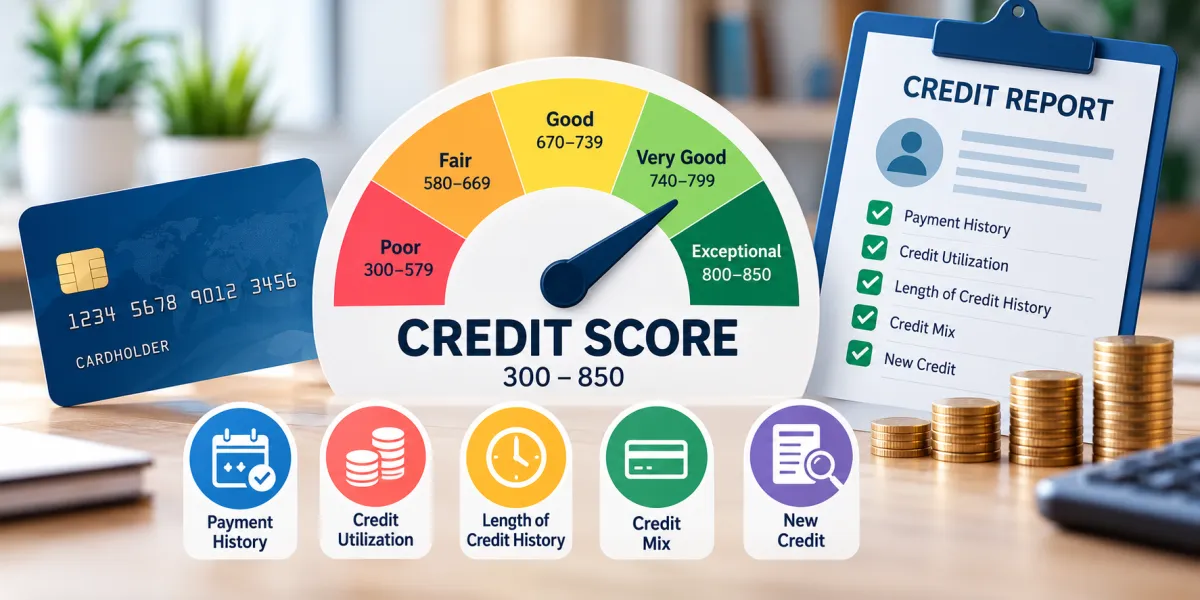
For the commonly used FICO scoring system, a 670 to 739 score is considered good. Scores from 740 to 799 are considered very good, while scores of 800 or higher are considered exceptional. Base FICO Scores generally range from 300 to 850.
There is not just one credit score, however. Different scoring models can produce different scores, and lenders may use different models depending on the type of credit being evaluated.
Understanding credit score ranges can help you understand where your credit stands and how lenders may view your credit profile.
What Is a Good Credit Score?
For a base FICO Score, the commonly used ranges are:
| FICO Score | Credit Rating |
|---|---|
| 300–579 | Poor |
| 580–669 | Fair |
| 670–739 | Good |
| 740–799 | Very Good |
| 800–850 | Exceptional |
A FICO Score of 670 or higher is generally considered good. A score of 740 or higher falls into the very good or exceptional categories.
These ranges are useful benchmarks, but they do not guarantee that a lender will approve your application. Lenders can consider your credit history and other financial information in addition to your score.
What Is a Good VantageScore?
VantageScore is another credit scoring system used in the United States. Like current base FICO Scores, VantageScore uses a 300-to-850 range, but its classifications are different.
The VantageScore ranges are commonly grouped as follows:
| VantageScore | Credit Tier |
|---|---|
| 300–600 | Subprime |
| 601–660 | Near Prime |
| 661–780 | Prime |
| 781–850 | Superprime |
This means a VantageScore of 661 to 780 falls into the Prime category.
Because FICO and VantageScore use different scoring models and terminology, a "Good" FICO score and a "Prime" VantageScore should not be treated as identical classifications.
FICO Score vs. VantageScore
FICO and VantageScore are separate credit scoring systems. Both use information from credit reports, but they use different models to calculate scores.
This is one reason why you may see different credit scores when checking your credit through different financial websites, banks, credit card companies, or credit monitoring services.
Your lender may also use a different score from the one you see.
The CFPB explains that consumers can have multiple credit scores because lenders may use different scoring formulas, different credit-reporting sources, and scores designed for different types of credit products.
What Is a 700 Credit Score?
A 700 FICO Score is considered good because it falls within the 670-to-739 range.
A 700 score can be a useful benchmark for someone trying to establish or maintain good credit. However, the score by itself does not determine whether you will be approved for a particular credit card or loan.
A lender may also consider factors such as your income, existing debt, credit history, loan amount, and other information provided as part of your application.
What Is a 750 Credit Score?
A 750 FICO Score is considered very good because it falls within the 740-to-799 range.
A score in this range indicates a strong credit profile under the FICO scoring categories.
Even with a 750 score, approval and loan terms are not guaranteed. Different lenders have different requirements and may use different credit scores.
What Is an 800 Credit Score?
An 800 FICO Score is considered exceptional.
FICO classifies scores from 800 through 850 as exceptional.
An exceptional score can indicate a strong credit history, but you do not need an 850 score to have excellent credit. Lenders can also consider factors outside of your credit score when evaluating an application.
Why Does a Good Credit Score Matter?
Credit scores help businesses estimate how likely a consumer is to repay borrowed money.
The CFPB explains that companies may use credit scores when making decisions about mortgages, credit cards, auto loans, and other credit products. Credit scores can also be used in areas such as tenant screening and insurance.
A higher credit score generally makes it easier to qualify for credit and may help you receive better interest rates or other loan terms. However, your credit score is only one part of many lending decisions.
For example, a lender may evaluate your:
-
Credit score
-
Credit history
-
Income
-
Existing debt
-
Loan amount
-
Down payment
-
Type of credit
-
Other information in your application
What Factors Affect Your Credit Score?
The exact factors used depend on the scoring model. However, credit scoring models generally use information from your credit reports to calculate your score.
Common factors include payment history, debt and credit utilization, the age and type of credit accounts, and recent applications for credit.
Payment History
Your payment history shows how you have managed payments on your credit accounts.
Making payments on time can help you maintain a positive credit history. Late or missed payments can negatively affect your credit profile.
Payment history is an important factor in many credit scoring models, so consistently paying your bills on time is one of the most important credit habits you can develop.
Credit Utilization
Credit utilization refers to how much of your available revolving credit you are using.
For example, suppose a credit card has a $5,000 credit limit and the balance is $1,000.
Your credit utilization would be:
$1,000 ÷ $5,000 × 100 = 20%
Credit scoring models can consider how close your revolving balances are to your credit limits. The CFPB recommends avoiding getting close to your credit limit.
Length of Credit History
The age of your credit accounts can also affect your credit profile.
Scoring models may consider factors such as how long your accounts have been open and how long you have been using credit.
A longer history gives scoring models more information about how you have managed credit over time.
Types of Credit
Your credit history can contain different types of accounts, such as:
-
Credit cards
-
Auto loans
-
Mortgages
-
Student loans
-
Personal loans
Some scoring models consider the types of credit accounts you have.
However, you should not take out unnecessary loans simply to create a particular mix of credit accounts.
New Credit
Recent applications for credit can also affect your credit profile.
When you apply for certain credit products, the lender may perform a hard inquiry. Hard inquiries can affect your credit score, although the impact varies depending on your overall credit history and the scoring model.
Why Are My Credit Scores Different?
It is normal to have more than one credit score.
Your scores can differ because:
-
Different scoring models are used.
-
Different versions of scoring models exist.
-
Different credit reports may contain different information.
-
Different lenders may use different scores.
-
Scores can change as information on your credit reports changes.
For example, the score used for a credit card application may differ from a score used for a mortgage.
The CFPB notes that there are many credit scores and that lenders can use different scores for different financial products.
Therefore, seeing a different score from another source does not necessarily mean that one of the scores is incorrect.
What Is the Average Credit Score in the U.S.?
According to Experian's 2025 data, the average FICO Score in the United States was 713 as of September 2025. This was down from 715 in 2024.
The national average is useful for understanding the broader credit landscape, but it is not a required target for every consumer.
Your credit needs depend on your financial situation and the requirements of the lender you are dealing with.
What Credit Score Do You Need to Buy a House?
There is no single credit score that guarantees mortgage approval.
Mortgage lenders can have different requirements and may consider your complete financial profile, including your credit history, income, existing debt, down payment, loan amount, and the type of mortgage.
A higher credit score can be helpful when applying for a mortgage, but a score alone does not determine whether you qualify.
If you are planning to buy a home, checking your credit reports before applying can give you an opportunity to review your credit history and address potential errors.
What Credit Score Do You Need to Buy a Car?
There is also no universal minimum credit score for buying a car.
Auto lenders can have different eligibility requirements and may consider your credit score along with your income, debt, down payment, loan amount, and other information.
Your credit profile can influence the financing options available to you, but the exact terms depend on the lender.
Does a Good Credit Score Guarantee a Low Interest Rate?
No.
A good or excellent credit score does not guarantee a particular interest rate.
Lenders can consider several factors when determining whether to approve an application and what terms to offer.
These may include:
-
Credit score
-
Credit history
-
Income
-
Existing debt
-
Loan amount
-
Loan term
-
Type of loan
-
Lender requirements
-
Other financial information
A higher score can generally improve your credit profile, but it does not guarantee the lowest available rate.
How Can You Improve Your Credit Score?
There is no guaranteed method that will increase your credit score by a specific number of points.
However, responsible credit habits can help you build and maintain a stronger credit history.
Pay Your Bills on Time
Making payments on time is one of the most important things you can do to maintain good credit.
If you have missed payments, getting current and continuing to make payments on time can help you establish a stronger payment history over time.
Keep Credit Card Balances Manageable
Avoid using a large portion of your available revolving credit.
For example, if your total credit limits are $10,000 and your balances are $2,000, your utilization is 20%.
Your utilization can change as your balances and credit limits change.
Avoid Unnecessary Credit Applications
Only apply for new credit when you need it.
Applications for new credit can result in hard inquiries, which can affect your credit score.
Review Your Credit Reports
Checking your credit reports can help you identify information that you do not recognize or believe is inaccurate.
The three major nationwide credit reporting companies are Equifax, Experian, and TransUnion.
If you find inaccurate information, you can dispute it with the appropriate credit reporting company and the company that supplied the information.
Give Your Credit History Time
Building strong credit generally takes time.
Consistently managing credit responsibly can help create a stronger credit history, but there is no fixed timeline for reaching a particular score.
Does Checking Your Own Credit Score Lower It?
Generally, checking your own credit score does not lower your credit score.
When you check your own credit, it is generally considered a soft inquiry rather than a hard inquiry.
A hard inquiry can occur when you apply for new credit, such as a credit card, auto loan, or mortgage. Hard inquiries can affect your score.
This means you can monitor your own credit without worrying that the act of checking your score will automatically lower it.
How Long Does It Take to Improve a Credit Score?
There is no fixed amount of time required to improve a credit score.
The timeline depends on your individual credit history and what is currently affecting your score.
For example, someone with high credit card balances may have a different path to improvement than someone dealing with late payments or a short credit history.
Your score can change as new information is reported to the credit reporting companies.
Improving credit is usually a gradual process that requires consistent financial habits.
Can You Have a Good Credit Score With a Short Credit History?
It depends on the scoring model and whether there is enough information available to calculate a score.
People who are new to credit may have a limited credit history, which can make it harder for scoring models to evaluate their credit behavior.
Establishing accounts responsibly and making payments on time can help build a credit history over time.
You should not open unnecessary accounts simply to increase the length or variety of your credit history.
Can Your Credit Score Change From Month to Month?
Yes.
Credit scores can change when information in your credit reports changes.
For example, your score may change after:
-
A credit card balance changes
-
A payment is reported
-
A new account is opened
-
A hard inquiry is added
-
An account balance is paid down
-
Negative information changes or is removed
Because lenders and creditors regularly report information to credit reporting companies, your credit profile can change over time.
How Often Should You Check Your Credit?
There is no penalty for checking your own credit score.
Regularly monitoring your credit can help you understand your financial profile and identify unexpected changes.
It can also be useful to review your credit reports before applying for major credit, such as a mortgage or auto loan.
The CFPB recommends consumers learn about and monitor their credit reports and scores.
Good Credit Score: Key Takeaways
-
A 670 to 739 FICO Score is generally considered good.
-
A 740 to 799 FICO Score is very good.
-
An 800 to 850 FICO Score is exceptional.
-
VantageScore uses different credit tiers from FICO.
-
You can have multiple credit scores because different scoring models and credit-report information can be used.
-
Payment history, credit utilization, account history, credit accounts, and new credit activity can affect your credit score.
-
A good credit score does not guarantee loan approval or a specific interest rate.
-
Checking your own credit score generally does not lower it.
-
Building strong credit is a long-term process based on responsible credit management.
Understanding your credit score is an important part of managing your finances. Rather than focusing only on reaching a particular number, it can be more useful to build consistent habits such as paying bills on time, keeping credit balances manageable, and reviewing your credit reports regularly.
Frequently asked questions
What is considered a good credit score?
A FICO Score of 670 to 739 is generally considered good. Scores from 740 to 799 are very good, while scores from 800 to 850 are considered exceptional.
Is a 700 credit score good?
Yes. A 700 FICO Score falls within the good range of 670 to 739. However, lenders may consider other factors, such as income, debt, credit history, and the type of credit you are applying for.
Is a 750 credit score good?
Yes. A 750 FICO Score is considered very good because it falls within the 740 to 799 range.
Is an 800 credit score good?
Yes. An 800 FICO Score is considered exceptional. The exceptional FICO range is 800 to 850.
What is the highest credit score?
The highest base FICO Score is 850. VantageScore also uses a maximum score of 850 for its current models.
What credit score do I need to buy a house?
here is no single credit score that guarantees mortgage approval. Mortgage lenders can have different requirements and may consider your credit history, income, debt, down payment, loan amount, and type of mortgage in addition to your credit score.
What credit score do I need to buy a car?
There is no universal minimum credit score for an auto loan. Auto lenders can use different requirements and may consider your income, existing debt, down payment, loan amount, and credit history along with your credit score.
Does checking my credit score lower it?
Generally, no. Checking your own credit score is generally considered a soft inquiry and does not lower your credit score. Applying for new credit can result in a hard inquiry, which may affect your score.
Why are my credit scores different?
You can have different credit scores because different scoring models, model versions, credit reports, and lenders may be used. A score you see from a credit monitoring service may therefore differ from the score a lender uses.
How can I improve my credit score?
You can work toward building stronger credit by paying bills on time, keeping credit card balances manageable, avoiding unnecessary applications for new credit, and reviewing your credit reports for inaccurate information.
How long does it take to improve a credit score?
There is no fixed timeline. The time required depends on your credit history and the factors affecting your score. Building strong credit generally requires consistent responsible credit management over time
What factors affect a credit score?
Depending on the scoring model, factors can include payment history, credit utilization, the age and types of credit accounts, and recent credit activity. Different scoring models weigh and evaluate information differently.
What is the difference between a FICO Score and a VantageScore?
FICO and VantageScore are different credit scoring systems. Both use information from credit reports, but they use different models and classifications. This means the scores and ranges can differ.
What is the average credit score in the United States?
Experian reported that the average FICO Score in the United States was 713 as of September 2025. An average score is a national statistic and is not a required score for every consumer.
Can a credit score change every month?
Yes. Credit scores can change as information on your credit reports changes. Changes in credit card balances, payments, new accounts, hard inquiries, and other reported information can affect your score.

Daniel Brooks writes practical content about personal finance, budgeting, saving, credit, banking, taxes, and everyday money decisions. His work focuses on explaining financial topics in straightforward language and help...