Can Your Employer Make You Work Off the Clock? US Employee Pay Rules
Can your employer make you work off the clock without pay? Learn how US wage laws protect nonexempt employees, what counts as unpaid work, how overtime rules apply, and what to do if your employer does not pay for all hours worked.
In this article
- What Does Working Off the Clock Mean?
- Can an Employer Require Employees to Work Without Pay?
- Common Situations Where Unpaid Work Can Occur
- Work Before a Scheduled Shift
- Work After Clocking Out
- Work From Home or After-Hours Messages
- Required Meetings and Training
- Unpaid Meal Periods and Interrupted Breaks
- Unauthorized Overtime Does Not Automatically Mean Unpaid Overtime
- How Unpaid Work Affects Minimum Wage and Overtime
- A Simple Example of Unpaid Minutes Adding Up
- How Overtime Is Calculated
- Who Is Covered by These Federal Pay Rules?
- Federal Law and State Wage Protections
- How to Recognize and Document Unpaid Work
- Keep a Personal Work-Time Log
- Preserve Supporting Records
- Compare Actual Hours With Pay Records
- What to Do if Your Employer Does Not Pay for Work Performed
- 1. Review Your Time and Pay Records
- 2. Raise the Issue With Payroll or a Supervisor
- 3. Keep a Record of the Response
- 4. Contact the U.S. Department of Labor
- 5. Check Your State Labor Agency
- 6. Consider Getting Legal Advice
- Can Employers Ignore a Few Minutes of Work?
- Retaliation and Workplace Concerns
- Conclusion
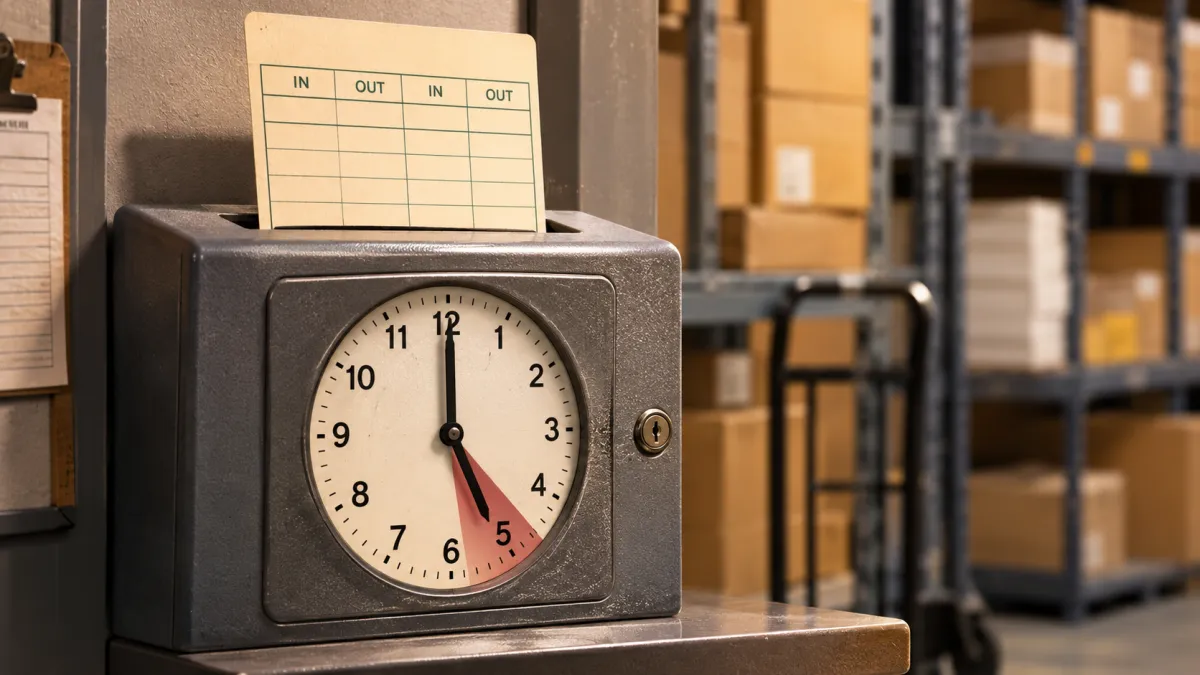
If your employer asks you to arrive early, finish tasks after clocking out, answer work messages at home, or attend an unpaid meeting, that time may still count as work under federal wage law.
For covered, nonexempt employees, the Fair Labor Standards Act (FLSA) generally requires employers to pay for work they “suffer or permit” employees to perform. That means an employer cannot automatically avoid paying for work simply because it happened outside a scheduled shift or was not entered correctly on a timecard.
The details matter. Some workers are exempt from federal overtime rules, certain activities may not count as working time, and state laws can provide additional protections. The practical question is whether the employer required, knew about, or allowed the work to happen—and whether the time should have been recorded and paid.
This guide explains what counts as off-the-clock work, how unauthorized overtime is treated, how unpaid minutes can affect wages, and what employees can do to document and report missing pay.
What Does Working Off the Clock Mean?
Working off the clock means performing job-related tasks without having that time recorded as working time for pay purposes. It can happen before a shift, after a shift, during an unpaid meal period, or outside the workplace.
The phrase does not describe only situations where a manager explicitly tells someone to work for free. Under the FLSA, work that an employer allows can also be compensable, even when the employee was not specifically asked to do it. The Department of Labor explains this through the legal concept of suffer or permit to work. Its Hours Worked Advisor provides examples.
Common examples include:
-
Arriving early to prepare a workstation, stock shelves, or set up equipment.
-
Staying after clocking out to finish serving customers or completing required closing duties.
-
Reading and responding to work messages outside scheduled hours when the employer permits or expects the work.
-
Completing reports, paperwork, or data entry at home without recording the time.
-
Attending a required meeting or training session that is not included in paid hours.
-
Working through a meal period while continuing to answer calls, monitor equipment, or help customers.
-
Repeating a task or correcting a mistake as part of the job.
Not every activity that happens near a shift is automatically paid work. Ordinary commuting, for example, is generally not working time under federal law. The details of the activity, the employer's knowledge, and the circumstances determine whether time is compensable.
Can an Employer Require Employees to Work Without Pay?
For employees covered by the FLSA who are nonexempt, an employer generally cannot require or allow work to be performed and then simply exclude that time from wages.
The law's “suffer or permit” standard is important because it covers more than formal instructions. If a supervisor knows an employee regularly stays late to finish assigned tasks, or the employer has reason to know that work is continuing, the time may be compensable even if the employee was not expressly told to stay.
For example, imagine a retail employee whose scheduled shift ends at 9 p.m. The employee clocks out at 9 p.m. but spends another 15 minutes cleaning a work area and finishing a required closing checklist. If the manager knows this is happening or allows the work to continue, those minutes generally cannot be treated as unpaid simply because the timecard shows a 9 p.m. departure.
The same principle can apply when employees take work home, complete reports after a shift, or correct mistakes. The Department of Labor's guidance recognizes that work performed voluntarily or without a direct request may still count when the employer permits it.
There are important limits to this general rule:
-
The FLSA's minimum-wage and overtime protections do not apply in the same way to every worker. Coverage and exemptions matter.
-
Some activities are not considered compensable work under federal rules.
-
State wage laws may provide broader protections.
-
Whether an employer knew or should have known about the work can matter when evaluating a particular situation.
An employer may set rules about when employees can work, how they should record their hours, and who can authorize overtime. Those workplace rules do not automatically erase the obligation to pay for compensable work that was actually permitted.
Common Situations Where Unpaid Work Can Occur
Off-the-clock work is not limited to one industry. The same pay issue can arise in a restaurant, warehouse, hospital, retail store, professional workplace, or remote job. The details differ, but the central issue is whether the employee performed work that should have been counted.
Work Before a Scheduled Shift
Some employees arrive early because they are expected to prepare before their official start time. Examples include:
-
A restaurant worker setting up a station before the shift begins.
-
A warehouse employee preparing equipment or reviewing assigned work.
-
A healthcare employee receiving information needed to begin patient-care duties.
-
A retail employee arranging displays or preparing registers before opening.
Simply arriving early does not necessarily mean the entire waiting period is paid. The key distinction is between personal time spent waiting to begin work and time spent performing job duties or being required to remain on duty.
If the employee is doing productive tasks that the employer requires or permits, the time may need to be included in the work record.
Work After Clocking Out
Unpaid time can also occur at the end of a shift. An employee may be told to clock out at the scheduled time but still be expected to finish work.
Examples include:
-
Cleaning or closing a work area.
-
Finishing a customer transaction.
-
Completing required paperwork.
-
Securing equipment or following closing procedures.
-
Handing over duties to the next shift.
The fact that the employee has already clocked out does not decide whether the remaining work is compensable. If the work is permitted by the employer, the time may still count.
Work From Home or After-Hours Messages
Remote and hybrid employees can also perform unpaid work. A worker might answer a supervisor's message, update a spreadsheet, prepare a report, or complete a task after the normal workday.
A brief message does not automatically make every minute of an evening compensable. The nature of the activity and the amount of time involved matter. However, employers should not ignore work simply because it happens on a personal device or outside the office.
Employees who regularly receive after-hours assignments should keep track of the time spent completing them and follow the employer's time-reporting process.
Required Meetings and Training
Meetings, lectures, and training sessions can count as working time. Under the Department of Labor's general guidance, attendance may be excluded from work time only when all four conditions are met:
-
It takes place outside the employee's normal working hours.
-
Attendance is voluntary.
-
The activity is not directly related to the employee's job.
-
The employee does not perform productive work during the session.
If even one of these conditions is not satisfied, the time may need to be counted, depending on the circumstances. For example, required job training held before a shift will generally be treated differently from an optional class that is unrelated to the employee's work.
Unpaid Meal Periods and Interrupted Breaks
A bona fide meal period is generally unpaid under federal law when the employee is completely relieved of duties for the purpose of eating. A meal period is commonly 30 minutes or longer, although the actual circumstances matter.
If an employee must continue working while eating, the period may not qualify as an unpaid meal break. Examples include answering customer calls, monitoring a work area, assisting patients, or remaining responsible for active duties.
Short rest breaks are treated differently. Rest periods of about 20 minutes or less are generally counted as paid working time under federal guidance.
An employer should not automatically deduct a meal period if employees routinely perform duties during that time. Workers should record interruptions accurately and report them through the appropriate workplace process.
Unauthorized Overtime Does Not Automatically Mean Unpaid Overtime
Employers can generally require employees to get approval before working overtime. They can also establish scheduling rules and take appropriate disciplinary action when an employee violates a workplace policy.
However, an approval rule is not a blanket exception to federal wage requirements.
For covered, nonexempt employees, an employer generally must pay for compensable overtime that it required or permitted, even if the employee did not obtain advance authorization. The Department of Labor explains that announcing that overtime is prohibited—or will not be paid unless approved—does not remove the obligation to pay for overtime hours actually worked.
Consider a warehouse employee who is told not to work beyond the scheduled shift without a supervisor's approval. A shipment arrives late, and the supervisor knows the employee stays 45 minutes to finish processing it. The employer may have a policy requiring prior approval, but that policy does not automatically make the 45 minutes unpaid.
The employee may still face workplace consequences for violating a valid scheduling or approval rule. That is a separate issue from whether the employer must pay for the time.
Employees should not assume that working without permission means they lose the right to wages. They should record all time worked accurately and follow the employer's process for reporting it.
How Unpaid Work Affects Minimum Wage and Overtime
Leaving work time off a timecard can affect more than the paycheck for that particular shift. It can also change the calculation of an employee's total hours and regular rate of pay.
Under the FLSA, covered, nonexempt employees generally must receive at least the applicable federal minimum wage for all compensable hours worked. They generally must also receive overtime pay at no less than one and one-half times their regular rate for hours worked over 40 in a workweek. The workweek is a fixed, recurring period of 168 hours; it does not have to match the calendar week.
A Simple Example of Unpaid Minutes Adding Up
Suppose a nonexempt employee earns $18 per hour and works an extra 15 minutes each day, five days a week, without that time appearing on the timecard.
The calculation looks like this:
| Calculation | Amount |
|---|---|
| Extra time per day | 15 minutes |
| Extra time per week | 1.25 hours |
| Hourly rate | $18 |
| Potential unpaid regular wages per week | $22.50 |
| Over four weeks | $90 |
| Over 52 weeks at the same pattern | $1,170 |
This example assumes the extra time is compensable, the employee is paid at the stated straight-time rate for those hours, and the added hours do not create an overtime obligation. It is an illustration of unpaid regular wages—not a calculation of legal damages, penalties, or any additional overtime that might be due.
If the employee's total hours exceed 40 in a workweek, the overtime calculation may change. The employer generally cannot calculate overtime correctly while ignoring compensable time that was left off the time record.
How Overtime Is Calculated
For most covered, nonexempt employees, federal overtime is based on hours worked in each workweek—not on the number of hours worked in a day or the total across two weeks.
For example, an employee who works 42 compensable hours in one workweek generally has two overtime hours. An employee who works 38 hours in one week and 42 in the next generally does not average the two weeks together to determine federal overtime. The overtime calculation is made separately for each workweek.
The regular rate can also be more complicated than an employee's stated hourly wage. Certain bonuses and other forms of compensation may need to be included when calculating overtime. Employees with commissions, multiple pay rates, or other pay arrangements may need a closer review of their pay records.
Who Is Covered by These Federal Pay Rules?
The FLSA provides federal minimum-wage and overtime protections to covered employees, but not every worker has the same coverage or overtime status.
A key distinction is whether an employee is nonexempt or exempt from the FLSA's overtime requirements.
Many hourly employees are nonexempt, but hourly pay is not the only factor. Some salaried employees are also nonexempt and may be entitled to overtime. Conversely, some employees may qualify for an exemption if the applicable legal requirements are met.
For the common executive, administrative, and professional exemptions, the analysis generally involves more than a job title or the fact that someone receives a salary. The applicable duties and compensation tests must be considered.
As of November 18, 2026, the Department of Labor says it is applying the restored 2019 federal salary thresholds: generally $684 per week for the standard EAP exemptions and $107,432 in annual compensation for certain highly compensated employees. These figures do not, by themselves, establish that a worker is exempt; the other requirements still matter.
Other exemptions and special rules can apply to particular occupations and industries. A worker should not assume that an employer's classification is correct simply because the company describes a position as salaried, managerial, or professional.
If the classification is unclear, the Department of Labor's FLSA guidance and resources can help explain the federal rules. For a specific situation, the Wage and Hour Division or a qualified employment attorney can help assess the applicable requirements.
Federal Law and State Wage Protections
The FLSA sets a federal baseline, but states can provide additional wage protections. Depending on where an employee works, state law may impose a higher minimum wage, different overtime requirements, stricter meal-period rules, or additional recordkeeping obligations.
This matters because an employee's rights may depend on both federal and state law. When both laws apply, employers generally must follow the standard that provides the greater protection for the employee on the issue involved.
For example, a state may have rules about meal breaks or daily overtime that go beyond the federal FLSA standard. An employee who works in that state may have rights under state law even when the federal rule does not require the same result.
There is no single state rule that should be assumed to apply nationwide. Before deciding whether a particular unpaid period is lawful, check the labor agency for the state where the work was performed. The U.S. Department of Labor's state labor office directory can help workers locate the appropriate state agency.
A useful way to review a pay concern is to consider three things:
-
Federal coverage: Does the FLSA cover the employer and employee, and is the employee nonexempt?
-
State protections: Does the state provide a higher minimum wage, different overtime rules, or stronger break protections?
-
Actual work performed: What duties were completed, how much time did they take, and did the employer know or allow the work?
This approach is more reliable than assuming that every workplace follows only the federal minimum standard.
How to Recognize and Document Unpaid Work
When a paycheck appears short, useful records can help establish what work was performed and when. Employers covered by the FLSA must maintain accurate records of hours worked and wages paid for nonexempt employees. Federal rules do not require one specific timekeeping method, but the records must be complete and accurate.
Employees can also keep their own contemporaneous notes. A personal record is especially useful when the timecard does not reflect the actual work performed.
Keep a Personal Work-Time Log
For each incident, write down:
-
The date.
-
The scheduled start and end times.
-
The time you actually began and stopped working.
-
The additional tasks performed.
-
Whether a supervisor requested, knew about, or allowed the work.
-
Any break that was interrupted by job duties.
-
The approximate amount of time involved.
For example, instead of writing “stayed late,” record: “Tuesday, scheduled until 6 p.m.; clocked out at 6 p.m.; completed the required closing checklist until approximately 6:18 p.m.; supervisor was present.”
Specific notes are more useful than a general estimate made weeks or months later.
Preserve Supporting Records
Keep copies of records you are lawfully allowed to access, such as:
-
Timecards and schedules.
-
Pay stubs and wage statements.
-
Work-related emails and messages.
-
Meeting invitations and training schedules.
-
Work assignments and task-completion records.
-
Personal notes showing actual start and end times.
Do not take confidential customer information, trade secrets, patient records, or documents you are not authorized to access. You generally do not need to copy sensitive company material to keep a useful personal record of your own hours.
Compare Actual Hours With Pay Records
Review your notes against the hours shown on your timecard and pay statement. Check each workweek separately because federal overtime is calculated by workweek, not by averaging hours across a pay period.
Look for patterns such as:
-
Regular early starts that are missing from the time record.
-
Closing duties performed after the recorded end time.
-
Required meetings that do not appear in paid hours.
-
Meal periods during which work continued.
-
After-hours tasks that were completed but not recorded.
If the difference appears repeatedly, organize the examples by date and workweek. This makes it easier to explain the issue clearly to payroll, human resources, a labor agency, or an attorney.
What to Do if Your Employer Does Not Pay for Work Performed
If you believe your employer has left compensable time off your paycheck, take a careful, documented approach. The right next step can depend on the workplace, the amount involved, and whether the issue appears to be a mistake or a recurring practice.
1. Review Your Time and Pay Records
Start by checking the relevant pay period and workweeks. Compare the hours you actually worked with the hours recorded and paid.
Make sure you distinguish between time spent performing job duties and time spent on personal activities, ordinary commuting, or other periods that generally do not count as work.
2. Raise the Issue With Payroll or a Supervisor
If it feels appropriate and safe to do so, explain the discrepancy in writing. Keep the message factual and specific.
For example, you might say:
“My time record shows that I finished at 6 p.m. on Tuesday, but I continued completing the required closing tasks until approximately 6:18 p.m. Could you review whether those additional minutes should be added to my hours for that workweek?”
A clear written message creates a record of the concern and gives the employer an opportunity to check for a timekeeping or payroll error.
Follow the company's process for correcting time records, but do not change or falsify a timecard yourself. If your employer uses a correction form or payroll portal, keep a copy of the information you submit.
3. Keep a Record of the Response
Save the employer's response and note whether the missing time is corrected. If the issue continues, record each additional incident rather than relying only on the first conversation.
Avoid deleting relevant messages or relying on memory alone. A dated record can help show whether the problem was isolated or part of a repeated practice.
4. Contact the U.S. Department of Labor
If the issue is not resolved, employees can contact the Department of Labor's Wage and Hour Division (WHD). The WHD administers and enforces federal wage-and-hour protections, including the FLSA's minimum-wage, overtime, and recordkeeping requirements.
The Department's complaint guidance explains how to contact the agency. Workers can call 1-866-487-9243 to discuss a concern or learn about the complaint process. The WHD may ask for employer information, the type of work performed, pay details, and supporting records. Its services are free.
The agency reviews the information and determines how to proceed. A complaint does not automatically mean that the employer violated the law or that a particular amount of money will be recovered.
5. Check Your State Labor Agency
A state labor department may enforce wage rules that provide additional protections beyond federal law. If your concern involves unpaid time, meal periods, minimum wage, or overtime, check the agency for the state where you performed the work.
The federal and state processes are not identical, and the appropriate route depends on the facts and the laws that apply. You can use the Department of Labor's state contacts directory to find state labor offices.
6. Consider Getting Legal Advice
For a substantial amount of unpaid wages, repeated timekeeping problems, complicated pay arrangements, or possible retaliation, consider speaking with an employment attorney. An attorney can review the facts, identify which laws may apply, and explain possible options.
This can be especially useful when the employee's classification, work schedule, overtime calculation, or state-law rights are disputed. Keep your records organized so the discussion can focus on actual dates, hours, duties, and pay.
Can Employers Ignore a Few Minutes of Work?
Federal regulations recognize a narrow concept called de minimis time. In limited circumstances, an employer may disregard very small, uncertain, and difficult-to-record periods of time when recording them would be impractical.
That rule is not a general permission to require unpaid work in small increments. The regulation explains that employers may not arbitrarily disregard fixed or regular work time, or time that can practically be determined.
The distinction is between occasional, uncertain seconds that are genuinely difficult to record and a regular task that takes a predictable amount of time.
For example, an employee who is consistently required to spend 10 or 15 minutes completing a closing procedure is describing a regular work activity, not an unpredictable few seconds. The time should not automatically be dismissed as insignificant.
Employees should record recurring work accurately, even when each individual period seems short. Small amounts can accumulate over days and weeks, and they can also affect overtime calculations.
Retaliation and Workplace Concerns
Employees may hesitate to raise a pay concern because they worry about losing shifts, being disciplined, or being fired. The FLSA includes protections against retaliation for certain protected activities, including making complaints about wages or cooperating with a Wage and Hour Division investigation.
The Department of Labor explains that prohibited retaliation can include firing, reducing hours, threats, or other adverse actions because an employee exercised protected rights.
If something changes after you raise a wage concern, keep a factual record of what happened. Note dates, statements, schedule changes, disciplinary actions, and the people involved. Do not assume every negative workplace decision is unlawful retaliation; the connection to protected activity and the circumstances matter.
The WHD provides information about retaliation protections. Workers who believe they have experienced retaliation can contact the agency to discuss the situation.
Conclusion
For covered, nonexempt employees, work does not become unpaid simply because it happens before a scheduled shift, after clocking out, at home, or without advance overtime approval. Under the FLSA, work an employer requires or permits generally must be counted and paid, subject to the law's coverage rules and specific exceptions.
If you regularly perform tasks that do not appear on your timecard, keep a dated record of the actual time and work involved. Compare it with your pay records, raise specific discrepancies through the appropriate workplace process, and keep copies of relevant communications. If the problem is not resolved, the U.S. Department of Labor or your state labor agency may be able to explain your options.
The most useful first step is to make sure your records reflect the work you actually performed. Accurate hours are essential to receiving the wages—and any overtime pay—you are legally entitled to.
Frequently asked questions
Q1. Can salaried employees also be entitled to overtime pay?
Yes. Some salaried employees are nonexempt under the FLSA and may qualify for overtime. Receiving a salary does not automatically make an employee exempt. The applicable duties and compensation tests must be considered.
Q2. Can my employer change or delete hours from my timecard?
Employers covered by the FLSA must maintain accurate records of hours worked and wages paid for nonexempt employees. An employer should not remove compensable work time simply to reduce recorded hours or avoid paying wages.
Q3. Do employers have to pay employees for just a few minutes of unpaid work?
Generally, compensable work must be paid. Federal regulations recognize a narrow de minimis exception for certain small, uncertain periods that are impractical to record. Regular and predictable work time should not automatically be ignored.
Q4. How long do I have to claim unpaid wages under federal law?
Under the FLSA, the general limitation period is two years. It can be extended to three years for a willful violation. State laws may have different deadlines, so employees should check the rules that apply to their situation.
Q5. Can I report unpaid wages if I no longer work for the company?
Yes. Former employees can contact the US Department of Labor's Wage and Hour Division about possible FLSA violations. Leaving the job does not automatically prevent someone from reporting unpaid wages, but applicable filing deadlines still matter.

James Collins writes practical content about work, business, careers, workplace trends, productivity, and professional development. His articles focus on helping readers understand everyday workplace decisions, business...