What Does a Medical Records Specialist Do? Duties, Salary & Career Path
Learn what medical records specialists do, including their daily responsibilities, education requirements, certifications, skills, and career opportunities. This guide explains US salary data, the difference between medical records specialists and medical coders, and practical steps to enter the healthcare information field.
In this article
- What Does a Medical Records Specialist Do?
- Medical Records Specialist Job Duties and Responsibilities
- Reviewing and Updating Patient Records
- Managing Electronic Health Records
- Organizing and Retrieving Medical Documents
- Checking Records for Completeness
- Protecting Patient Information
- What Is a Typical Day Like for a Medical Records Specialist?
- Medical Records Specialist vs. Medical Coder
- Where Do Medical Records Specialists Work?
- Hospitals
- Physician Offices
- Health Information Management Departments
- Other Healthcare Organizations
- How to Become a Medical Records Specialist in the United States
- Step 1: Understand the Job Requirements
- Step 2: Build Basic Administrative and Computer Skills
- Step 3: Learn Medical Terminology
- Step 4: Consider a Relevant Education Program
- Step 5: Apply for Entry-Level Positions
- Step 6: Consider Professional Certification
- Medical Records Specialist Education Requirements
- Medical Records Specialist Certification Options
- Registered Health Information Technician (RHIT)
- Registered Health Information Administrator (RHIA)
- Certified Coding Specialist (CCS)
- Is Certification Mandatory?
- Medical Records Specialist Salary in the United States
- Salary by Healthcare Setting
- What Affects Medical Records Specialist Salary?
- Job Outlook for Medical Records Specialists
- Skills Needed to Become a Medical Records Specialist
- Attention to Detail
- Computer and Information Management Skills
- Medical Terminology
- Confidentiality and Professional Judgment
- Organization and Time Management
- Communication Skills
- Can Medical Records Specialists Work Remotely?
- Career Advancement Opportunities
- Moving Into Medical Coding
- Moving Into Health Information Management
- Moving Into Supervisory Roles
- Is Medical Records Specialist a Good Career?
- Potential Advantages
- Potential Challenges
- Common Mistakes to Avoid When Entering This Career
- Assuming Every Job Requires the Same Education
- Confusing Medical Records Work With Medical Coding
- Enrolling in a Program Without Checking Accreditation
- Expecting the National Median Salary as Starting Pay
- Overlooking Confidentiality Requirements
- Conclusion

A medical records specialist helps healthcare organizations keep patient health information accurate, organized, complete, and confidential. These professionals work behind the scenes to ensure that medical records are available when doctors, nurses, billing teams, and other authorized staff need them.
Medical records specialists may review patient documentation, update electronic health records, organize files, check information for errors, and help maintain privacy. Depending on the position, they may also handle medical coding, record requests, document scanning, or data quality checks.
This career can be an option for people interested in healthcare who prefer administrative or information-focused work rather than direct patient care. Some positions are entry-level, while others require specialized education, experience, or professional certification.
If you are considering this career in the United States, it is important to understand the daily responsibilities, education requirements, certification options, salary expectations, and opportunities for advancement.
What Does a Medical Records Specialist Do?
A medical records specialist manages and maintains patient health information so that it is accurate, accessible to authorized users, and handled appropriately.
The role involves working with medical documentation, electronic health records (EHRs), patient information systems, and healthcare administrative processes.
Typical responsibilities may include:
-
Reviewing patient records for accuracy and completeness
-
Entering or updating information in electronic health record systems
-
Organizing, scanning, and storing medical documents
-
Checking records for missing information
-
Retrieving medical records when authorized healthcare staff need them
-
Helping process requests for patient information
-
Maintaining confidentiality of sensitive health information
-
Supporting medical coding or documentation workflows when required
-
Identifying discrepancies and following established procedures to resolve them
The exact duties depend on the employer and job title. A specialist working in a hospital may handle a different workload from someone working in a physician's office, health information management department, or records-processing company.
Some medical records specialists focus primarily on organizing and maintaining records. Others work in more specialized areas, such as medical coding, documentation review, or health information quality.
The main purpose of the job is to help healthcare organizations maintain reliable patient information.
Medical Records Specialist Job Duties and Responsibilities
Medical records specialists perform several types of tasks throughout the workday. Their responsibilities often involve a combination of administrative work, data accuracy, document management, and information security.
Reviewing and Updating Patient Records
One of the most common responsibilities is reviewing patient records to make sure information is entered correctly and remains organized.
A specialist may work with details such as:
-
Patient demographic information
-
Visit documentation
-
Medical history
-
Diagnoses recorded by healthcare providers
-
Treatment documentation
-
Test and procedure records
-
Discharge information
-
Other clinical documents
The specialist may identify missing pages, incomplete fields, duplicate records, or inconsistencies that need attention.
For example, a healthcare provider's office may receive documentation from a recent appointment. A medical records specialist may review the documents, verify that they belong in the correct patient record, and update the electronic system according to the organization's procedures.
The specialist does not independently diagnose patients or make treatment decisions. Their responsibility is to maintain and process information appropriately.
Managing Electronic Health Records
Many healthcare organizations use electronic health record systems rather than relying entirely on paper files.
Medical records specialists may enter, retrieve, organize, and update information in these systems. They may also scan paper documents and attach them to the appropriate electronic record.
Accuracy is important because healthcare professionals rely on patient documentation to understand a patient's medical history and care.
A misplaced document or incorrect record entry can create administrative problems and may affect how information is accessed.
Specialists therefore need to follow established procedures and carefully check their work.
Organizing and Retrieving Medical Documents
Healthcare organizations generate large amounts of documentation. Medical records specialists help ensure that records can be located when authorized users need them.
Their work may include:
-
Filing documents electronically or physically
-
Categorizing records
-
Retrieving information for approved requests
-
Maintaining document indexes
-
Tracking records that need additional processing
-
Following retention and storage procedures
A specialist may receive a request from an authorized department to locate documentation associated with a patient visit. The specialist follows the organization's process to retrieve the correct information.
Checking Records for Completeness
Medical records specialists may review documentation to identify missing or incomplete information.
For example, a record may be missing a required document, contain an incomplete entry, or need clarification from an authorized healthcare professional.
The specialist follows established procedures to flag the issue or route it to the appropriate person.
They should not independently change clinical information or create medical details that were not documented by the healthcare provider.
Protecting Patient Information
Patient health information is sensitive. Medical records specialists must follow applicable privacy and security policies.
Their responsibilities may include:
-
Accessing only information necessary for assigned duties
-
Following approved procedures for record requests
-
Avoiding unauthorized disclosure
-
Protecting documents from improper access
-
Using secure systems and approved communication methods
-
Reporting suspected privacy or security issues according to workplace procedures
The federal HIPAA Privacy Rule establishes protections for certain health information and governs its use and disclosure by covered entities and business associates.
HIPAA compliance is not simply about keeping files locked away. It also involves understanding when information may be accessed, used, or shared under applicable rules and workplace policies.
What Is a Typical Day Like for a Medical Records Specialist?
A medical records specialist's day usually involves a series of administrative and information-management tasks.
The schedule varies by workplace, but a typical day may include the following activities.
Starting the workday: The specialist checks assigned tasks, record-processing queues, pending requests, and any items requiring follow-up.
Reviewing documentation: They examine medical records for completeness, accuracy, and proper organization.
Updating electronic records: They enter information, scan documents, attach files, or update records according to established procedures.
Processing requests: They may retrieve records for authorized departments or handle approved requests for medical information.
Resolving documentation issues: If records are incomplete or contain discrepancies, the specialist flags the issue or routes it to the appropriate staff member.
Maintaining privacy: Throughout the day, they follow access controls and confidentiality procedures.
Completing daily assignments: Before finishing work, they may review pending items, update task statuses, and ensure records have been processed appropriately.
This is generally a computer-based administrative occupation. Some positions involve physical files and document handling, while others rely heavily on electronic systems.
Medical Records Specialist vs. Medical Coder
Medical records specialists and medical coders have overlapping responsibilities in some workplaces, but the occupations are not identical.
Medical records specialists generally focus on managing, maintaining, reviewing, and organizing patient health information. Medical coders focus more specifically on translating documented diagnoses, procedures, and services into standardized medical codes used in healthcare processes.
Some medical records specialists perform coding tasks, depending on their job duties and qualifications. Other positions focus primarily on record management without extensive coding responsibilities.
| Factor | Medical Records Specialist | Medical Coder |
|---|---|---|
| Main focus | Managing and maintaining health information | Assigning standardized codes to documented diagnoses and procedures |
| Typical tasks | Record organization, data entry, document review, retrieval | Reviewing documentation and applying coding systems |
| Medical terminology | Useful and commonly relevant | Important for accurate coding |
| Coding knowledge | May be required for some positions | Central to the role |
| Certification | May be preferred or required by employer | Coding credentials may be preferred or required |
| Work environment | Hospitals, physician offices, records departments, other healthcare settings | Hospitals, physician offices, coding departments, and other healthcare organizations |
The distinction matters when choosing education or training.
A person interested in organizing patient documentation may pursue a medical records or health information pathway. Someone who wants to specialize in coding should investigate coding-focused education and credentials.
Job titles are not always consistent across employers. Read the responsibilities and qualifications in the job posting rather than relying on the title alone.
Where Do Medical Records Specialists Work?
Medical records specialists work in several types of healthcare and health information environments.
Hospitals
Hospitals often maintain extensive patient documentation across departments and services.
Medical records specialists may support inpatient or outpatient records, discharge documentation, record retrieval, document processing, or health information management operations.
The work can involve larger record volumes and more complex workflows than some smaller healthcare settings.
Physician Offices
Doctors' offices and outpatient clinics also need organized patient records.
Specialists may update electronic health records, scan documents, organize patient information, and support administrative workflows.
Depending on the organization, the role may combine medical records responsibilities with other office tasks.
Health Information Management Departments
Health information management departments focus on maintaining and managing healthcare information.
Medical records specialists may work alongside other professionals responsible for record quality, documentation workflows, privacy, coding, and information management.
Other Healthcare Organizations
Medical records specialists may also work for:
-
Nursing and residential care facilities
-
Government healthcare organizations
-
Insurance-related organizations
-
Administrative and support service companies
-
Organizations that provide medical record processing services
The specific job duties depend on the organization and its operational needs.
How to Become a Medical Records Specialist in the United States
There is no single universal pathway into every medical records specialist position. Education, experience, and certification expectations vary by employer.
A practical approach is to follow these steps.
Step 1: Understand the Job Requirements
Start by reviewing medical records specialist job postings in your preferred location.
Look at positions offered by hospitals, physician offices, healthcare systems, and medical records processing companies.
Pay attention to:
-
Required education
-
Preferred experience
-
Medical terminology expectations
-
Computer skills
-
Electronic health record experience
-
Certification requirements
-
Whether the position is entry-level
This helps you understand which qualifications employers actually request.
Some jobs may accept applicants with a high school diploma and relevant administrative skills. Other positions may require postsecondary education or previous healthcare experience.
Step 2: Build Basic Administrative and Computer Skills
Medical records specialists need strong attention to detail and the ability to work with digital information.
Useful skills include:
-
Computer literacy
-
Data entry accuracy
-
Document management
-
File organization
-
Written communication
-
Time management
-
Confidentiality awareness
-
Ability to follow procedures
Experience with office software and electronic record systems can be helpful.
If you are new to healthcare, developing these skills can make you better prepared for entry-level administrative positions.
Step 3: Learn Medical Terminology
Medical terminology helps specialists understand the words and abbreviations used in healthcare documentation.
Knowledge of common medical terms can make it easier to recognize diagnoses, body systems, procedures, and other information found in patient records.
The depth of terminology knowledge needed depends on the role. A records-management position may require less specialized knowledge than a medical coding position.
Step 4: Consider a Relevant Education Program
The U.S. Bureau of Labor Statistics reports that medical records specialists typically need a postsecondary nondegree award, although requirements vary. Some workers may qualify with a high school diploma, while certain employers prefer or require an associate degree or higher.
Potential education options include:
-
Medical records or health information certificate programs
-
Medical coding programs
-
Associate degree programs in health information management
-
Other relevant healthcare administration programs
Before enrolling, compare the curriculum with the requirements in job postings you want to pursue.
If a program advertises preparation for a professional credential, verify the credential's official eligibility requirements separately.
The CAHIIM program directory can help prospective students identify accredited health information management programs.
Before choosing a school, check:
-
Whether the program is accredited when accreditation is relevant to your goal
-
Which credentials the program may prepare you for
-
Whether coursework includes medical terminology and health information systems
-
Whether coding is included
-
Whether the program offers practical training
-
Whether its graduates meet the requirements of jobs you are targeting
The most useful program is one that matches your intended occupation and employer requirements, not necessarily the one with the longest curriculum.
Step 5: Apply for Entry-Level Positions
Once you have developed relevant skills and meet the employer's requirements, begin applying.
Search job titles such as:
-
Medical Records Specialist
-
Medical Records Clerk
-
Health Information Clerk
-
Medical Records Technician
-
Health Information Specialist
-
Medical Document Specialist
These titles may describe different levels of responsibility. Review each job description carefully.
For applicants without previous healthcare experience, administrative support or document-processing roles may provide a starting point, depending on the employer's requirements.
Step 6: Consider Professional Certification
Certification can help demonstrate specialized knowledge, particularly for positions involving health information management or medical coding.
However, certification is not universally required for every medical records specialist job. Its value depends on the position, employer, and career direction.
Medical Records Specialist Education Requirements
Education requirements vary by role and employer.
The BLS notes that medical records specialists typically need postsecondary education, often a nondegree award. Some employers may accept a high school diploma, while others prefer an associate degree or additional qualifications.
The main education pathways include the following.
| Education pathway | What it may prepare you for |
|---|---|
| High school diploma | Some entry-level records or administrative positions, depending on employer |
| Certificate program | Medical records, medical terminology, document processing, or coding-related skills |
| Associate degree | Broader health information management knowledge and preparation for some professional credentials |
| Bachelor's degree | More advanced health information management or related career pathways |
A certificate may be suitable for someone seeking a focused entry-level pathway. An associate degree may offer a broader foundation for health information management and credential eligibility.
Do not assume that every program qualifies graduates for every professional certification.
For example, the CAHIIM program directory can help prospective students identify accredited health information management programs.
Before choosing a school, check whether the program meets the requirements for your intended credential and whether its coursework matches the jobs you want to pursue.
Medical Records Specialist Certification Options
Professional certification may be helpful for career advancement or specialized work. The appropriate credential depends on the type of responsibilities you want to perform.
Registered Health Information Technician (RHIT)
The RHIT credential is offered by the American Health Information Management Association (AHIMA).
It is associated with health information management knowledge and skills, including maintaining health information and supporting its quality and integrity.
RHIT eligibility generally requires completion of an eligible associate-level health information management program accredited by CAHIIM or a recognized reciprocal pathway.
Review the official AHIMA RHIT certification page for current eligibility details.
Registered Health Information Administrator (RHIA)
The RHIA credential is intended for a broader health information management pathway.
It is associated with more advanced health information management responsibilities, including managing health information systems and related operations.
Eligibility is tied to qualifying health information management education pathways, typically at the bachelor's or master's level, through approved programs.
You can review the official AHIMA RHIA certification page for the current requirements.
Certified Coding Specialist (CCS)
The CCS credential is focused on medical coding.
It may be relevant for medical records specialists who want to move into coding-intensive positions. Coding work requires accurate interpretation of healthcare documentation and application of coding guidelines.
CCS is not interchangeable with RHIT or RHIA. It represents a different professional focus.
Review AHIMA's certification overview before deciding whether this credential fits your goals.
Is Certification Mandatory?
Certification is not a universal state licensing requirement for all medical records specialists.
Some employers may require a credential, while others may prefer one or accept relevant education and experience.
Check the qualifications listed in the job posting. If certification is required, verify that your education or training meets the credential's eligibility criteria before paying for a program or exam.
Medical Records Specialist Salary in the United States
Medical records specialist salary depends on factors such as experience, employer, location, education, responsibilities, and specialized skills.
According to the U.S. Bureau of Labor Statistics, the median annual wage for medical records specialists was $51,140 in May 2025, equivalent to approximately $24.59 per hour.
The median is the midpoint of the wage distribution. It does not mean that every worker earns this amount or that a new employee should expect to start at the median.
The BLS wage distribution also indicates that:
-
The lowest 10% earned less than $37,000 annually.
-
The highest 10% earned more than $81,150 annually.
These figures represent national wage estimates, not guaranteed salary offers.
Salary by Healthcare Setting
BLS wage data for May 2025 also show differences among industries employing medical records specialists.
| Industry | Median annual wage |
|---|---|
| Management of companies and enterprises | $60,980 |
| Hospitals | $59,120 |
| Administrative and support services | $49,490 |
| Offices of physicians | $47,120 |
| Professional, scientific, and technical services | $46,800 |
These figures can help readers compare broad industry patterns. They do not establish that every job in a particular setting will pay the listed amount.
Actual pay can differ based on local labor markets, employer size, job duties, and experience.
What Affects Medical Records Specialist Salary?
Several factors can influence compensation.
Experience: Workers who have developed strong record-management skills and experience with healthcare systems may qualify for more advanced positions.
Education: Relevant education may help applicants meet requirements for specialized roles or professional credentials.
Certification: A credential may be valuable when an employer requires or prefers it, especially for health information management or coding-related positions.
Location: Wages can differ across states and metropolitan areas due to local labor markets and employer demand.
Employer and responsibilities: A role focused on specialized coding, information quality, or more complex records management may have different compensation from a basic administrative records position.
To compare wages in a specific area, use the CareerOneStop Salary Finder, which provides wage information by occupation and location.
Job Outlook for Medical Records Specialists
Medical records specialists support the organization and management of healthcare information.
The BLS projects employment for medical records specialists to grow 8% from 2025 to 2035. The occupation is also projected to have approximately 14,000 openings per year on average over that period.
Annual openings include opportunities arising from employment growth and workers leaving or transitioning out of the occupation. They should not be interpreted as 14,000 new jobs created through net growth every year.
The occupation's outlook reflects the ongoing need to maintain and manage healthcare information.
However, employment projections do not guarantee that a job will be available in a particular city or that every applicant will qualify. Local demand, employer requirements, education, and experience still matter.
It is useful to review job postings in your area alongside national projections.
Skills Needed to Become a Medical Records Specialist
Medical records specialists need a combination of technical, administrative, and professional skills.
Attention to Detail
Accuracy is one of the most important skills in this occupation.
A specialist may need to identify missing information, check that documents are filed correctly, or notice inconsistencies in records.
Small errors can create administrative problems, so careful review is essential.
Computer and Information Management Skills
Medical records specialists work with electronic health records and other digital information systems.
They should be comfortable navigating software, entering data, organizing files, and following system-specific procedures.
The particular systems used depend on the employer.
Medical Terminology
Medical terminology helps specialists understand healthcare documentation.
It is especially useful for positions involving coding, detailed record review, or specialized health information workflows.
Confidentiality and Professional Judgment
Patient information must be handled appropriately.
Specialists need to understand workplace privacy policies, access restrictions, and approved record-handling processes.
They should recognize when a request needs to be reviewed or routed to an authorized person.
Organization and Time Management
Healthcare organizations may process large volumes of documentation.
Specialists need to manage tasks, prioritize assignments, and keep records organized without sacrificing accuracy.
Communication Skills
Medical records specialists may communicate with healthcare providers, administrative staff, records departments, or other authorized personnel.
Clear communication helps resolve missing documentation and process requests efficiently.
Can Medical Records Specialists Work Remotely?
Some medical records specialist positions are remote or partially remote, but remote work is not available for every job.
Whether a position can be performed remotely depends on the employer, the nature of the responsibilities, security requirements, and workplace policies.
Remote positions may involve tasks such as:
-
Electronic record review
-
Document processing
-
Data entry
-
Medical coding
-
Record organization
-
Health information quality checks
Employers may require a secure home workspace, reliable internet access, familiarity with specific systems, and compliance with information-security procedures.
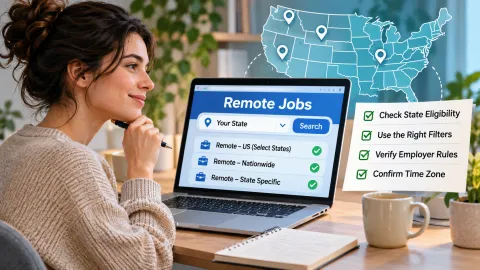
Some remote positions also have geographic restrictions. An employer may only hire workers who reside in certain states because of operational, legal, or employment-related requirements.
When reviewing a remote job posting, check:
-
Whether the role is fully remote or hybrid
-
Which states are eligible
-
Whether previous healthcare experience is required
-
Whether training is provided
-
Whether a certification is required
-
Whether the employer provides the necessary equipment
Be cautious of remote job advertisements that promise unusually high pay for basic data entry, request payment to secure employment, or ask for sensitive personal information before a legitimate hiring process.
Remote work should be evaluated based on the actual employer and job requirements rather than assumed to be a standard feature of the occupation.
Career Advancement Opportunities
Medical records specialists may be able to advance by developing more specialized health information skills, gaining experience, or pursuing additional education.
Potential career directions include:
-
Senior medical records specialist
-
Health information technician
-
Medical coding specialist
-
Health information management specialist
-
Medical records supervisor
-
Health information management manager
The path depends on the person's education, experience, credentials, and employer.
Moving Into Medical Coding
A specialist who develops coding knowledge may pursue a coding-focused position.
This pathway generally requires more detailed understanding of medical terminology, documentation, coding systems, and applicable coding guidelines.
A coding credential may be useful when it aligns with employer requirements.
Moving Into Health Information Management
Health information management offers a broader career direction involving the organization, quality, protection, and use of healthcare information.
Some positions may require an associate or bachelor's degree and relevant professional credentials.
The RHIT and RHIA pathways may be relevant depending on the role and educational qualifications.
Moving Into Supervisory Roles
Experienced specialists may eventually take on responsibilities involving workflow coordination, staff support, quality review, or department operations.
Supervisory opportunities depend on the employer's structure and the employee's demonstrated skills.
For career changers, comparing possible roles before choosing a training pathway can help avoid unnecessary education expenses. KnowBrook's guide on how to compare careers before choosing one can help organize that decision.
Someone exploring the occupation can also conduct an informational interview to learn about a career by speaking with a professional in the field.
If you are moving from another occupation, it may also help to consider whether you need a career change vs. a job change.
Is Medical Records Specialist a Good Career?
Medical records specialist can be a reasonable career option for people who are interested in healthcare information and administrative work.
Whether it is a good fit depends on your interests, work preferences, education, and salary expectations.
Potential Advantages
Healthcare-related work without direct patient care: Many positions focus on records and information rather than hands-on treatment.
A variety of work settings: Specialists may work in hospitals, physician offices, health information departments, or other organizations.
Multiple career pathways: Experience may support progression into coding, health information management, or supervisory roles.
A structured work environment: Many jobs involve defined procedures, documentation standards, and assigned tasks.
Potential entry-level opportunities: Some employers offer positions that do not require extensive prior healthcare experience.
Potential Challenges
Repetitive tasks: Document review, data entry, and record organization may involve repetitive work.
High accuracy expectations: Errors can create administrative complications, so the work requires consistent attention to detail.
Confidentiality responsibilities: Specialists must handle sensitive information carefully and follow workplace rules.
Salary differences: Pay varies by location, employer, experience, and job specialization.
Education or certification requirements: Some positions may require training, a degree, or a credential that involves additional time and expense.
The occupation may be a better fit for someone who enjoys organized, detail-oriented work than for someone who prefers frequent face-to-face interaction or hands-on clinical duties.
Common Mistakes to Avoid When Entering This Career
Choosing the wrong training program or misunderstanding the job requirements can make the career transition more difficult.
Assuming Every Job Requires the Same Education
Medical records specialist positions do not all have identical requirements.
Some may accept a high school diploma and relevant skills, while others require postsecondary education.
Review actual job postings before deciding which qualification to pursue.
Confusing Medical Records Work With Medical Coding
Medical records management and medical coding can overlap, but they are not the same in every position.
If your goal is coding, look for training that specifically prepares you for coding responsibilities and relevant credentials.
Enrolling in a Program Without Checking Accreditation
Some professional credentials have specific educational eligibility rules.
Before enrolling, verify whether the program meets the requirements for the credential you want. Use official credentialing and accreditation resources rather than relying solely on a school's marketing claims.
Expecting the National Median Salary as Starting Pay
The national median wage includes workers at different experience levels and in different settings.
Entry-level compensation may be lower or higher depending on the employer and location.
Use local wage information and job postings to build realistic expectations.
Overlooking Confidentiality Requirements
Medical records work involves sensitive patient information.
Understanding privacy and security responsibilities is part of being prepared for the job, not merely an optional skill.
Conclusion
A medical records specialist manages and maintains patient health information so that healthcare organizations can keep records accurate, organized, and accessible to authorized users. The work may include reviewing documentation, updating electronic health records, processing record requests, checking for missing information, and following confidentiality procedures.
In the United States, the career may offer opportunities in hospitals, physician offices, health information departments, and other healthcare organizations. Education requirements vary, and some positions may be accessible to applicants with relevant administrative skills, while others require postsecondary education or specialized credentials.
The BLS reported a May 2025 median annual wage of $51,140 for medical records specialists and projected 8% employment growth from 2025 to 2035. These figures provide a national reference point, but actual salary and job availability depend on location, employer, experience, and qualifications.
If you are considering this career, start by reviewing local job postings, identifying the education and skills employers request, and deciding whether your goal is general medical records management, medical coding, or broader health information management. Choosing a pathway based on the responsibilities you want to perform can help you make a more informed career decision.
Frequently asked questions
1. Do medical records specialists need a state license?
Medical records specialists generally do not need a state occupational license for this role. However, certification may be required or preferred by some employers. Requirements can vary by employer and position, so review job postings carefully before applying.
2. Can you become a medical records specialist without previous healthcare experience?
Yes, some entry-level medical records specialist positions may accept applicants without previous healthcare experience. Requirements vary, however. Certain employers may expect relevant education, training, certification, or prior experience in a healthcare setting. Review individual job descriptions to understand the qualifications required.
3. Do medical records specialists provide direct patient care?
Medical records specialists generally do not provide hands-on patient care. Their work focuses on maintaining, reviewing, processing, and organizing patient health information. They may communicate with physicians, nurses, and other healthcare professionals to help ensure records are accurate and complete.
4. How long does it take to train as a medical records specialist?
Training time depends on the education pathway, program length, previous qualifications, and employer requirements. Some applicants pursue postsecondary certificate programs, while others complete an associate degree or additional education. There is no single training timeline that applies to every medical records specialist position.
5. Do medical records specialists need to know medical terminology?
Yes, medical terminology is useful for understanding patient records, diagnoses, procedures, and healthcare documentation. Relevant education programs commonly include medical terminology. The level of knowledge required can vary depending on the job, particularly when medical coding responsibilities are involved.

James Collins writes practical content about work, business, careers, workplace trends, productivity, and professional development. His articles focus on helping readers understand everyday workplace decisions, business...