What Happens If a Home Appraisal Comes in Low? Options for Buyers
Learn what a low home appraisal means for your mortgage and purchase contract, how to calculate the appraisal gap, and what options buyers may have, including negotiation, additional cash, and reconsideration of value.
 By Ethan Parker
In this article
- What Does It Mean If a Home Appraisal Is Lower Than the Offer?
- Why Does a Low Appraisal Matter to the Buyer?
- How an Appraisal Gap Can Change the Cash You Need
- What Can You Do If the Appraisal Comes in Low?
- Option 1: Negotiate a Lower Purchase Price
- Option 2: Split the Appraisal Gap
- Option 3: Bring Additional Cash
- Option 4: Request a Reconsideration of Value
- What Should You Check in a Low Appraisal?
- Property details
- Comparable properties
- Condition and characteristics
- Market information
- Obvious factual errors
- What Is a Reconsideration of Value?
- How the Purchase Contract Changes Your Options
- Should You Still Buy the House at the Higher Price?
- What Should You Do Immediately After a Low Appraisal?
- 1. Get and review the appraisal
- 2. Contact your lender
- 3. Review your purchase contract
- 4. Calculate the actual gap
- 5. Review the appraisal for supportable issues
- 6. Discuss negotiation with the seller
- 7. Compare the available options
- Questions to Ask Your Lender
- Questions to Discuss With Your Real Estate Agent
- What a Low Appraisal Does Not Automatically Mean
- It does not automatically mean the seller must lower the price
- It does not automatically mean the home is overpriced
- It does not automatically mean you must pay the entire difference
- It does not automatically give you the right to cancel
- It does not guarantee that an ROV will increase the value
- A Simple Decision Framework for Buyers
- The Bottom Line
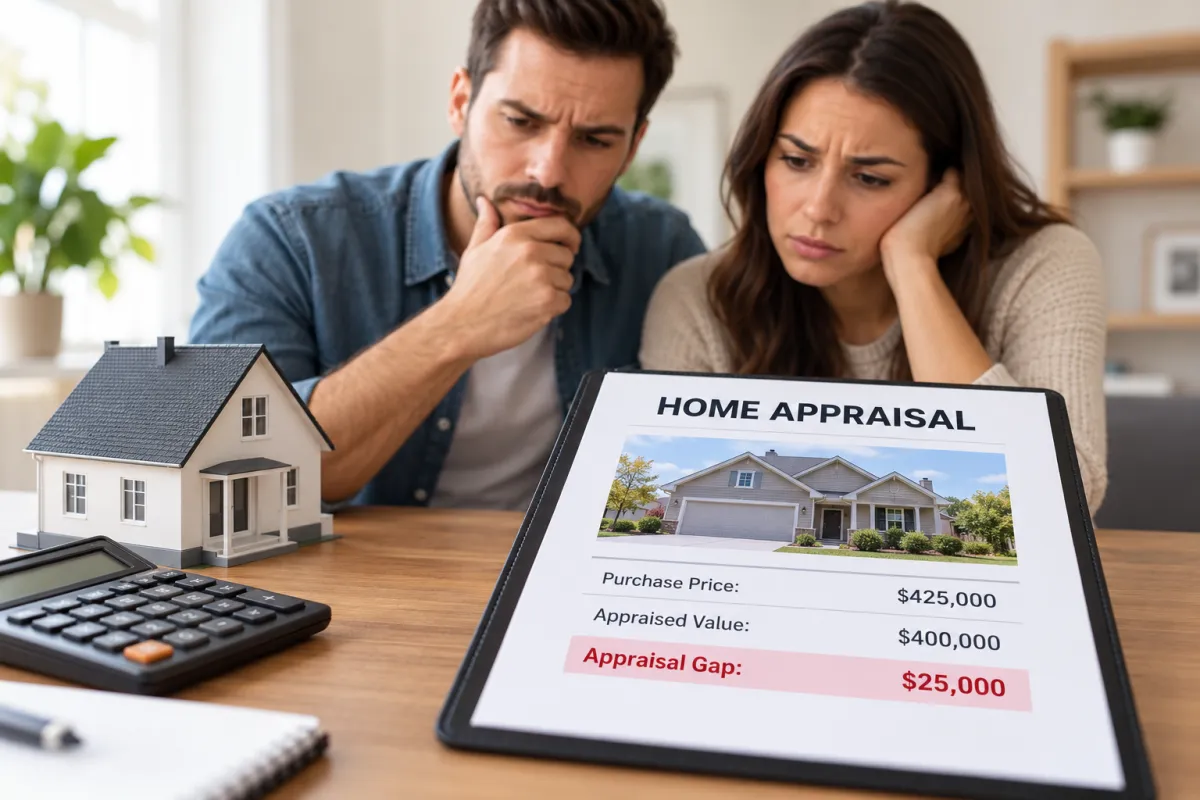
A low home appraisal can turn an otherwise straightforward home purchase into a financing and negotiation problem. If you agreed to pay $425,000 for a house but the appraisal comes in at $400,000, the issue is not simply that the house is “worth less.” The lower valuation can affect how much the lender is willing to finance and how much cash you may need to bring to closing.
The good news is that a low appraisal does not automatically mean the purchase has to fall apart. Depending on your financing, purchase contract, and negotiations with the seller, you may have several options.
The first step is to understand the difference between the purchase price, appraised value, loan amount, and appraisal gap. From there, you can review the appraisal, talk with your lender, examine your contract, and decide whether renegotiating, bringing additional funds, requesting a reconsideration of value, or using an applicable contract contingency makes sense.
What Does It Mean If a Home Appraisal Is Lower Than the Offer?
A home appraisal is a professional opinion of the property's value. When you buy a home with a mortgage, the lender generally uses the appraisal as part of its assessment of the property securing the loan.
A low appraisal occurs when the appraised value is below the price you agreed to pay.
For example:
In this example, the $25,000 difference is the appraisal gap.
That does not necessarily mean you personally have to pay exactly $25,000 more. The financial effect depends on the loan structure, the amount being financed, your available cash, and what you and the seller agree to do.
The lender may not approve the same loan amount it would have approved if the property had appraised at or above the purchase price. Fannie Mae explains that when the appraised value is below the purchase price, the lender may not approve the full amount originally requested.
This is why a low appraisal should be treated as a decision point rather than simply a bad number.
Why Does a Low Appraisal Matter to the Buyer?
The biggest concern is financing.
When a lender is providing a mortgage, the property serves as collateral for that loan. A valuation substantially below the agreed purchase price can create a mismatch between the amount being paid for the home and the property's appraised value.
That can affect the amount the lender is willing to finance.
It can also change the amount of money you need to bring to the transaction. If the lender will not increase the loan to cover the full purchase price, you may need additional cash if you still want to buy the property at the agreed price.
A low appraisal can therefore create three related questions:
- Will my lender still approve the loan I need?
- If not, how much additional money would I need?
- Does my purchase contract give me a way to renegotiate or reconsider the transaction?
These questions should be addressed together. Looking only at the appraisal gap without considering your actual loan and contract can lead to the wrong decision.
How an Appraisal Gap Can Change the Cash You Need
Consider a simplified hypothetical example.
Suppose you agree to purchase a home for $425,000, but the appraisal comes in at $400,000.
The appraisal gap is:
$425,000 − $400,000 = $25,000
Now imagine your lender's financing structure means you cannot simply borrow enough additional money to cover the entire purchase price.
You may then have to consider whether you can contribute additional funds, whether the seller will reduce the price, or whether another option is available under your contract.
The important point is that the $25,000 gap is not automatically a bill that the buyer must pay.
The actual amount you might need to contribute depends on your loan terms and the resolution you negotiate.
For that reason, don't assume that the appraisal gap equals the exact amount of additional cash you must bring to closing.
Ask your lender to calculate the financing impact using your actual loan terms.
What Can You Do If the Appraisal Comes in Low?
A low appraisal usually leads to a discussion about several possible paths.
The most common possibilities include:
- Asking the seller to reduce the purchase price
- Negotiating a compromise between the original price and the appraised value
- Bringing additional funds if the financing permits and the purchase still makes financial sense
- Reviewing the appraisal for errors or unsupported information
- Requesting a reconsideration of value when appropriate
- Using an appraisal or financing contingency if your contract provides applicable rights
- Deciding not to proceed when the contract and circumstances allow it
There is no single option that is best for every buyer.
The right choice depends on the size of the gap, your finances, the home's condition and comparable sales, your financing, the strength of your contract protections, and how motivated the seller is to keep the transaction together.
Option 1: Negotiate a Lower Purchase Price
One of the simplest solutions is to ask the seller to reduce the purchase price.
Using the earlier example, suppose the agreed price is $425,000 and the appraisal is $400,000. You could ask the seller to reduce the price closer to the appraised value.
The seller may agree, reject the request, or make a counterproposal.
A seller is not automatically required to reduce the price simply because the appraisal is low. The outcome depends on negotiation and the terms of the purchase contract.
The CFPB specifically identifies negotiating with the seller as one possible response when an appraisal is lower than the sale price.
Option 2: Split the Appraisal Gap
The buyer and seller may sometimes agree to share some of the difference.
For example, rather than asking the seller to absorb the entire gap, the parties might negotiate a smaller price reduction while the buyer contributes some additional funds.
Whether this makes sense depends on the buyer's finances and the property's long-term value.
The important thing is to calculate the actual financial impact before agreeing to the arrangement.
Option 3: Bring Additional Cash
Another possibility is for the buyer to contribute more money toward the transaction if the loan structure and personal finances allow it.
This can allow the purchase to continue at a price above the appraised value.
But additional cash has an opportunity cost.
Money used to cover an appraisal gap is money that will no longer be available for:
- Emergency savings
- Moving expenses
- Repairs
- Furniture and other immediate expenses
- Future maintenance
- Other financial priorities
A buyer should therefore ask not only, “Can I cover the gap?” but also, “Will I still be financially comfortable after covering it?”
Option 4: Request a Reconsideration of Value
If you believe the appraisal does not accurately reflect the property, you may be able to request a reconsideration of value (ROV) through the appropriate lender process.
An ROV is not simply a request to “raise the appraisal.” It is intended to address potentially unsupported, inaccurate, incomplete, or deficient information used in the valuation.
Before pursuing an ROV, carefully review the appraisal and identify information that may genuinely warrant reconsideration.
For example, you may discover an issue involving relevant property characteristics, comparable sales information, or other material information that was not properly considered.
The goal should be to provide useful evidence for review rather than simply arguing that the value should be higher.
An ROV also does not guarantee that the appraised value will increase.
What Should You Check in a Low Appraisal?
Before deciding what to do, read the appraisal carefully.
You do not need to become an appraisal expert, but you should understand the basic information supporting the valuation.
Look for:
Property details
Check whether the basic facts about the home appear accurate.
Errors in important property information can potentially affect the analysis.
Comparable properties
Review the comparable sales used to support the valuation.
Ask whether they appear reasonably relevant to the property being purchased.
Condition and characteristics
Consider whether the appraisal accurately reflects meaningful features of the home.
Major differences between the subject property and the comparable properties can matter.
Market information
Look at the information used to support the valuation and whether there is relevant information that appears to have been overlooked.
Obvious factual errors
If you find a factual mistake, document it clearly rather than making a general argument that the appraisal is “too low.”
A stronger review focuses on specific information that could materially affect the valuation.
What Is a Reconsideration of Value?
A reconsideration of value is a process through which information relevant to a property valuation can be submitted for review when there may be an issue with the original valuation.
For a buyer, the practical question is not simply whether the appraisal is lower than the purchase price. The question is whether there is credible information that could support reconsideration.
The process can vary depending on the lender and loan circumstances, so the buyer should ask the lender how an ROV request should be submitted.
Do not assume that a second opinion or another appraisal will automatically replace the original appraisal. Likewise, do not assume that an ROV will produce a higher value.
The strongest approach is evidence-based: identify a specific concern, provide relevant information, and allow the lender's process to determine whether the valuation should be reconsidered.
How the Purchase Contract Changes Your Options
A low appraisal is not only a financing issue. It can also become a contract issue.
Your purchase agreement may contain an appraisal contingency or other provisions that affect what happens when the appraised value is below the purchase price.
This is important because a low appraisal does not automatically give every buyer the right to cancel the purchase.
The CFPB advises consumers to review the contract because the contract determines important consequences if the buyer considers canceling after a low appraisal.
Your rights can depend on the exact language of the agreement and the circumstances of the transaction.
Before assuming you can walk away, review the relevant provisions and discuss the situation with the appropriate real estate or legal professional.
Should You Still Buy the House at the Higher Price?
Sometimes a buyer may decide that paying more than the appraised value is still worthwhile.
That decision should be based on the buyer's overall financial situation and the reasons for wanting the property—not simply on the desire to avoid losing the deal.
Consider:
- How large the appraisal gap is
- How much additional cash would be required
- Whether the remaining savings are adequate
- Whether the monthly mortgage payment remains comfortable
- Whether the home meets your long-term needs
- Whether comparable properties support your confidence in the purchase
- Whether the seller is willing to negotiate
- What your contract allows you to do
A relatively small gap may be manageable for one buyer and financially uncomfortable for another.
There is no universal dollar amount at which a low appraisal becomes a bad deal.
What Should You Do Immediately After a Low Appraisal?
Avoid making a rushed decision based solely on the headline appraisal number.
A practical sequence is:
1. Get and review the appraisal
Make sure you understand the reported value and the information used to support it.
2. Contact your lender
Ask exactly how the lower value affects your loan amount, cash requirement, and closing plans.
Do not calculate the financing impact based on a generic online formula when your lender can provide the figures for your actual transaction.
3. Review your purchase contract
Look specifically for appraisal, financing, and other provisions that may affect your options.
4. Calculate the actual gap
Separate the purchase price from the appraised value and determine how the financing structure affects the amount you would need to contribute.
5. Review the appraisal for supportable issues
If there are factual errors or relevant information that appears to have been missed, ask the lender about the appropriate review or ROV process.
6. Discuss negotiation with the seller
Depending on the circumstances, your agent may help you determine whether a price reduction or other negotiated solution is realistic.
7. Compare the available options
At this point, you can make a more informed decision about whether to proceed, renegotiate, contribute additional funds, pursue an appraisal review, or use applicable contract protections.
Questions to Ask Your Lender
Your lender can explain the financing consequences specific to your transaction.
Useful questions include:
- How does this appraisal affect the loan amount you can approve?
- How much additional cash would I need if the purchase price stays unchanged?
- Does the lower valuation change any other loan terms?
- What happens to my expected cash to close?
- Is a reconsideration of value available in my situation?
- What documentation would be needed for an ROV?
- Could this affect the expected closing date?
- Will any loan disclosures or estimates need to be updated?
A low appraisal can affect loan information and may result in a revised Loan Estimate in circumstances covered by federal mortgage disclosure rules.
Questions to Discuss With Your Real Estate Agent
Your agent can help you understand the negotiation side of the situation.
You may want to ask:
- How does this appraisal compare with recent comparable sales?
- Is the seller likely to consider a price reduction?
- Would a partial price reduction be realistic?
- What does the purchase contract say about a low appraisal?
- What deadlines apply to any appraisal or financing contingency?
- What happens if the seller refuses to renegotiate?
- Are there other negotiated solutions worth considering?
The agent's perspective can be useful, but contract interpretation can involve legal issues. If you are unsure about your rights or potential consequences, consider obtaining appropriate legal advice rather than assuming a particular interpretation.
What a Low Appraisal Does Not Automatically Mean
A low appraisal can be stressful, but several assumptions should be avoided.
It does not automatically mean the seller must lower the price
The seller can decide whether to negotiate, subject to the terms of the contract.
It does not automatically mean the home is overpriced
An appraisal is a professional opinion of value. A difference between that opinion and the negotiated purchase price does not by itself establish that the home is objectively overpriced.
It does not automatically mean you must pay the entire difference
The financial outcome depends on your financing and the agreement reached between the parties.
It does not automatically give you the right to cancel
Contract terms matter. A buyer should not assume that a low appraisal alone provides an unrestricted cancellation right.
It does not guarantee that an ROV will increase the value
An appraisal review is not a guaranteed value-increase mechanism. It should be based on credible information that warrants reconsideration.
These distinctions are important because the phrase “appraisal gap” can make the situation sound more mechanically simple than it really is.
A Simple Decision Framework for Buyers
Once you know the actual financing impact, you can compare your options.
The best option is the one that works financially and contractually for your specific situation.
The Bottom Line
A home appraisal that comes in below the offer price creates a problem to solve, not an automatic end to the transaction.
Start by separating the four numbers that are often confused: purchase price, appraised value, loan amount, and appraisal gap. Then find out exactly how the lower valuation affects your financing.
From there, review the appraisal, talk with your lender, examine your purchase contract, and evaluate whether negotiation, additional funds, an appropriate reconsideration of value, or applicable contract protections make sense.
Most importantly, do not assume that a low appraisal automatically means you must bring the entire difference in cash, that the seller must reduce the price, or that you can automatically cancel the purchase. The right outcome depends on the details of the transaction.
Frequently asked questions
Can I walk away from a house if the appraisal is low?
Whether you can walk away depends on the purchase contract and any applicable appraisal or financing contingencies. A low appraisal does not automatically give every buyer the right to cancel. Buyers should review the contract and discuss their options with the appropriate professionals before making a decision.
Who pays the appraisal gap?
There is no universal rule that one party automatically pays the appraisal gap. Depending on the circumstances, the buyer and seller may negotiate a lower purchase price, split the difference, or the buyer may contribute additional funds if proceeding with the purchase makes financial sense and the financing allows it.
Can the seller refuse to lower the price after a low appraisal?
Yes. A seller is not automatically required to reduce the agreed purchase price simply because the appraisal is lower. What happens next depends on the negotiations and the rights provided by the purchase contract.
What happens if I don't have enough cash to cover the appraisal gap?
The buyer may need to renegotiate the purchase price or explore other options available under the contract and financing arrangement. If the buyer cannot or does not want to provide additional funds, the transaction may need to be reconsidered based on the contract terms.
Does a low appraisal mean the house is overpriced?
Not necessarily. An appraisal is a professional opinion of value, and a difference between the appraisal and purchase price can occur for several reasons. A low appraisal should be reviewed rather than automatically treated as proof that the home is overpriced.
Does a low appraisal delay closing?
1. It can. Resolving a low appraisal may require additional negotiations, appraisal review, financing changes, or other steps that can affect the closing timeline. The actual impact depends on how quickly the issue is resolved and the terms of the transaction.
Ethan Parker writes practical guides about home, everyday living, household decisions, consumer products, organization, and practical lifestyle topics. His work focuses on helping readers compare options, understand comm...