How to Become a Substitute Teacher in the USA: Requirements, Certification, and Pay
Learn how to become a substitute teacher in the United States, including education requirements, state-specific permits and certifications, background checks, application steps, and pay. This guide also explains alternative pathways for applicants without a bachelor's degree and how to verify local school district requirements.
 By Emily Carter
In this article
- What Are the Requirements to Become a Substitute Teacher?
- Education requirements
- Background checks and fingerprinting
- Age and work authorization
- Training and orientation
- Do You Need a Substitute Teaching Certificate?
- California
- Pennsylvania
- Nebraska
- Ohio
- New York
- How to Become a Substitute Teacher: Step-by-Step
- Step 1: Choose the state and school district where you want to work
- Step 2: Confirm your eligibility
- Step 3: Gather your application documents
- Step 4: Complete the background-check process
- Step 5: Apply to school districts or approved staffing providers
- Step 6: Complete the interview and onboarding
- Step 7: Accept your first substitute assignment
- How Much Do Substitute Teachers Make in the USA?
- Factors that affect substitute teacher pay
- How to estimate your potential earnings
- Day-to-Day Substitute Teacher vs. Long-Term Substitute Teacher
- Skills That Help You Succeed as a Substitute Teacher
- Classroom management
- Communication
- Adaptability
- Organization
- Patience and professionalism
- Common Mistakes to Avoid When Applying
- Assuming the requirements are the same in every state
- Paying for an unverified certification course
- Applying without checking the degree requirement
- Overlooking background-check requirements
- Expecting a guaranteed full-time schedule
- Ignoring long-term assignment restrictions
- Where to Find Substitute Teaching Jobs in the USA
- Conclusion

Becoming a substitute teacher in the United States can be a practical way to work in a school, gain classroom experience, or explore a career in education. However, the requirements are not the same everywhere. Some states and school districts require a bachelor's degree or a specific teaching permit, while others allow qualified applicants with fewer college credits.
There is no single nationwide substitute teaching certificate. Your eligibility depends on the state where you want to work, the school district's hiring policies, the grade level you plan to teach, and whether you will work as a day-to-day or long-term substitute.
The basic process is to check your state's requirements, meet the education and background-check criteria, complete any required application or training, and apply through a school district or an approved substitute staffing provider. Before paying for a course or credential, confirm that the district you want to work for accepts it.
This guide explains the process, compares selected state pathways, and outlines practical steps to help you prepare for substitute teaching in the United States.
What Are the Requirements to Become a Substitute Teacher?
Substitute teacher requirements vary by state and school district. Before applying, you should understand the common qualifications and identify which ones apply to your location.
Education requirements
Your education is often one of the most important factors in determining whether you qualify.
Depending on the state and district, you may need:
-
A high school diploma or GED
-
A minimum number of college credit hours
-
An associate degree
-
A bachelor's degree
-
A valid teaching certificate
-
Completion of an educator preparation program
Some states have different routes for applicants who have not completed a bachelor's degree. Others require a bachelor's degree for standard substitute teaching but provide limited exceptions.
For example, Nebraska offers a Local Substitute Permit for applicants who have completed at least 48 semester credit hours. Ohio also has a temporary non-bachelor's substitute license available under certain employer-defined requirements. These are state-specific pathways, not nationwide rules.
If you already have a teaching degree or a valid teaching certificate, you may have a more direct route into substitute teaching. However, you should still confirm whether your credential is accepted in the state where you intend to work.
Background checks and fingerprinting
Many school districts require applicants to complete criminal background checks before they can work with students.
Depending on the state, this process may include:
-
Fingerprinting
-
State criminal history checks
-
Federal criminal history checks
-
Child-protection or abuse-related clearances
-
Disclosure of relevant employment or disciplinary history
The exact process differs by state and employer. Pennsylvania, for example, requires background clearances for substitute teachers. California also includes fingerprint information as part of its substitute permit process.
Do not assume that a background check completed for another job will automatically satisfy school district requirements. Ask the hiring district which checks it accepts and whether you must complete new fingerprinting.
Age and work authorization
Some states or districts establish minimum age requirements. The minimum age may also depend on the grade level or type of assignment.
You must also be legally authorized to work in the United States. Pennsylvania specifically includes U.S. citizenship or legal authorization to work as a requirement for day-to-day substitute teaching.
Training and orientation
Some school systems require new substitutes to complete training or orientation before accepting assignments.
Training may cover:
-
Classroom management
-
School safety procedures
-
Student attendance
-
Emergency response
-
Lesson-plan instructions
-
Student privacy
-
School policies
Training requirements can be set by a state, school district, or staffing provider. Ask whether the training is mandatory, whether it is paid, and whether it must be completed before your first assignment.
Do You Need a Substitute Teaching Certificate?
Not necessarily. The United States does not have one universal substitute teacher certificate that applies in every state.
Some states issue substitute-specific permits or licenses. Others rely on regular teaching certificates, district hiring policies, or authorization categories.
The National Education Association explains that substitute qualifications depend on where the applicant lives and that states differ in their credential, education, and training requirements.
Here are examples of how selected states handle substitute teaching.
California
California has several substitute teaching permit options through the California Commission on Teacher Credentialing.
The Emergency 30-Day Substitute Teaching Permit is a common day-to-day pathway. The Commission's published requirements include a bachelor's degree from a regionally accredited college or university and fingerprint information.
California also has a permit pathway for prospective teachers who have not completed a bachelor's degree. It requires, among other criteria, at least 90 semester units of coursework from a qualifying four-year college or university and current enrollment verification.
Permit holders have limits on how long they can substitute in the same classroom. The exact permit matters, particularly if you are considering a long-term assignment.
Official resource: California Commission on Teacher Credentialing — Substitute Permits
Pennsylvania
Pennsylvania's day-to-day substitute pathway generally requires a bachelor's degree or higher, background clearances, and legal authorization to work in the United States.
If an applicant has a bachelor's degree but lacks the proper certification, a public school may request an emergency permit. The hiring school district handles the process and sets compensation and assignments.
Pennsylvania also has specific pathways for prospective teachers and other categories. Private schools may have different requirements, so applicants should contact those schools directly.
Official resource: Pennsylvania Department of Education — Substitute Teaching
Nebraska
Nebraska offers three substitute permit types:
| Permit type | General eligibility | Important limitation |
|---|---|---|
| Local Substitute Permit | At least 48 semester credit hours | Up to 90 full-time days per school system per school year |
| State Substitute Permit | Completed an educator preparation program | No stated day limit in the state's general permit description |
| Paraprofessional Substitute Permit | Applicant hired as a paraprofessional | Valid only in the school system requesting the permit |
Nebraska's Local Substitute Permit requires official transcripts, an application, a fee, and fingerprinting in applicable circumstances. Substitute permits generally expire after five years, subject to the specific permit's renewal requirements.
Official resource: Nebraska Department of Education — Substitute Teacher
Ohio
Ohio offers standard substitute teaching licenses for qualifying applicants with a bachelor's degree. The applicant must first complete the employment process with a school, district, or educational service center, which then supports the license application.
Ohio also provides a temporary non-bachelor's substitute teaching license. This route depends on the employing school or district's educational requirements and its request for the license. Background checks must be on file.
Official resource: Ohio State Board of Education — Substitute Licenses
New York
New York State does not issue a separate substitute teaching certificate. Instead, substitute teachers fall into categories based on whether they hold a valid teaching certificate, are working toward certification, or do not hold a certificate and are not pursuing one.
The state sets assignment-day limits for some categories, and school districts may impose additional local requirements. New York City also has its own substitute teacher licensing requirements.
Official resource: New York State Education Department — Substitute Teaching
These examples show why you should not rely on a generic substitute teaching certification course without checking your state and district first.
How to Become a Substitute Teacher: Step-by-Step
Once you know the basic requirements, you can follow a practical application process.
Step 1: Choose the state and school district where you want to work
Start by narrowing your search to the location where you can realistically commute.
Substitute teaching is often arranged through individual school districts. A district may hire substitutes directly or use a staffing company to recruit and manage them.
Visit the district's official employment website and look for terms such as:
-
Substitute teacher
-
Substitute educator
-
Guest teacher
-
On-call teacher
-
Daily substitute
-
Building substitute
Read the job description carefully. It may identify the required degree, permit, background checks, application documents, and hiring process.
Step 2: Confirm your eligibility
Before submitting applications, compare your qualifications with the state's rules and the district's job requirements.
Check:
-
Your highest completed education level
-
Whether your college credits or degree are accepted
-
Whether you need a state permit or license
-
Whether your teaching certificate is valid in that state
-
Whether you meet background-check requirements
-
Whether the district has a minimum age requirement
-
Whether you need additional training
If you have a foreign degree, ask the state education agency or district whether it requires a formal credential evaluation. The accepted evaluation process may vary.
If you have an expired or inactive teaching certificate, ask whether it can still qualify you for substitute assignments. Do not assume that an inactive credential is treated the same way in every state.
Step 3: Gather your application documents
Prepare the documents commonly requested by school districts.
| Document | Why it may be needed |
|---|---|
| Resume | Shows education, experience, and skills |
| Official college transcripts | Verifies college credits or degree completion |
| Teaching certificate or substitute permit | Demonstrates credential eligibility |
| Government-issued identification | Helps verify identity |
| Background-check documents | Supports school employment clearance |
| Work authorization documents | Confirms legal authorization to work |
| Professional references | Helps the district assess your suitability |
| Training certificates | May satisfy district-specific requirements |
Not every district requires every document. Use the district's application checklist as the final authority.
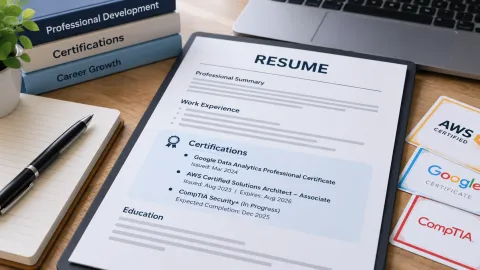
If you need help presenting your credentials, KnowBrook's guide on how to list certifications on a resume explains where and how to include relevant credentials.
Step 4: Complete the background-check process
Follow the instructions provided by the district or state licensing agency.
You may need to schedule fingerprinting, submit forms, pay required fees, or complete online disclosures. Processing times vary, so avoid assuming that you can begin work immediately after submitting your application.
Ask the district:
-
Which fingerprinting provider should I use?
-
Are state and federal checks required?
-
Can I use a previous background check?
-
Are clearances required before the interview or before the first assignment?
-
How will I be notified when the process is complete?
Step 5: Apply to school districts or approved staffing providers
Submit your application through the official district employment portal or the staffing provider designated by the school system.
Some districts recruit substitutes throughout the year. Others may have hiring periods tied to the school calendar or local staffing needs.
You can apply to more than one district if you are eligible and able to meet each employer's requirements. However, each employer may have separate onboarding steps, documentation, or background checks.
Step 6: Complete the interview and onboarding
A substitute teacher interview may focus on your ability to supervise students, follow lesson plans, communicate with school staff, and manage classroom situations.
Be prepared to discuss how you would handle scenarios such as:
-
A student refusing to follow instructions
-
A classroom disruption
-
A lesson plan that is unclear
-
A student asking for help with an unfamiliar topic
-
An emergency or safety concern
After hiring, the district may provide an orientation, access to assignment systems, school procedures, and information about attendance reporting.
Some districts or staffing companies use platforms such as Frontline Education to manage substitute assignments and absences. KnowBrook's Frontline Education guide explains how the platform may be used in school employment settings.
Step 7: Accept your first substitute assignment
Once you are approved, you may begin receiving available assignments.
Before accepting a job, review:
-
School location
-
Grade level
-
Subject
-
Start and end time
-
Daily compensation
-
Assignment duration
-
Lesson-plan availability
-
Any special classroom responsibilities
Arrive early enough to review the lesson plan, locate classroom materials, and understand the school's procedures.
At the end of the assignment, follow the teacher's or school's instructions for recording attendance, completing work, and leaving notes about the day.
How Much Do Substitute Teachers Make in the USA?
Substitute teacher pay varies considerably by school district, state, education level, assignment type, and local staffing demand.
Many substitute teachers are paid by the day or hour rather than receiving a traditional annual salary. Short-term assignments, long-term placements, and building substitute positions may have different pay arrangements.
According to May 2025 wage data reported for short-term substitute teachers, the national median hourly wage was approximately $20.03. The middle range varies by location, and the national figure should not be treated as a guaranteed district pay rate.
Factors that affect substitute teacher pay
Location: Districts in different cities, states, and regions may offer different rates based on local budgets and staffing needs.
Education and credentials: Some districts pay higher daily rates to substitutes who have a bachelor's degree, teaching certification, or additional qualifications.
Assignment duration: A long-term assignment may have a different pay structure than a one-day classroom coverage assignment.
Grade level or subject: Certain assignments may have different compensation, particularly when specialized qualifications are needed.
Staffing demand: Districts may adjust pay or offer incentives when they have difficulty filling substitute positions.
How to estimate your potential earnings
Because many substitutes work only on selected school days, annualized wage figures can be misleading.
For example, consider a hypothetical district that pays $120 per day:
| Days worked | Gross earnings at $120/day |
|---|---|
| 5 days | $600 |
| 10 days | $1,200 |
| 15 days | $1,800 |
| 20 days | $2,400 |
These are illustrative calculations, not a claim about the typical district rate. Actual earnings depend on your employer's pay policy and how many assignments you accept.
Before accepting a position, ask the district or staffing agency about daily pay, payment schedule, long-term rates, benefits eligibility, and whether school closures affect compensation.
Day-to-Day Substitute Teacher vs. Long-Term Substitute Teacher
The type of assignment you accept can affect your responsibilities, qualifications, and compensation.
| Feature | Day-to-day substitute | Long-term substitute |
|---|---|---|
| Assignment length | Usually short or single-day coverage | Extended assignment covering a longer absence |
| Lesson plans | Often follows plans prepared by the regular teacher | May take on more planning and instructional responsibilities |
| Classroom continuity | May work in different classrooms | Usually works with the same class over an extended period |
| Responsibilities | Classroom supervision and lesson delivery | May include grading, planning, and ongoing student progress |
| Qualifications | Based on state and district requirements | May require additional credentials or authorization |
| Pay | Often a daily or hourly rate | May have a different rate or compensation structure |
A long-term substitute assignment can be more demanding because it may involve maintaining classroom continuity, preparing instruction, and handling additional responsibilities.
Do not assume that a day-to-day substitute permit automatically authorizes you to work in a long-term role. California, for example, has specific limits on substitute service in the same classroom depending on the permit type.
Skills That Help You Succeed as a Substitute Teacher
Meeting the formal requirements is only part of becoming an effective substitute. School districts also need people who can maintain a safe, productive classroom and help students continue learning.
Classroom management
You should be able to communicate expectations clearly, follow school discipline policies, and respond calmly to disruptive behavior.
You do not need to imitate the regular teacher's exact style. However, you should maintain consistent expectations and use the procedures provided by the school.
Communication
Substitute teachers communicate with students, teachers, administrators, and school support staff.
Clear communication helps you understand lesson instructions, report concerns, and leave useful notes for the regular teacher.
Adaptability
A substitute may work with different grades, subjects, classrooms, and school routines. Being flexible and prepared to follow unfamiliar lesson plans is valuable.
Organization
You may need to manage attendance, classroom materials, assignments, and end-of-day reporting.
Keeping track of instructions and student work helps the school maintain continuity after the regular teacher returns.
Patience and professionalism
Students may respond differently to a substitute than they do to their regular teacher. Remaining calm, respectful, and professional can help you establish a positive classroom environment.
Common Mistakes to Avoid When Applying
Assuming the requirements are the same in every state
A substitute teaching permit from one state may not automatically qualify you to work in another. Always check the rules for the state and district where you want to teach.
Paying for an unverified certification course
A course advertised as a substitute teacher certification may not be required or accepted by your target district.
Before enrolling, ask the district whether the course is recognized and whether it is necessary for employment.
Applying without checking the degree requirement
Some districts require a bachelor's degree even when a state has a different pathway. Others may accept college credits or an alternative permit.
Review the actual job posting and licensing rules before applying.
Overlooking background-check requirements
Background checks may involve more than a simple online form. Fingerprinting, clearances, and processing time can affect your start date.
Expecting a guaranteed full-time schedule
Substitute assignments may depend on teacher absences and district demand. You may receive more assignments during certain periods and fewer during others.
If you need predictable income, ask whether the district offers building substitute positions, regular weekly schedules, or long-term assignments.
Ignoring long-term assignment restrictions
A permit may limit how long you can substitute for the same teacher or classroom. If you are offered an extended assignment, confirm that your authorization allows it.
Where to Find Substitute Teaching Jobs in the USA
The most reliable place to begin is the official employment website of the school district where you want to work.
Look for substitute teaching positions in:
-
Public school districts
-
Charter school networks
-
Private schools
-
Approved substitute staffing agencies
-
School district education service centers
District websites often provide information about eligibility, compensation, application steps, and onboarding.
You can also check the National Education Association's substitute teacher resource for information about substitute teaching and state-level qualification differences.
When evaluating a job posting, verify that the employer is legitimate and that the application process matches the official district or provider website. Avoid paying an unverified recruiter for a guaranteed job or credential.
Conclusion
Becoming a substitute teacher in the USA begins with understanding the requirements of the state and school district where you want to work. Some applicants need a bachelor's degree and a state permit, while others may qualify through college credit requirements or alternative pathways.
The most practical next step is to choose a school district, review its official substitute teacher job posting, and confirm the education, certification, background-check, and training requirements before applying.
Once you are eligible, prepare your documents, complete the hiring process, and learn the school's classroom procedures. Substitute teaching can provide school-based experience and a flexible way to explore education, but your schedule, compensation, and responsibilities will depend on the employer and the assignments available.
Frequently asked questions
1. Can you become a substitute teacher without a bachelor's degree?
Yes, in some states. Requirements vary by state and school district. Some states offer alternative pathways based on college credits or other eligibility conditions. For example, Nebraska has a Local Substitute Permit pathway requiring 48 college credit hours. Check your state's education department and the hiring district for current requirements.
2. Can you substitute teach in more than one school district?
Possibly. Applicants may be able to work with multiple districts, but each district can have its own application, screening, and onboarding requirements. Confirm the process with each district before accepting assignments.
3. Does a substitute teaching certificate transfer from one state to another?
Not automatically. Substitute teaching permits and credentials are generally governed by state-specific rules. If you move, check the destination state's education department to determine whether you need a new permit or credential.
4. Do private schools have the same substitute teacher requirements as public schools?
Not necessarily. Private schools may have different hiring and credential requirements from public school districts. Contact the individual school to confirm its current requirements.
5. Do long-term substitute teachers need additional qualifications?
They may. Longer assignments can involve additional subject-specific, credential, or state requirements. Check the relevant state education department and school district policy before accepting a long-term assignment.
6. How long does it take to become a substitute teacher?
There is no single national timeline. The process depends on your existing education, credential requirements, background screening, application processing, and district onboarding. Contact your state agency and hiring district for current processing information.
Emily Carter writes practical, reader-focused content about education, college planning, degrees, financial aid, career paths, and the transition from school to work. She focuses on making complicated education and caree...