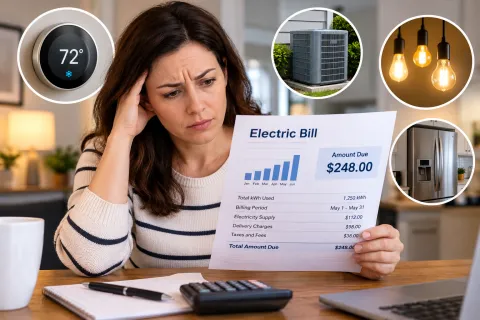
How to Dispute an Incorrect Utility Bill in the US
Learn how to dispute an incorrect utility bill in the US by checking billing errors, gathering supporting documents, contacting your utility provider, requesting an investigation, and escalating an unresolved complaint to the appropriate regulator.
 By Ethan Parker
In this article
- How to Dispute a Utility Bill: Step-by-Step Process
- Step 1: Review Your Utility Bill Carefully
- Step 2: Compare the Bill With Previous Statements
- Step 3: Check the Meter Reading
- Step 4: Contact Your Utility Provider
- Step 5: Submit a Written Billing Dispute
- Step 6: Request an Investigation and Written Explanation
- Step 7: Escalate the Complaint if It Remains Unresolved
- Common Utility Billing Errors to Look For
- Estimated Utility Bills: What You Should Know
- What Evidence Should You Gather for a Utility Bill Dispute?
- Utility Bills
- Meter Reading Records
- Payment Confirmations
- Communication Records
- Supporting Documents
- Utility Bill Dispute Letter: A Copy-Ready Template
- What Happens After You Submit a Utility Billing Dispute?
- The Utility Corrects the Bill
- The Utility Explains Why the Bill Is Correct
- The Utility Requests More Information
- The Dispute Remains Unresolved
- Can a Utility Shut Off Service During a Billing Dispute?
- How to Find the Right Utility Regulator in Your State
- Common Mistakes to Avoid When Disputing a Utility Bill
- Disputing the Bill Without Identifying the Error
- Ignoring the Bill While Waiting for a Response
- Relying Only on Phone Conversations
- Missing the Utility's Complaint Instructions
- Assuming Every High Bill Is Incorrect
- Assuming the State Commission Regulates Every Utility
- Conclusion

An unexpectedly high electricity, gas, or water bill can be frustrating, especially when the charges do not match your usual usage. Sometimes the increase is legitimate, but billing mistakes can also occur because of incorrect meter readings, estimated usage, rate changes, duplicate charges, or account errors.
If you believe your utility bill is incorrect, you can dispute it. The process generally involves reviewing the bill, gathering evidence, contacting your utility provider, requesting an investigation, and escalating the complaint if the issue remains unresolved.
The exact procedures and consumer protections vary by state and utility. A dispute does not automatically mean you can withhold payment or avoid disconnection. Understanding the process and keeping clear records can help you handle the issue more effectively.
How to Dispute a Utility Bill: Step-by-Step Process
If you notice a possible billing error, follow these steps to address it.
Step 1: Review Your Utility Bill Carefully
Before contacting the utility company, examine the bill to identify what appears to be incorrect.
Check the following details:
-
Billing period: Confirm that the dates cover the expected number of days.
-
Meter reading: Review whether the reading is actual or estimated.
-
Previous and current readings: Compare the values shown on the bill.
-
Usage: Check whether electricity, gas, or water consumption is unusually high.
-
Rates: Look for changes in the price charged per unit.
-
Additional charges: Review service fees, taxes, surcharges, and other line items.
-
Account information: Confirm that the account number and service address are correct.
-
Previous balance: Check whether an unpaid amount from an earlier bill has been carried forward correctly.
A higher bill is not necessarily a billing error. Seasonal usage, additional occupants, heating or cooling equipment, and rate changes can increase costs. The goal is to identify a specific discrepancy rather than relying only on the fact that the bill is higher than usual.
Step 2: Compare the Bill With Previous Statements
Compare the current bill with several previous bills, if available.
Look for patterns such as:
-
A sudden increase in usage without an obvious explanation.
-
A billing period that is significantly longer than usual.
-
A charge appearing for the first time.
-
A meter reading that does not appear consistent with the previous reading.
-
A repeated charge that may have already been paid.
-
A change in the rate or service classification.
For electricity customers, reviewing the usage details can help determine whether the increase reflects actual consumption or a possible billing problem. If the bill is unusually high but the charges appear accurate, see how to investigate an unusually high electric bill.
Step 3: Check the Meter Reading
If your utility bill includes a meter reading, compare it with the reading currently displayed on your meter, when you can safely and reasonably access it.
For example, suppose your bill shows a current reading of 18,450 units, but your meter appears to display 18,390 units. That difference may indicate a discrepancy worth asking the utility to investigate.
This is only an illustrative example. Meter types, units, display formats, and billing methods differ.
When checking your meter:
-
Confirm that you are looking at the correct meter for your service.
-
Record the displayed reading.
-
Note the date and time.
-
Take a photograph if practical.
-
Avoid opening sealed equipment or attempting to modify the meter.
Keep in mind that the current meter reading may not match the reading used on a bill that ended earlier. Compare the dates before concluding that the utility made an error.
If you believe the meter itself is inaccurate, ask the provider whether a meter test is available. Testing procedures, fees, eligibility, and customer rights vary by utility and state.
Step 4: Contact Your Utility Provider
Once you identify a possible error, contact the utility company's customer service department.
Use the contact information on your bill or the provider's official website. Explain the discrepancy clearly and provide the details needed to locate your account.
You may need to provide:
-
Your account number.
-
The billing period in question.
-
The disputed charge or reading.
-
The amount you believe is incorrect.
-
Relevant previous bills.
-
Meter readings or photographs, if applicable.
Avoid making a vague complaint such as, "My bill is too high." Instead, identify the specific issue.
For example:
"I am disputing the usage shown on my electricity bill for the billing period ending October 15. The bill appears to use a meter reading that does not match the reading I recorded. Please review the meter reading and explain how the billed usage was calculated."
Ask the representative to explain the charge and determine whether an investigation is necessary.
Step 5: Submit a Written Billing Dispute
If the issue is not resolved during the initial contact, submit a written complaint through the utility's formal billing dispute process.
Depending on the provider, this may be handled through an online form, email, postal letter, or another official channel.
A written dispute helps create a record of:
-
What you believe is wrong.
-
Which bill or charge is disputed.
-
What evidence you have.
-
What correction or explanation you are requesting.
-
When you submitted the complaint.
Keep a copy of the complaint and any confirmation number.
If the utility has a specific formal complaint procedure, follow its instructions. Do not assume that a general customer service message is equivalent to a formal dispute under applicable rules.
Step 6: Request an Investigation and Written Explanation
Ask the utility company to investigate the issue.
Depending on the nature of the dispute, the investigation may involve reviewing:
-
Meter readings.
-
Usage records.
-
Billing calculations.
-
Rate schedules.
-
Account history.
-
Previous payments.
-
Service dates.
-
Meter testing procedures, if relevant.
Request a written explanation of the findings.
If the company identifies an error, ask how the bill will be corrected and whether an adjusted statement will be issued.
If the provider says the bill is correct, request an explanation of how the disputed amount was calculated. Review that explanation against your records before deciding whether to escalate the complaint.
Step 7: Escalate the Complaint if It Remains Unresolved
If you cannot reach a satisfactory resolution through the utility's complaint process, you may be able to contact a state public utility commission or another appropriate consumer protection agency.
The correct agency depends on the utility and the type of service.
A state public utility commission may regulate certain investor-owned electricity, natural gas, water, or other utility providers. However, some municipal utilities, cooperatives, and other service providers may fall outside the commission's jurisdiction.
Before submitting a complaint, confirm that the agency handles your utility.
You can also use USA.gov's state consumer protection office directory to locate a relevant state office.
When filing an external complaint, include your utility account information as required, a description of the dispute, copies of the bills involved, your communications with the provider, and the response you received.
Keep the original documents for your records.
Common Utility Billing Errors to Look For
Not every billing problem has the same cause. Identifying the type of discrepancy can make your complaint more specific.
| Possible billing error | What to check | What to ask the utility |
|---|---|---|
| Incorrect meter reading | Compare billed reading with your recorded reading and dates | Can you verify the meter reading used? |
| Estimated usage | Look for an estimated-reading designation | Why was usage estimated, and when will it be reviewed? |
| Duplicate charge | Compare line items with previous bills and payments | Can you explain why this charge appears more than once? |
| Incorrect billing period | Review the start and end dates | Was the number of billed days calculated correctly? |
| Wrong rate or tariff | Review the applicable rate information | Which rate was applied to my account, and why? |
| Incorrect account charge | Confirm account details and service address | Is this charge associated with my service and account? |
| Payment not credited | Compare your payment confirmation with the account balance | Can you trace and apply the payment? |
| Unexplained adjustment | Review the description and amount | What is the reason for this adjustment? |
Use this table as a starting point. The provider may need additional information to determine whether a charge is incorrect.
Estimated Utility Bills: What You Should Know
Some utility bills are based on estimated usage rather than an actual meter reading.
An estimate may be used when a meter cannot be read during a billing period, when access is unavailable, or when the provider's billing process allows estimated readings under applicable rules.
An estimated bill is not automatically an error. However, if the estimate appears unreasonable, you can ask the utility to explain how it was calculated.
Check whether the statement identifies the reading as estimated. Then ask:
-
What information was used to estimate my usage?
-
When will the next actual reading occur?
-
Can I submit a customer meter reading?
-
Will the account be adjusted when an actual reading becomes available?
If the next actual reading differs from the estimate, ask the utility how the difference will be handled.
Do not assume that an estimated bill will automatically be corrected on a particular date. The timing and adjustment procedures depend on the provider and applicable regulations.
What Evidence Should You Gather for a Utility Bill Dispute?
A well-documented dispute is easier to explain and review than a complaint based only on memory.
Collect the records that relate directly to the disputed charge.
Utility Bills
Save the current bill and previous statements that help show the discrepancy. If the issue involves a billing period or rate change, include the statements that cover those dates.
Meter Reading Records
If you recorded a meter reading, keep the date, time, and reading. Photographs may help support your explanation.
Make sure the photographs are clear and show the correct meter, where possible.
Payment Confirmations
If the dispute involves a payment that was not credited, retain the payment receipt, bank transaction record, or confirmation number.
Do not share unnecessary financial account information in a complaint.
Communication Records
Keep notes of every conversation with the utility.
Record:
-
Date and time of contact.
-
Department or representative, if known.
-
Complaint or reference number.
-
Explanation provided.
-
Any promised follow-up.
-
The next step you were told to take.
Save emails, letters, and online complaint confirmations.
Supporting Documents
Depending on the dispute, relevant records may include service start or stop confirmations, account adjustment notices, or documents explaining a rate change.
Submit only documents that are relevant to the issue. Keep copies of everything you send.
Utility Bill Dispute Letter: A Copy-Ready Template
If the utility does not resolve your concern through an initial conversation, you can use a written complaint to describe the issue.
The Federal Trade Commission provides general guidance on writing an effective customer complaint letter. Its sample customer complaint letter can help you organize your request. This is general complaint-writing guidance, not utility-specific legal advice.
You can adapt the following template:
Subject: Formal Dispute of Utility Bill
Dear Customer Service or Billing Dispute Department,
I am writing to dispute a charge on my utility account.
Account Number: [Your account number]
Service Address: [Your service address]
Billing Period: [Start date and end date]
Bill Date: [Date]
Disputed Amount or Charge: [Amount or description]
I believe this bill may be incorrect because:
[Clearly explain the discrepancy. For example, describe an unusual meter reading, a charge that appears to have been duplicated, or a payment that has not been credited.]
I have reviewed the bill and compared it with my available records. I am including the following supporting documents:
-
[Copy of the disputed bill]
-
[Relevant previous bill]
-
[Meter reading record or photograph, if applicable]
-
[Payment confirmation, if applicable]
-
[Other relevant documentation]
Please investigate the disputed charge, review the relevant billing and account records, and provide a written explanation of the findings.
If an error is identified, please explain how the account and bill will be corrected.
Please also inform me of the applicable dispute procedure, any relevant deadlines, and what amount, if any, remains due while the dispute is under review.
Thank you for your attention to this matter.
Sincerely,
[Your Name]
[Your Contact Information]
Before sending the letter, check the utility's official instructions. Some providers require a particular form or submission method.
What Happens After You Submit a Utility Billing Dispute?
After you submit your complaint, the provider may review your account and billing records.
The investigation could result in several outcomes.
The Utility Corrects the Bill
If the company identifies a billing error, it may adjust the account or issue a corrected statement.
Review the revised bill carefully. Confirm that the disputed charge was addressed and that the resulting balance is consistent with the explanation provided.
The Utility Explains Why the Bill Is Correct
The provider may determine that the charges are accurate.
For example, a higher bill could reflect actual usage, a longer billing period, or a rate change. If you receive an explanation, compare it with your records.
If you still disagree, ask for clarification and review the available escalation process.
The Utility Requests More Information
The company may need additional documents, meter readings, or account details.
Respond through the official channel and keep a copy of what you provide. If you cannot obtain the requested information, explain what is available and ask whether another form of evidence can be considered.
The Dispute Remains Unresolved
If the issue remains unresolved, consider escalating it to the appropriate regulator or consumer protection agency.
The resolution timeline is not uniform across the United States. Ask the utility for its expected timeframe and any applicable procedural deadlines.
Can a Utility Shut Off Service During a Billing Dispute?
A billing dispute does not automatically guarantee that electricity, gas, or water service will remain connected.
Disconnection protections depend on state regulations, utility type, the circumstances of the account, and whether the customer has followed the applicable dispute procedure.
If you are concerned about a shutoff:
-
Contact the utility immediately.
-
Explain that the bill is disputed.
-
Ask whether the account is subject to a pending disconnection.
-
Ask what payment or dispute steps are required.
-
Request information about applicable protections.
-
Contact the appropriate regulator if you need clarification about your rights.
Do not assume that submitting a complaint to a utility or regulator automatically suspends payment obligations or disconnection procedures.
If you cannot afford an accurate bill, that is a separate issue from disputing a billing error. You may need to ask the provider about payment arrangements or assistance programs. See utility bill payment assistance options.
How to Find the Right Utility Regulator in Your State
The agency responsible for a utility complaint is not always the same across states or service types.
A state public utility commission may oversee certain utility companies, while a municipal utility or cooperative may be handled through a different process.
For example, the California Public Utilities Commission provides a utility complaint process that generally directs consumers to contact the utility first and then use the commission's complaint procedures when appropriate. The commission also identifies services and entities that are outside its jurisdiction.
This is an example of a state-specific process, not a nationwide rule.
To identify the correct agency:
-
Visit your state's official public utility commission website.
-
Check whether your utility is regulated by that commission.
-
Review the agency's consumer complaint instructions.
-
Confirm whether you must first contact the utility.
-
Follow the required submission procedure.
If the commission does not regulate your utility, check whether a state consumer protection office, municipal authority, or another agency handles the issue.
Do not assume that every electricity, water, gas, or cooperative service provider is covered by the same regulator.
Common Mistakes to Avoid When Disputing a Utility Bill
A few mistakes can make a billing complaint harder to resolve.
Disputing the Bill Without Identifying the Error
Simply saying that a bill is too high may not give the provider enough information to investigate.
Identify the specific reading, charge, billing period, or payment issue that concerns you.
Ignoring the Bill While Waiting for a Response
Do not assume that a dispute means the entire bill can be ignored.
Ask the utility what payment obligations apply while the issue is being investigated. Confirm the relevant rules and keep a record of the response.
Relying Only on Phone Conversations
A phone call may be useful for an initial inquiry, but written documentation helps establish what you requested and what the utility said.
For unresolved issues, use the provider's formal written complaint process where available.
Missing the Utility's Complaint Instructions
Providers may have specific forms, departments, or submission requirements.
Check the official process rather than sending a complaint to an unrelated department.
Assuming Every High Bill Is Incorrect
Actual usage can increase because of weather, equipment, household activity, or changes in rates.
Review the usage and charges before deciding that the bill contains an error.
Assuming the State Commission Regulates Every Utility
A regulator may have limited authority over municipal utilities, cooperatives, or certain service categories.
Confirm the appropriate agency before escalating.
Conclusion
Disputing an incorrect utility bill in the US starts with identifying a specific discrepancy and reviewing the supporting records. Check the billing period, meter readings, usage, rates, charges, and payment history before contacting the provider.
Explain the problem clearly, submit a written dispute when necessary, request an investigation, and keep copies of your bills and communications. If the utility does not resolve the issue, you may be able to escalate the complaint to the appropriate state regulator or consumer protection agency.
The most important point is to understand the rules that apply to your particular utility. Payment requirements, meter testing procedures, disconnection protections, complaint timelines, and regulatory jurisdiction can vary. A documented, specific complaint gives you a clearer path toward understanding the bill and seeking an appropriate correction.
Frequently asked questions
1. Can I request a utility meter test if I think it is inaccurate?
Yes, you can ask your utility provider whether a meter test is available if you believe your usage reading is incorrect. The process, eligibility, potential fees, and customer rights vary by state and utility. Ask the provider how to request a test and whether charges apply before proceeding.
2. Do I have to pay the disputed amount on my utility bill?
Payment requirements during a billing dispute depend on the utility, applicable state regulations, and the status of your complaint. Do not assume you can withhold the entire bill. Contact your provider and ask what amount remains due while the investigation is pending. Confirm applicable rules with the appropriate regulator.
3. Can my electricity or water be shut off while I dispute a bill?
Disputing a bill does not automatically guarantee protection against disconnection. Shutoff protections and procedures vary by state, utility type, and circumstances. Contact your utility immediately to ask about your account's status and any applicable protections. If necessary, contact the relevant regulator.
4. How long does a utility billing dispute take to resolve?
There is no single nationwide timeline for resolving utility billing disputes. The time depends on the provider's investigation process, the type of error, and applicable state rules. Ask the utility for its expected timeline and keep records of your complaint and follow-up communications.
5. What should I do if my utility company says my bill is correct?
Request a written explanation of the charges and the investigation findings. Review the meter readings, billing period, rates, and usage details. If you still disagree, check whether your state public utility commission or another consumer protection agency handles complaints involving your utility. Some municipal utilities and cooperatives may fall outside a state commission's jurisdiction.
Ethan Parker writes practical guides about home, everyday living, household decisions, consumer products, organization, and practical lifestyle topics. His work focuses on helping readers compare options, understand comm...